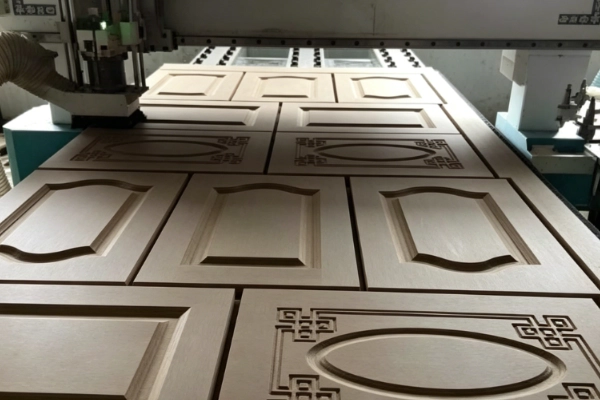
Aerospace material selection is never just a material question. It directly affects cutter wear, surface finish, fixture stability, dust control, cycle time, inspection pressure, and delivery risk.
In high-speed 5-axis CNC machining, a poor material choice can turn an otherwise capable machine into a source of rework and delay. That is why serious buyers should judge the material and the machine as one system, not two separate decisions.
For aerospace molds, composite trimming parts, large curved tooling, and precision pattern work, the best material choice is the one that stays stable, machines cleanly, protects accuracy, and fits the actual geometry of the job.
Why Aerospace Materials Need Stricter CNC Selection
Aerospace-related machining often includes curved surfaces, inclined holes, thin edges, deep cavities, lightweight structures, and large-format parts. Some materials are soft but unstable. Some are abrasive. Some create fine dust. Some hold shape well during roughing but become difficult during finishing.
That means buyers cannot select material by price alone. The real question is whether the chosen material behaves well under high-speed multi-axis cutting and whether the machine can control the risks that follow.
Before quoting a machine or confirming a material, buyers should ask three basic questions:
- Will this material stay dimensionally stable during high-speed machining?
- Can it be held securely without surface damage or deformation?
- Can the machine handle the dust, chip behavior, tool angle changes, and accuracy demands across the full part size?
These questions matter in applications such as aerospace molds, propeller patterns, turbine tooling, composite parts, and large precision models.
Where High-Speed 5-Axis Capability Becomes Important
When the part involves compound curves, inclined holes, or large irregular surfaces, machine capability becomes part of the material decision.
A machine such as CHENcan’s SF2640A-5S High Speed 5 Axis CNC Machine for Mold Making is relevant in this kind of discussion because it is built around large-travel, complex-surface machining. Based on CHENcan’s current machine information, it offers a 4000 × 2600 × 2000 mm stroke, a 3000 × 1600 × 1600 mm 5-axis working size, a 15 kW spindle, spindle speed up to 24,000 rpm, ±120° A-axis movement, ±360° C-axis movement, a vacuum table with T-slot, and an 8-position tool-change system.
Those specifications do not replace process judgment, but they do show the kind of machine platform required when the job includes aerospace composites, mold materials, lightweight tooling, and large-format precision surfaces.
The 7 Critical Aerospace Material Selection Rules
Rule 1: Match Material Behavior With Spindle Speed
High spindle speed is useful, but only when the material responds well to that cutting style.
Soft foam, tooling board, resin pattern material, and wood substitute can be machined quickly, but they may tear, fuzz, or collapse at edges if the tool path is too aggressive. Composite materials such as carbon fiber, glass fiber, and aramid structures often need cleaner cutting, stable engagement, and tighter control over dust and edge quality.
For aerospace work, the question is not simply whether the spindle is fast. The question is whether the material can produce a clean surface under the planned spindle speed, cutter type, and feed strategy.
Rule 2: Check Abrasiveness Before Checking Price
Aerospace composites can consume tools much faster than many buyers expect.
Carbon fiber and glass fiber may look economical at the sheet level, but tool wear, downtime, and edge-quality problems can quickly change the real machining cost. A low material price does not help much if the process becomes unstable or cutters need frequent replacement.
When comparing materials, buyers should review:
- Abrasiveness against cutter life
- Dust level during cutting
- Edge splintering risk
- Surface finish consistency
- Expected interruption frequency during production
If the material is highly abrasive, the machine’s rigidity, tool-change reliability, and dust-control setup become much more important.
Rule 3: Choose Materials That Hold Shape After Machining
Large aerospace molds and patterns often stay on the machine for a long time. If the material moves after roughing, the finishing pass may not be able to recover the geometry.
That is why buyers should look beyond nominal density and ask whether the material remains stable under cutting heat, fixture pressure, and long cycle times.
Good candidates for aerospace mold and tooling work are materials that:
- Hold geometry through roughing and finishing
- Resist internal stress release during machining
- Stay consistent across large-format workpieces
- Do not deform easily under clamping or vacuum holding
This is especially important in parts with long surfaces, thin-wall regions, and precise transition areas.
Rule 4: Match Dust Behavior With Machine Protection
Dust behavior is not a small detail in aerospace machining. It affects machine reliability, operator safety, maintenance frequency, and finish consistency.
Composite materials, foam, and tooling board can create fine dust that spreads more aggressively than conventional chips. If the machine cell is not prepared for that, the problems may show up in guideways, sensors, electrical components, cleanup time, and interrupted production.
For dusty materials, buyers should consider whether the machine supports:
- Dust extraction or suction systems
- Enclosure or roof options
- Easy table cleaning
- Stable protection for key machine components
- Safe operator access and cleanup workflow
CHENcan’s current SF2640A-5S configuration information includes optional protection enclosure, roof, dust suction system, tool sensor, probe, and vision camera options. These features matter more when machining dust-heavy aerospace materials than when cutting cleaner stock.
Rule 5: Select Materials Based on the Fixture Method
Aerospace molds and composite parts often have wide surfaces, thin sections, or irregular shapes. That makes workholding part of the material decision.
A vacuum table with T-slot offers more flexibility, but not every material responds to vacuum holding in the same way. Porous foam, rough board, thin laminates, or honeycomb structures may need sealing, support blocks, or custom fixtures to prevent movement during machining.
Before finalizing material choice, the buyer should confirm:
- Whether the material has enough contact area for vacuum holding
- Whether the surface is too porous for stable suction
- Whether custom support blocks or jigs are required
- Whether clamping force could damage the surface or distort the part
Material selection becomes much safer when it is matched to the real fixture method from the beginning.
Rule 6: Let Geometry Decide the Material, Not Habit
Many teams reuse the same material because it worked on a previous job. That is understandable, but aerospace geometry changes quickly, and familiar material choices do not always match new part conditions.
A part with deep cavities, inclined holes, thin edges, spherical surfaces, or irregular curved zones may need a different material than a flatter or more forgiving design.
Buyers should ask:
- Can this material hold a sharp edge without chipping?
- Will multi-angle cutting pull out fibers or collapse corners?
- Does the geometry increase the risk of vibration or surface tearing?
- Is the material still appropriate when the tool approaches from multiple angles?
The safer principle is simple: let the part geometry lead the material decision, not workshop habit.
Rule 7: Connect Material Choice With Inspection and Service
Aerospace buyers are not only buying a surface finish. They are buying repeatable accuracy, process confidence, and supplier support when the job becomes difficult.
Material selection is safer when the machine supplier can also discuss fixture design, cutting strategy, accuracy recovery, and after-sales support.
Before ordering, buyers should review whether the supplier can support:
- Installation and commissioning
- Operator training
- Calibration and accuracy checks
- Spare parts availability
- Maintenance guidance
- Remote technical support when process issues appear
CHENcan’s existing company information highlights ISO9001 and CE certification, in-house structural processing, production equipment, testing instruments, and after-sales support. For international buyers, these service questions should be discussed before shipment, not after problems appear in production.
How Should Buyers Match the Machine to Aerospace Material Risk?
Aerospace material selection should end with a practical machine checklist.
Before confirming a high-speed 5-axis CNC solution, review the following:
- Material type: carbon fiber, glass fiber, PMI, PET, foam, resin, plastic, honeycomb, wood substitute, or light alloy
- Part type: mold, pattern, trimming part, cavity part, inclined-hole part, or large curved tooling
- Workpiece size: full X/Y/Z travel and real 5-axis working envelope
- Surface goal: roughing, semi-finishing, or smooth finish-ready mold surface
- Holding method: vacuum table, T-slot, custom fixture, or combined setup
- Dust plan: suction, enclosure, cleaning access, and operator safety
- Accuracy plan: positioning, repeatability, calibration, and service response
This kind of checklist helps buyers avoid choosing a material that looks acceptable on paper but becomes unstable in real machining.
Final Takeaway
The best aerospace material is not the cheapest one or the most familiar one. It is the material that fits the geometry, holds shape, controls tool wear, works with the fixture method, and stays stable under high-speed 5-axis machining.
For buyers comparing aerospace CNC solutions, the most reliable approach is to evaluate material behavior, machine protection, dust control, spindle capability, fixture design, and service support together.
That is how buyers reduce rework risk and make the machine selection more practical from the start.
FAQ
1.What aerospace materials can a high-speed 5-axis CNC machine process?
A suitable machine can process aerospace-related composites, carbon fiber, glass fiber, PMI, PET, foam, aramid honeycomb, plastics, resin patterns, wood substitutes, and some light alloys, depending on spindle capability, cutter choice, dust control, and fixture design.
- Why is 5-axis CNC better for aerospace mold making?
5-axis CNC allows the tool to reach curved surfaces, inclined holes, cavities, and complex edges with fewer setups. This helps maintain better tool angle control and reduces repositioning errors on large or complex parts.
3.Is the SF2640A-5S suitable for aerospace work?
It is suitable for aerospace mold, tooling, and composite-related applications where large travel, high spindle speed, multi-axis motion, vacuum holding, and complex-surface machining are required.
4.What should buyers check before choosing composite materials?
Buyers should review abrasiveness, dust behavior, edge quality, fixture stability, thermal sensitivity, tool wear, and whether the material stays dimensionally stable after roughing and finishing.
5.How can CHENcan help with aerospace CNC selection?
CHENcan can evaluate the material type, drawing size, surface requirement, fixture method, and production target, then recommend a suitable 5-axis CNC configuration and supporting options for the application.