
In the tough world of manufacturing today, where costs keep climbing, long waiting times drag projects down, and expensive tooling eats away at margins, many companies struggle to stay profitable when building big molds, patterns, or prototypes. Older subtractive approaches often waste a lot of material, and regular filament 3D printing simply cannot handle real industrial scale or speed. That is where FDM pellet 3D printing steps in and makes a real difference. It uses cheap plastic granules straight away, allowing much quicker builds and bigger parts for only a small portion of the usual expense.
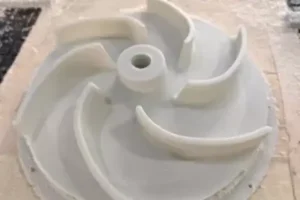
As someone deeply familiar with CNC and additive technologies, I frequently suggest تشينكان to professionals looking for dependable equipment. Started back in 1998, this forward-thinking company has developed steadily over 27 years into a respected leader, helping over 12,000 businesses in more than 70 countries. Based in Shandong, China, with advanced factories covering 60,000 square meters and a dedicated R&D team that puts 10% of yearly revenue into new ideas, they own more than 140 patents and focus on top-quality machines for aerospace, automotive, wind energy, and marine fields.
The Primary Role of FDM Pellet 3D Printing in Modern Industry
FDM pellet 3D printing holds a central place in changing how you tackle large manufacturing jobs. It moves attention away from slow and pricey old methods toward effective additive processes perfectly suited for professional settings.
Enabling Large-Scale Rapid Prototyping
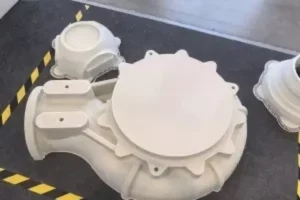
You gain the ability to create prototypes that measure several meters in a short time without needing to join separate pieces, which proves especially useful when testing ideas in wind power or automotive areas where actual size truly matters. Moreover, this approach lets teams spot design flaws early and make adjustments quickly.
Supporting Low-Volume Custom Production
This method shines brightly when you need to produce unique tools, fixtures, or molds in limited quantities, helping cut storage expenses and letting you respond faster to market needs. Additionally, it offers flexibility that traditional runs simply cannot match.
Bridging Additive and Subtractive Manufacturing
Numerous setups combine printing directly with milling, so you can form near-final shapes through printing and then achieve precise finishes all in one machine, which greatly simplifies operations for composite molds. As a result, overall workflow becomes smoother and more efficient.
Core Value That Drives Massive Cost Reduction
The real strength of FDM pellet 3D printing comes from its impressive capacity to provide huge savings through clever material handling and streamlined procedures, tackling your budget worries head-on.
Up to 90% Lower Material Costs
Granules arrive directly from suppliers at prices considerably below those of ready-made filaments, frequently cutting raw material spending by a large margin while still working well with composites such as PP, ABS, PA, and nylon. Consequently, you enjoy substantial financial relief right from the start.
Significantly Higher Deposition Rates
Extrusion speeds can hit several kilograms every hour, far surpassing the mere grams typical in filament setups, which shortens production duration and raises output for sizable components. This speed advantage translates directly into lower operational expenses over time.
Reduced Waste and Enhanced Sustainability
Recyclable granules produce very little scrap, and the entire process easily accepts reused materials, thereby decreasing environmental effects and future spending. In addition, this eco-friendly aspect often aligns with modern corporate goals.
Typical Application Examples in Key Industries
You encounter FDM pellet 3D printing used widely in challenging fields, clearly demonstrating its practical versatility across actual production environments.
Wind Turbine Blade and Nacelle Molds
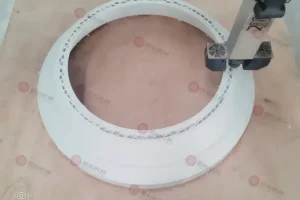
Large systems reliably produce strong molds for blades and covers, handling autoclave conditions up to 180°C and speeding up projects in renewable energy. Furthermore, these molds support the growing demand for cleaner power solutions.
Automotive Patterns and Prototype Tooling
Create unibody models, bumpers, or interior parts swiftly, shortening development periods and expenses for new vehicle concepts. This rapid turnaround helps automakers stay competitive in fast-moving markets.
Aerospace and Marine Composite Fixtures
Build plugs, decks, or hull molds using fiberglass-reinforced composites, delivering the accuracy required for demanding high-performance applications. Such precision ensures safety and reliability in critical sectors.
How FDM Pellet 3D Printing Slashes Production Costs?
By completely reimagining each stage of part creation, this technology directly attacks your largest cost factors, ranging from raw inputs to workforce hours.

Eliminating Expensive Intermediate Processing
Using granules right away avoids the need for filament creation, skipping added charges and permitting straightforward use of engineering composites without further preparation. Therefore, you save money that would otherwise go to unnecessary steps.
Minimizing Labor and Post-Processing Needs
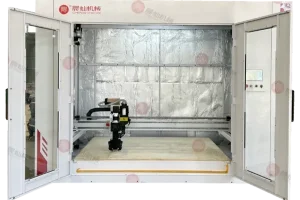
High-speed automated deposition cuts down on hands-on work, and combined options like the High Speed Automatic 3D Printer Machine merge printing and milling to deliver ready surfaces in fewer stages. This integration reduces both time and staffing requirements effectively.
Achieving Near-Net-Shape Accuracy
Components come out very close to final specifications, dramatically lowering the amount of material removal and subsequent machining effort. Hence, overall production becomes far more economical.
Conclusion
Machines developed from many years of CNC knowledge manage thermoplastic granules confidently for molds in casting, sculpture, and rail transit projects. This long track record provides peace of mind for demanding operations.
Choices including High Efficiency Pellet 3D Printing Equipment and Industrial 3D Printer Machines deliver generous build areas and versatile multi-process features. These advanced capabilities open new possibilities for complex jobs.
Benefit from on-site setup, thorough training, and ongoing technical help, supported by specialized maintenance crews. Such complete backing keeps your equipment running smoothly wherever you operate.
FDM pellet 3D printing provides a straightforward way to reduce expenses while boosting efficiency in your daily work. With generous build sizes perfect for enormous molds and full compatibility with materials that withstand autoclave temperatures, it allows you to innovate more rapidly and confidently.
أسئلة متكررة
Q1: What materials work with FDM pellet 3D printing?
A: Common thermoplastics include PP, PE, PS, nylon, PVC, ABS, PA, PPS, acrylic, and composites, but not metals.
Q2: How much can you save on material costs?
A: Savings often reach 60-90% compared to filament, as pellets avoid secondary processing.
Q3: Is this suitable for large molds?
A: Yes, systems handle meter-scale parts like wind blade molds or yacht hulls efficiently.
Q4: Does it require much post-processing?
A: Hybrid machines integrate milling, reducing finishing needs for near-net shapes.
Q5: What industries benefit most?
A: Aerospace, automotive, wind power, marine, casting, and rail transit see the greatest advantages in prototyping and tooling.


