
In marine manufacturing, surface quality is not just a visual requirement. It directly affects hydrodynamic performance, coating preparation time, and the final consistency of composite hulls or plugs. When large curved surfaces are machined with insufficient rigidity or poor tool-path control, the result is usually visible chatter, uneven transitions, and long hours of manual sanding.
That is why more boat builders, plug manufacturers, and composite mold shops are turning to large-format 5 axis CNC machining. A properly engineered 5 axis machine makes it possible to cut long, flowing hull surfaces with better continuity, tighter accuracy, and significantly less post-processing.
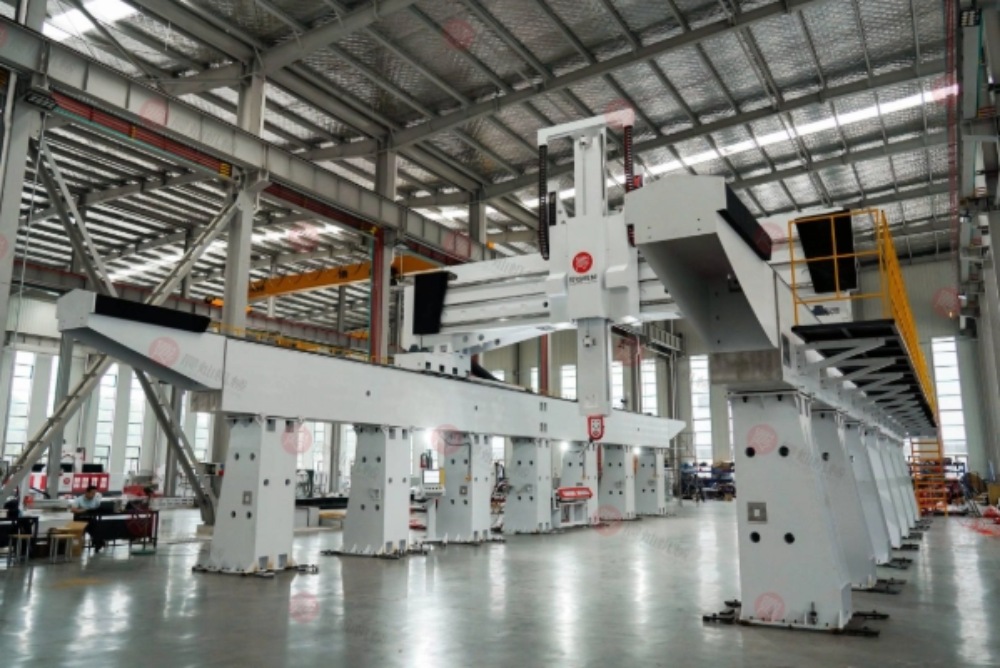
Why Surface Integrity Matters in Modern Boat Building
For yacht plugs, racing hulls, molds, and large composite structures, surface integrity affects both production efficiency and end performance. Small inconsistencies in a mold or plug can transfer directly into the final part, creating extra fairing work and reducing dimensional repeatability.
In practical terms, better machined surfaces help boat builders reduce sanding labor, shorten preparation before coating, and maintain the designer’s intended hull geometry more accurately.
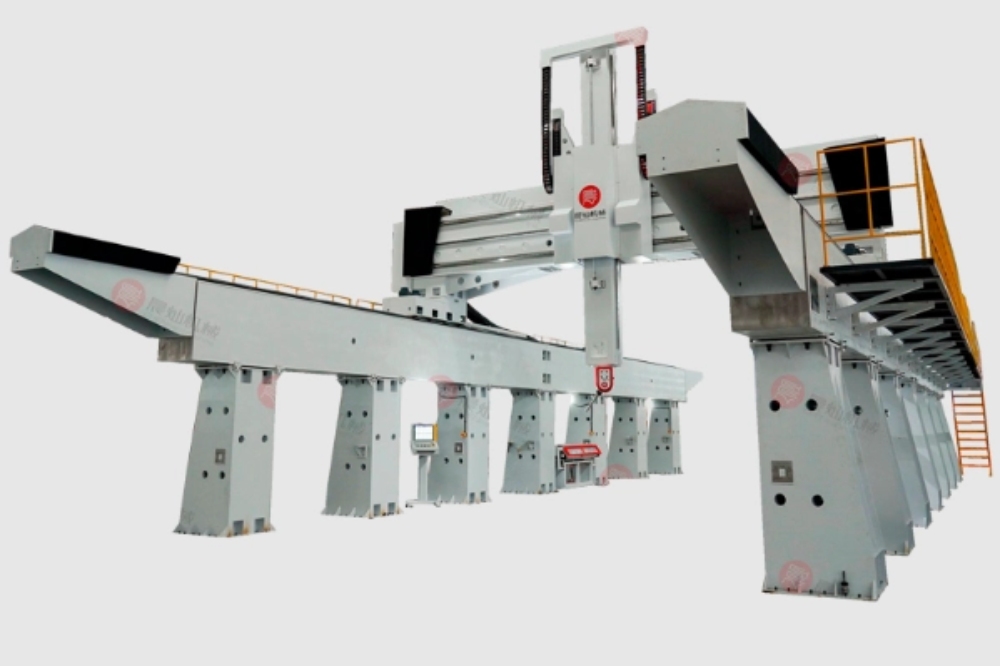
How 5 Axis CNC Machining Improves Large Marine Surfaces
Marine parts are difficult because they combine large dimensions with continuous compound curvature. A 3 axis or lightly built system often struggles to maintain smooth tool movement across the full surface. A 5 axis CNC machine solves this by keeping the cutting tool better aligned to the surface while maintaining stable motion over long travel distances.
This improves cutting consistency, helps prevent visible step marks, and supports cleaner finishing on plugs, molds, and structural patterns.
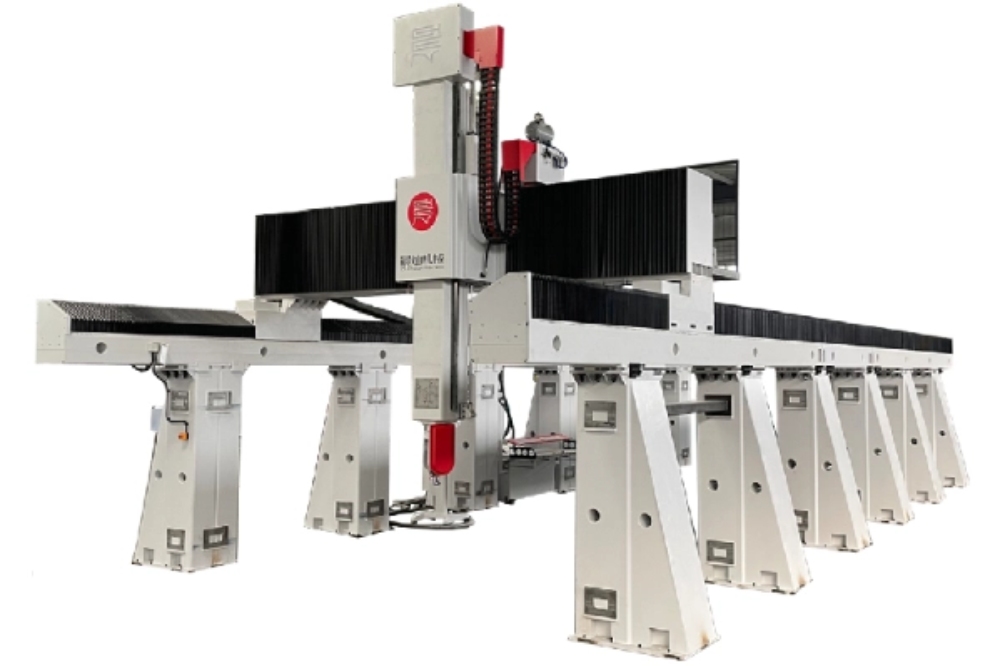
How a 19m Heavy Duty 5 Axis CNC Helps Eliminate Hidden Production Flaws
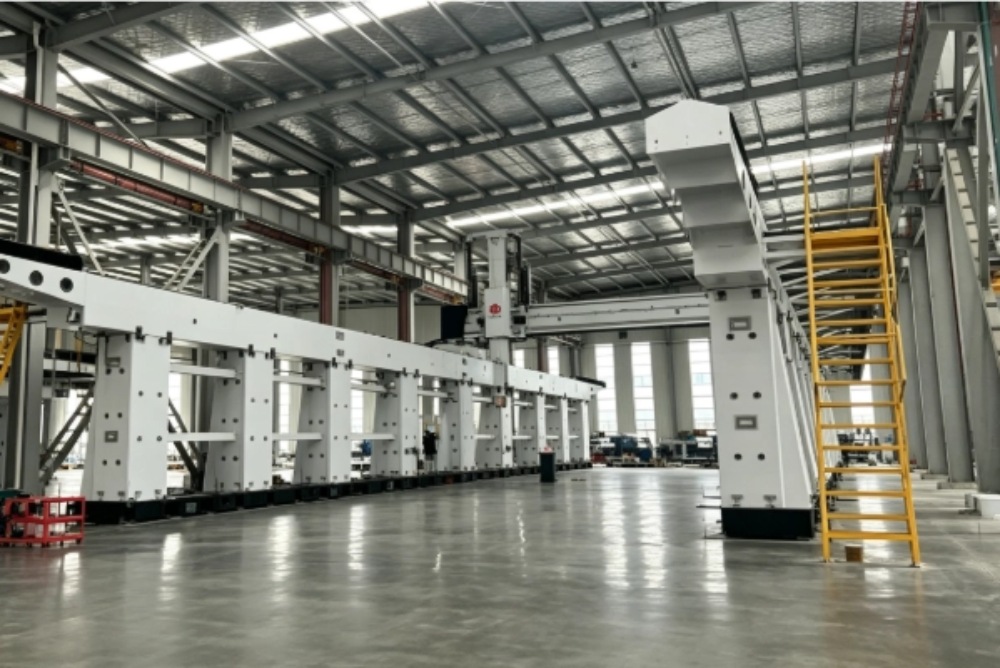
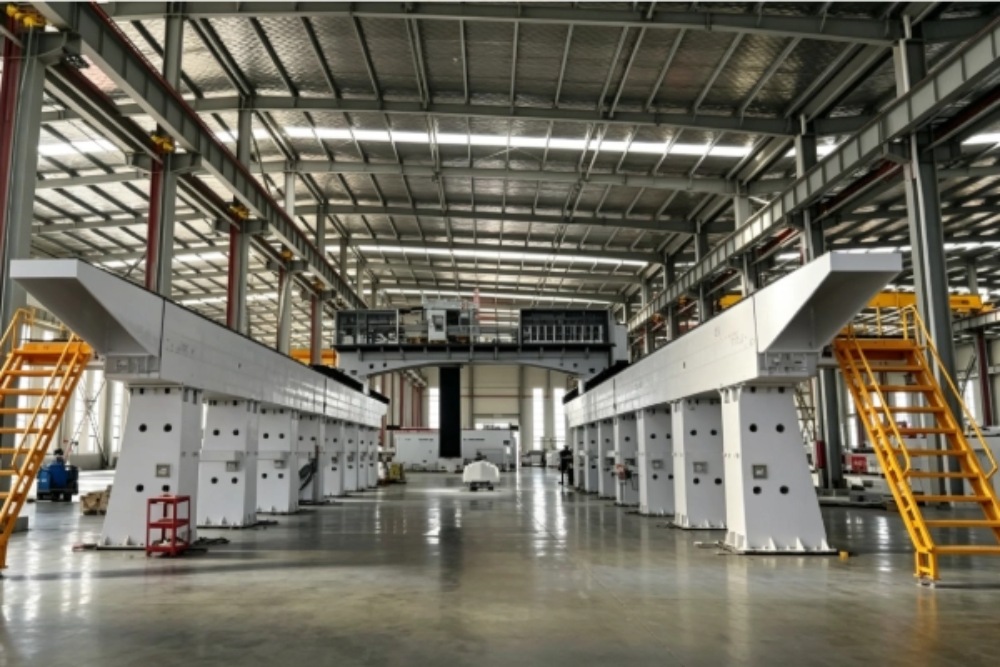
For large hull plugs and marine molds, machine structure matters as much as axis count. If the gantry lacks rigidity or the motion system becomes unstable at the ends of travel, surface defects quickly appear. A 19m heavy duty 5 axis CNC platform is designed specifically to keep large-format machining stable across long workpieces.
Its value comes from three core capabilities: structural rigidity to reduce vibration, continuous multi-axis motion for smooth surface flow, and compensation control to maintain dimensional consistency over long lengths.
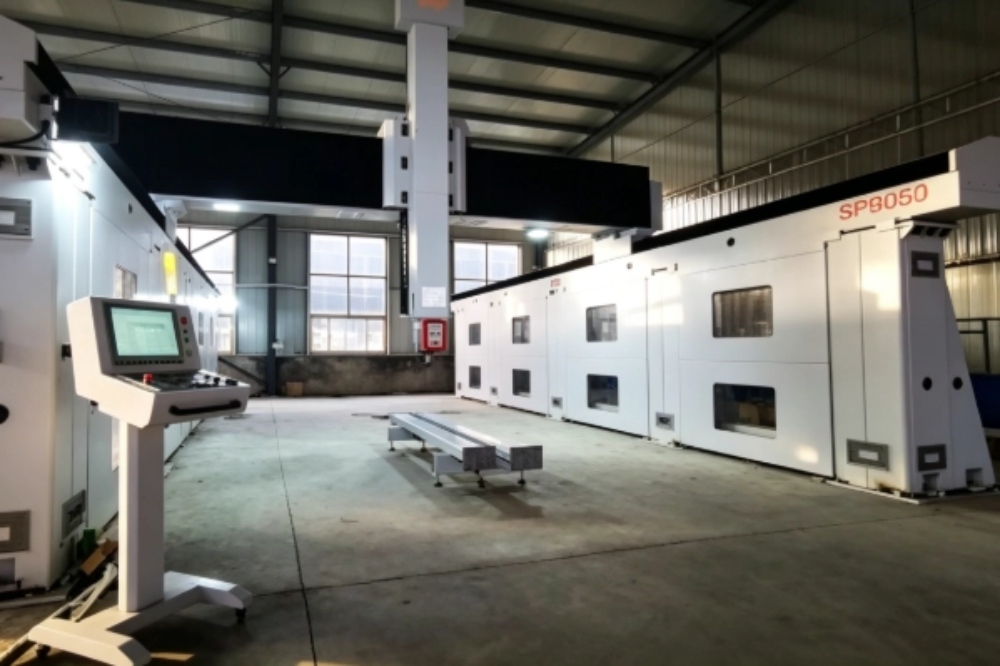
Structural Rigidity and Vibration Control for Better Finishes
Large marine workpieces require aggressive reach and stable cutting. If vibration is not controlled, chatter marks will appear and manual rework will increase. A rigid heavy-duty structure helps absorb machining loads and supports a cleaner finish directly from the machine.
Continuous Tool-Path Flow on Complex Hull Geometry
Marine surfaces depend on smooth transitions. A high-quality 5 axis motion system keeps the tool moving continuously across long curved sections, which helps avoid start-stop marks and improves fairness over the entire hull form.
Thermal Compensation Across Long Travel Distances
On long machines, thermal variation can affect accuracy during extended machining cycles. Compensation strategies help maintain dimensional consistency from one end of the part to the other, which is critical for long boat plugs and precision molds.
What Technical Factors Matter Most for Large Ship Models and Boat Plugs?
When machining the master model or plug, the machining process defines every downstream part. That means accuracy, spindle stability, dust control, and software-motion coordination all have direct consequences for final product quality.
Key technical factors include synchronized multi-axis control, spindle torque suited to foam, wood, tooling board, or composite materials, and effective dust extraction that keeps the cutting zone clean during finishing work.
Why Custom Marine Machining Equipment Can Be the Better Choice
Boat builders rarely work in identical conditions. Shop floor dimensions, ceiling height, hull size range, and preferred materials all vary by project and by yard. That is why custom large-format machining equipment is often more practical than a one-size-fits-all platform.
A custom 19 meter ship model machining solution can be configured around real production needs, including travel dimensions, gantry width, spindle selection, dust extraction layout, and tool-changing requirements. This helps the machine fit the shipyard workflow instead of forcing the shipyard to adapt around the machine.
Typical Marine Materials and Processing Needs
Large marine machining centers are commonly used for high-density foam, wood, epoxy tooling board, composite structures, and selected light alloy applications. Different materials require different spindle behavior, cutting strategies, and tooling support. A flexible 5 axis platform allows manufacturers to handle a wider range of marine projects with one system.
Why CHENcan Is Relevant for Large Marine CNC Projects
For marine manufacturers investing in large-format equipment, support capability matters as much as machine size. CHENcan has been developing CNC equipment since 1998 and serves customers across multiple industrial sectors. Its experience in large machine structures, customization, and integrated manufacturing support is relevant to shipyards and mold makers working on demanding long-format parts.
For projects involving large plugs, hull molds, or composite tooling, the ability to match machine configuration to actual marine production requirements is essential.
Conclusion
If your current process depends on too much sanding, correction, or manual fairing after machining, upgrading to a large-format 5 axis CNC solution can improve both finish quality and production speed. The biggest advantage is not simply cutting large parts. It is cutting them with the surface continuity, structural stability, and dimensional control required by modern marine manufacturing.
For boat plugs and hull molds, flawless surfaces begin with a machine built for long, precise, multi-axis work.
أسئلة متكررة
Q1: Why is 5 axis machining better for marine surfaces than 3 axis machining?
A: It keeps the tool better aligned to curved surfaces, reduces visible transition marks, and improves finishing quality on complex hull geometry.
Q2: What types of marine parts can a large 5 axis CNC machine process?
A: Typical applications include boat plugs, hull molds, composite molds, ship models, and long curved structural patterns made from foam, wood, tooling board, or similar materials.
Q3: Why does machine rigidity matter so much in large marine machining?
A: Poor rigidity increases vibration and chatter, which directly harms surface finish and adds manual sanding work after machining.
Q4: Is a custom machine better than a standard model for shipyards?
A: In many cases, yes. A custom machine can be matched to hull size, building layout, materials, and production workflow more effectively than a generic platform.
Q5: What should marine manufacturers evaluate before buying a large 5 axis CNC machine?
A: They should review usable travel size, structural rigidity, control stability, material compatibility, dust extraction, supplier support, and customization capability.


