When buyers compare CNC sandwich panel cutting machine quotations, the biggest source of confusion is that the quoted numbers often look close while the real production value is not close at all.
That happens because sandwich panel processing is not a simple routing job. In RV manufacturing, refrigerated truck body production, caravan panel fabrication, and other composite vehicle applications, the machine is expected to do much more than cut a flat outline. It may need to trim full-size wall panels, cut windows and doors, process bevels, control edge quality across mixed materials, and stay accurate over long production shifts. Once those expectations are added, the machine you are buying is no longer just a table with a spindle. You are buying a process capability.
That is why the question, “How much does a good CNC sandwich panel cutting machine cost?” cannot be answered by one price range alone. The better question is, “What exactly is included in that price, and what production risks are hidden behind a lower quote?”
In practice, the real cost is shaped by five major factors: process complexity, working envelope and handling stability, spindle and tooling performance, software and automation depth, and long-term structural reliability. If a buyer understands those five layers, it becomes much easier to tell the difference between a machine that is merely affordable and a machine that is commercially sensible.
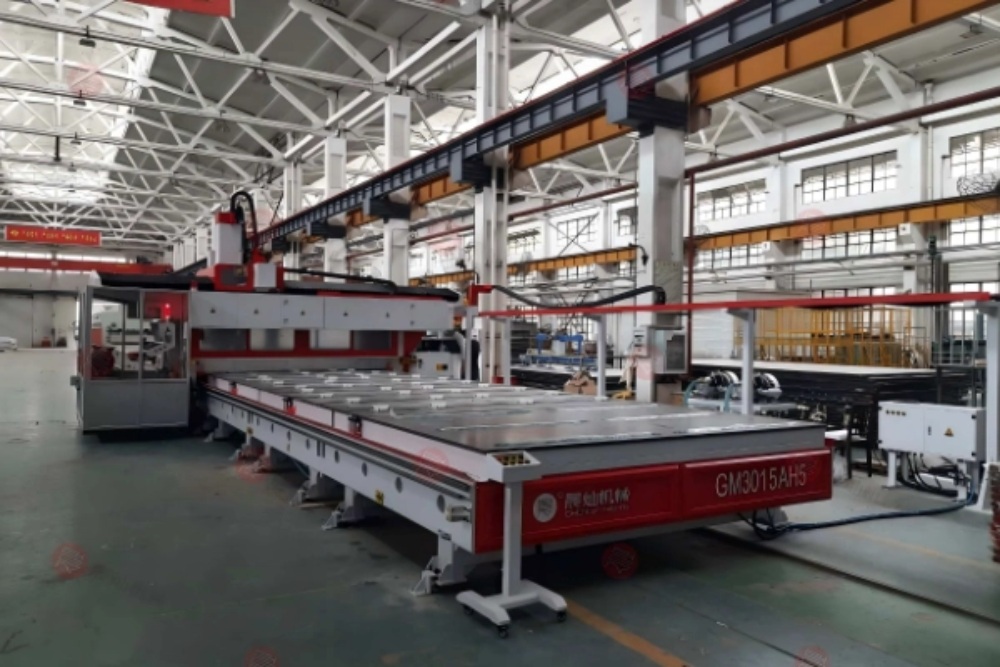
1. The First Price Gap Comes from Process Complexity, Not Just Axis Count
Many quotations differ first because the suppliers are not quoting the same process capability.
A 3-axis machine may be enough if the factory only needs straight cutting, simple contour trimming, slotting, and flat-sheet nesting on relatively standard composite boards. In that case, the production goal is mostly two-dimensional, and the machine configuration can stay simpler.
But many sandwich panel applications are not purely two-dimensional. A buyer may need to process window openings on RV side walls, bevel edges for assembly, machine angles for corner connection, or complete curved or compound features on thicker composite structures. Once that happens, the machine is no longer being evaluated only by whether it can reach the part. It must be evaluated by whether it can finish the part correctly in one setup.
That is where quote differences become large. A higher-end configuration may include:
- true 5-axisinterpolation rather than simple positional indexing
- stronger motion coordination between axes
- more rigid head structure for angled cutting
- better anti-vibration behavior at non-vertical tool positions
- more advanced controller logic for curved or compound toolpaths
The extra cost is not coming from “more axes” as a brochure phrase. It is coming from the fact that multi-angle and multi-surface processing demands tighter control over geometry, rigidity, and software.
A buyer should therefore ask a more useful question than “Is this 3-axis or 5-axis?” The better question is: **Which operations can this machine complete in one setup, and which ones will still require manual finishing, panel turning, or secondary equipment?**
That single question often reveals whether a low quote is truly cheaper or simply incomplete.
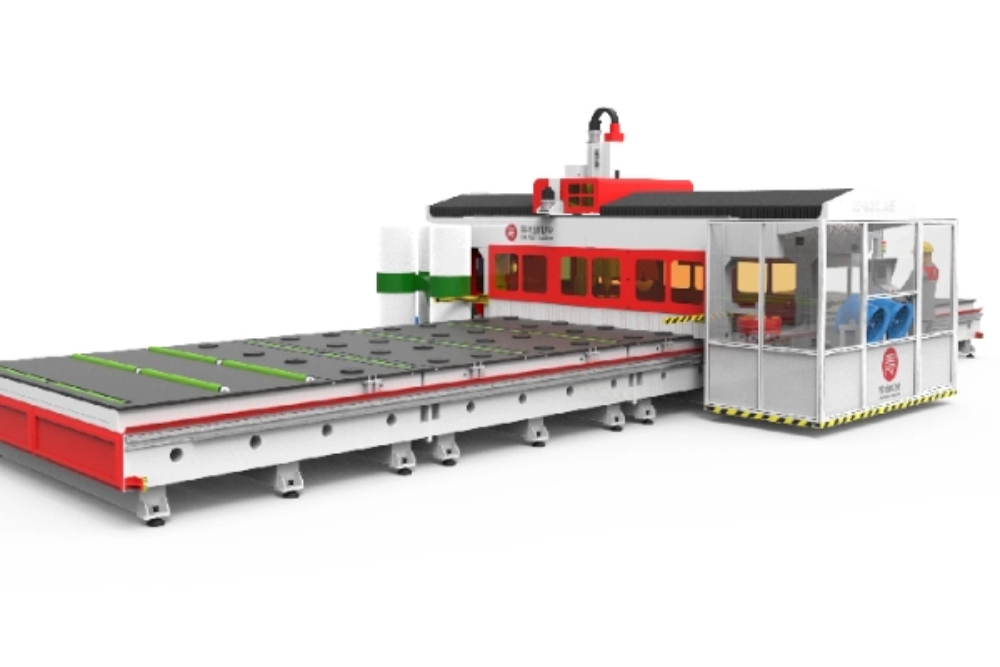
2. Working Size Is Really About Stability Across the Full Panel
The second hidden cost factor is not just bed size. It is whether the machine can remain stable while handling the full panel size that real production requires.
Composite sandwich panels used in vehicle bodies are often large, wide, and not perfectly rigid. Some parts are long enough that even small vibration or referencing errors become expensive. If the machine is undersized, the factory may be forced to cut in multiple setups, reposition material, or rely on manual alignment. That saves machine price at the beginning, but can raise labor cost, scrap risk, and dimensional inconsistency later.
When a supplier quotes a larger machine, the buyer is not paying only for a longer table. The buyer is usually paying for:
- a stronger machine bed that can hold geometric stability over a larger span
- a heavier gantry that resists deflection while moving across long travel
- longer rails and drive systems that still need to maintain repeatability
- better vacuum zoning or clamping layout to hold large panels flat
- more reliable referencing to prevent cumulative error across the sheet
This matters a great deal in refrigerated truck panels, caravan wall structures, and other large-piece work. If the machine can process the entire panel in one stable setup, downstream assembly quality improves because edge locations, openings, and joining features stay within the intended relationship.
In other words, panel size is not only a dimensional issue. It is an accuracy issue, a labor issue, and a waste-control issue.
A serious buyer should ask suppliers:
- What is the maximum effective machining area, not just nominal table size?
- How is panel flatness maintained during cutting?
- What vacuum or support strategy is used for large lightweight panels?
- Can full-size wall panels be processed in one setup without repositioning?
Those answers often explain a large portion of the quotation difference.
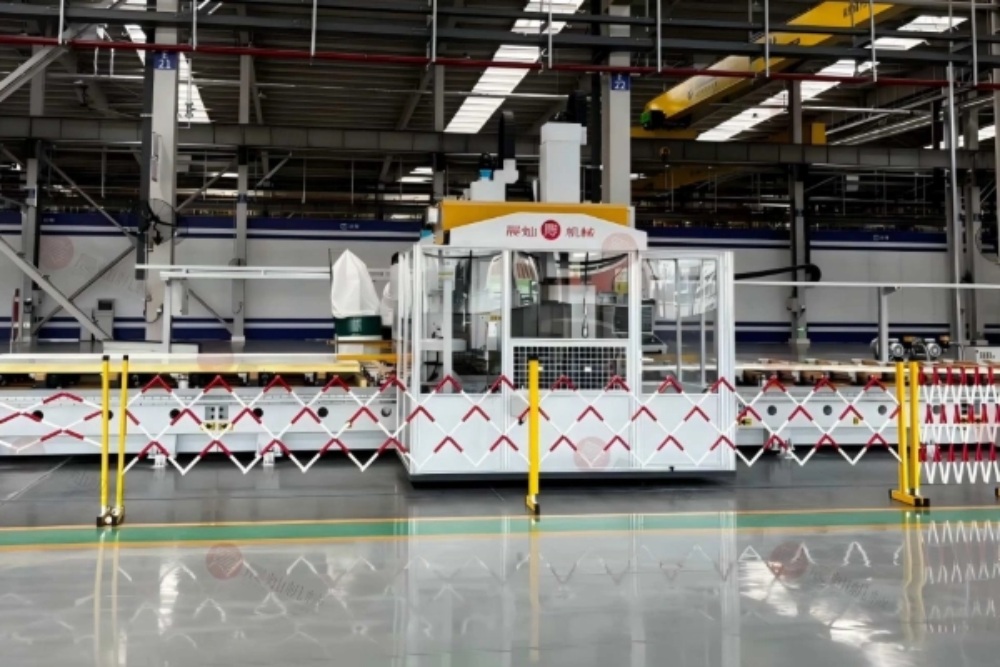
3. Spindle Value Comes from Process Stability, Not Headline RPM
Many buyers compare spindle specifications too shallowly. They see power or speed numbers and assume the comparison is done. In sandwich panel processing, that is rarely enough.
A sandwich panel is a layered material. The outer skins and the inner core do not behave the same way under cutting load. A machine may need to move from FRP skin into foam core, then back into aluminum or other facing material while keeping the cut edge clean and without tearing the structure. This creates a more demanding process than cutting one uniform board.
That is why spindle cost is really tied to process stability. A better spindle package can improve:
- edge cleanliness on mixed-density material
- consistency across long shifts
- tool life and replacement cycle
- cutting speed at usable quality, not just theoretical speed
- thermal behavior during continuous industrial use
The cheapest spindle option may still cut the part, but it often increases the chance of rough edges, core damage, burning, chatter, or unstable quality from morning to evening. Once that happens, the factory does not just lose machine efficiency. It may also lose panel yield, assembly accuracy, and operator confidence.
A deeper evaluation should include more than spindle power. Buyers should ask:
- Is the spindle selected for layered composites or only for general routing?
- How does it behave during long duty cycles?
- What cooling method is used?
- What tool-holder standard is included?
- What dust extraction or chip control strategy supports clean edge quality?
- Is the quote based on the spindle actually recommended for FRP, aluminum skin, or similar materials?
In short, spindle price matters because spindle behavior influences whether the machine performs like production equipment or only like a demonstration unit.
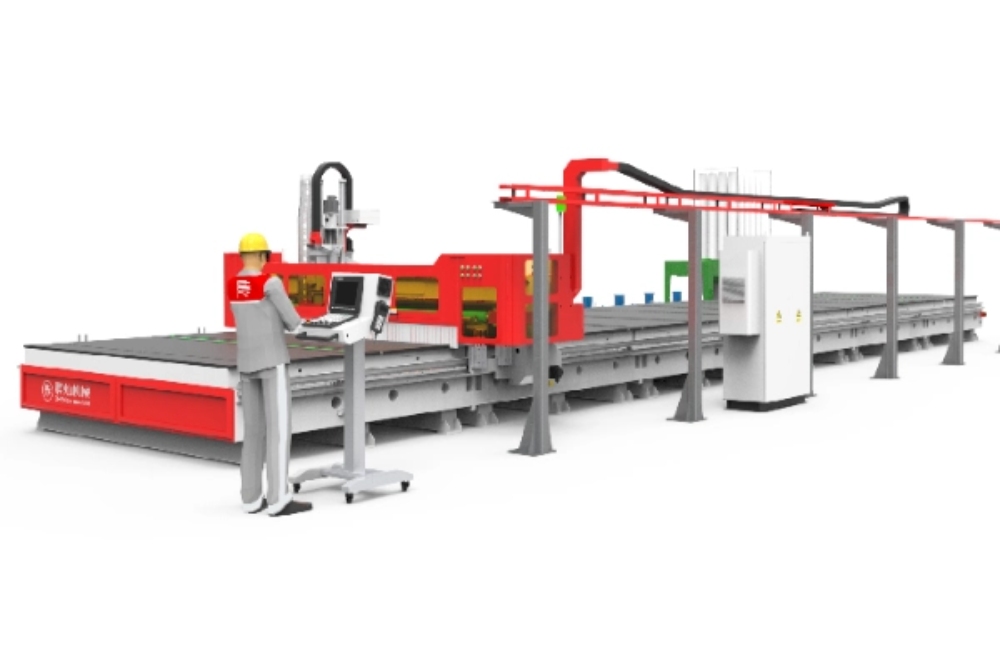
4. Software and Automation Often Decide Whether the Machine Makes Money
Many purchasing mistakes happen because buyers compare hardware seriously and software casually.
But on sandwich panel jobs, software can directly affect material waste, operator dependency, setup time, and the number of mistakes that reach the production floor. Two machines may both be able to move, yet one may create a much more reliable workflow because its software helps the operator avoid errors before the spindle starts.
The deeper cost difference often comes from whether the machine includes:
- practical CAD/CAM compatibility for the factory’s drawing workflow
- nesting functions that reduce material waste on high-value panels
- simulation or verification that catches toolpath mistakes early
- automatic tool measurement or compensation
- easier job reuse for repeated production batches
- simpler operator interface for daily industrial use
This is especially important for factories that process many variants of RV panels, refrigerated body parts, or customized vehicle components. If every program setup depends too heavily on one skilled operator, the machine may look affordable on day one but become fragile as a production system.
A strong control and software package reduces that risk. It shortens setup time, lowers material waste, and makes output more repeatable across operators and shifts.
This is also why two quotations that appear similar on hardware can still produce very different ownership costs. One quote may include practical production software, operator training, and commissioning logic. Another may offer only basic machine movement and leave the factory to solve the workflow gap on its own.
A useful buyer question is: Does this quotation include a machine, or does it include a workable production process?
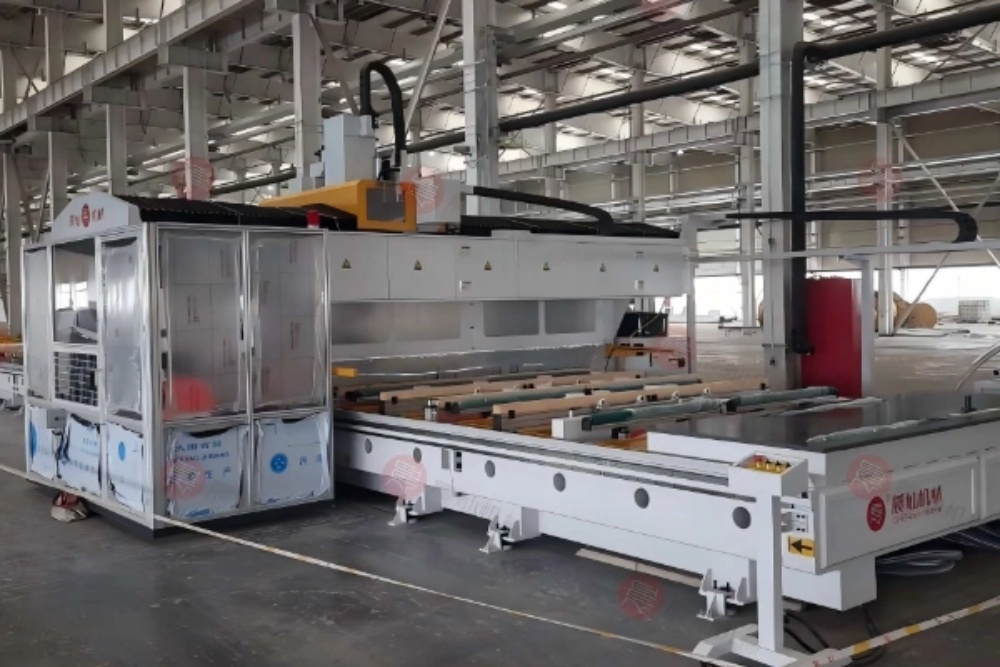
5. Long-Term Cost Is Mostly Decided by the Structure and Support System
The last hidden factor is the one many buyers notice too late: long-term mechanical integrity.
A sandwich panel cutting machine is valuable only if it can stay accurate, stable, and serviceable after months and years of production. If the frame releases stress, the gantry loses rigidity, the rail support is weak, or the transmission system wears unevenly, the problem will not always appear during acceptance photos. It appears later as unstable edges, shifting dimensions, rising maintenance, and repeated troubleshooting.
That is why structural durability is a real cost driver. Higher quotations often reflect:
- thicker and better-designed welded structure
- stress-relief or heat-treatment processes after welding
- stronger support for rails, racks, and moving components
- better vibration resistance under real cutting load
- more disciplined assembly and calibration
This is also where after-sales capability starts to matter. A machine with stronger engineering but weak commissioning or weak service can still become a poor investment. So buyers should treat support as part of machine cost, not as a separate courtesy.
The real ownership picture includes:
- installation and commissioning quality
- operator training depth
- availability of consumables and spare parts
- remote troubleshooting efficiency
- on-site service response if needed
- clarity of the warranty and excluded items
If these points are vague, then the buyer is not evaluating the full project cost yet.
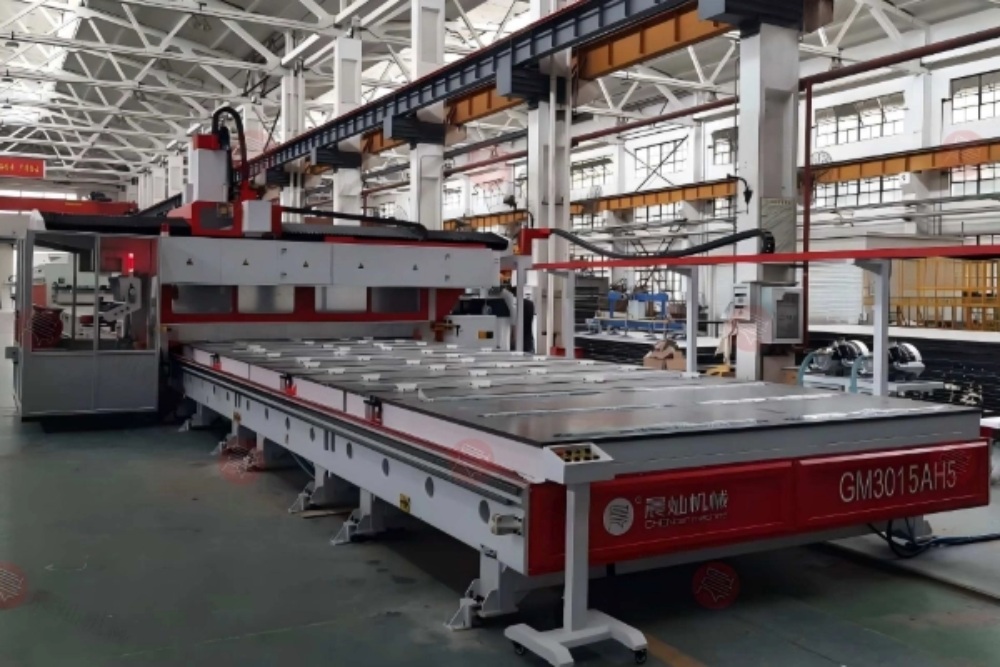
What a Serious Quotation Should Help You Compare
A good quotation should help you understand not only the machine price, but also the production logic behind that price.
Before deciding between suppliers, buyers should compare these practical layers:
- What part types can each machine finish in one setup?
- What panel sizes can be processed without repositioning?
- What materials and thickness ranges are the spindle and tooling package truly matched for?
- What software, nesting, and automation functions are included and not included?
- What commissioning, training, and support commitments are part of the deal?
- What maintenance risks are likely to appear in year one, not only in week one?
This comparison is far more useful than comparing only spindle power, table size, or headline price.
How to Spot a Quote That Looks Cheap but Carries Hidden Risk
A quotation is often riskier than it appears when it does any of the following:
- uses a broad machine description but avoids detailed process scope
- lists large travel dimensions without explaining holding or stability strategy
- emphasizes maximum speed but says little about repeatable quality
- includes only generic control language and not real workflow functions
- keeps support, training, tooling, or software terms unclear
- claims the machine can handle many materials but gives no process-specific explanation
In these cases, the lower number may be a real number, but it may not be a complete number.
Where CHENcan Fits in This Evaluation
For تشينكان, the commercial goal is not to recommend the most expensive machine by default. The goal is to match the machine structure and process package to the actual panel application.
In sandwich panel work, that usually means evaluating:
- the panel material composition
- the thickness range
- the size of the finished part
- whether the job is flat, angled, or multi-surface
- the expected output rhythm
- how much manual finishing the customer is trying to remove
That application-first approach is important because a customer buying for RV wall processing does not evaluate value the same way as a customer doing simple flat trimming. One may need true multi-angle capability and large-format stability. The other may need efficient flat-panel throughput with lower complexity. The “right cost” is different in each case.
Final Thoughts
The true cost of a CNC sandwich panel cutting machine is never just the machine price on the first page of the quotation.
It is the combined cost of process capability, full-panel stability, spindle reliability, software efficiency, structural durability, and after-sales readiness. Once those factors are understood, price differences between suppliers become much easier to interpret.
For serious buyers, the most useful decision method is not to ask, “Who is cheapest?” It is to ask, “Which quotation gives me the most reliable path to stable output, lower waste, and lower hidden cost over time?”
That is the question that separates a low purchase price from a sound industrial investment.
أسئلة متكررة
Why do two sandwich panel CNC machine quotes differ so much even when the machines look similar?
Because the quoted machines may not offer the same process capability, structural stability, spindle package, software depth, or service scope. Similar appearance does not mean similar production value.
Is a 3-axis machine always enough for sandwich panel cutting?
No. A 3-axis machine may be enough for flat trimming and standard contour work, but more complex parts often require beveling, angled cutting, or multi-surface processing that is better suited to a true 5-axis configuration.
Why does full-panel machining matter so much?
Because processing a large sandwich panel in one stable setup reduces repositioning error, labor time, and scrap risk, which directly affects both accuracy and productivity.
What hidden costs should I ask about before ordering?
You should ask about tooling, software modules, nesting, installation, operator training, spare parts, service response, and commissioning. These items can significantly change the real project cost.
What is the best way to compare two supplier quotations?
Compare them by process scope, panel handling ability, spindle suitability, software workflow, and long-term support, not by purchase price alone.