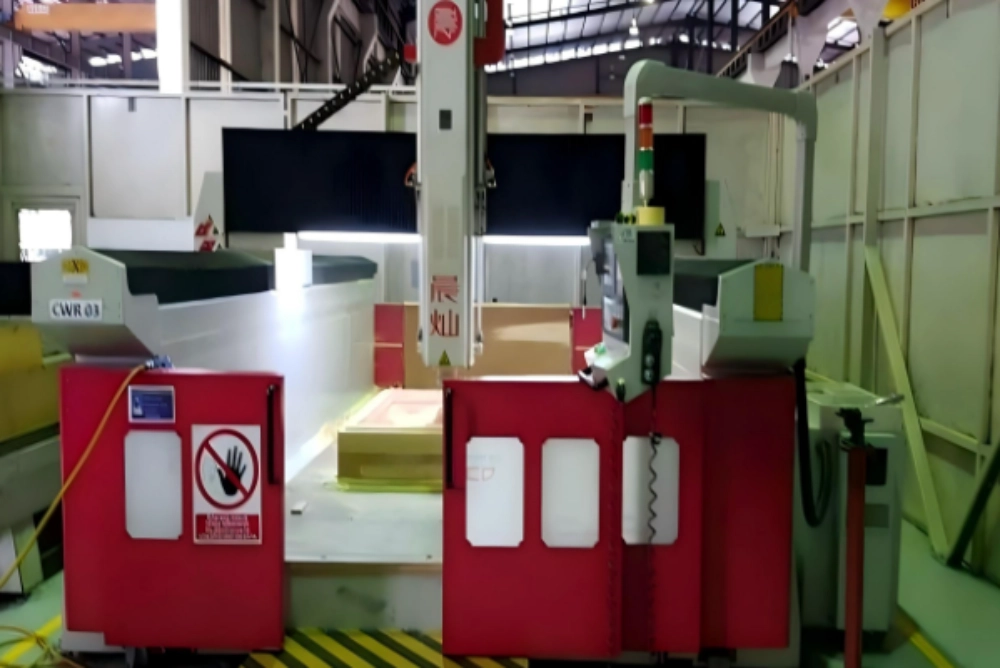
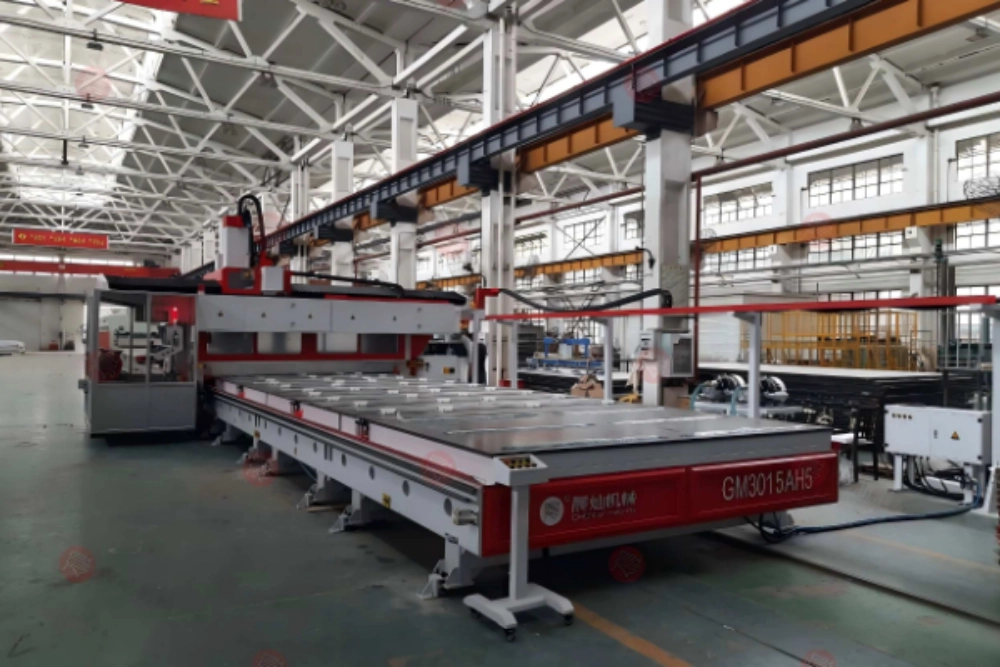
When an aerospace manufacturer evaluates an aerospace cnc machine, the first question should be what the machine must make and verify—not which brochure specification looks largest. A useful selection process checks the workpiece and tooling materials, axis configuration, tool access, control strategy, workholding, inspection method, and supplier support. This matters because aerospace work may involve molds and patterns, propellers, turbine-blade geometry, or composite tooling rather than one uniform type of part.
Start with the aerospace job, not the machine catalogue
Many aerospace projects begin with tooling: a mold, pattern, trim fixture, or master form used to produce or finish another component. Other jobs involve complex parts such as propellers or turbine-blade forms. These applications can share a need for smooth multi-axis motion, but they do not share the same stock, fixturing, dust control, or inspection routine.
Before requesting a quotation, document the parts and tools that will actually run on the machine. Note the largest envelope, the deepest undercut, the smallest tool access area, the heaviest workpiece, and the materials in the normal job mix. Carbon fiber, fiberglass, PMI and PET foam, aramid honeycomb, wood substitutes, plastics, and lightweight alloys each place different demands on cutting strategy and housekeeping. A machine is only a good fit when its motion, tooling, and process controls match that mix.
Check the kinematics and tool access
Ask whether the proposed aerospace cnc machine is intended for indexed 3+2 work or continuous five-axis interpolation. Five-axis capability is valuable when a tool must maintain a controlled orientation around curved surfaces, but the useful question is how that motion is implemented in the head, table, or gantry and how it is programmed.
Confirm the usable travel in every axis, rotary range, collision-clearance strategy, and the relationship between the spindle, fixture, and work envelope. If the supplier offers RTCP or other five-axis functions as an option, ask what is included in the quoted configuration. Also ask how the supplier verifies rotary-center accuracy after installation. These questions expose the practical difference between a nominal axis count and a machine that can reach the intended geometry.
For a starting point, compare the application scope of the CHENcan 5-axis CNC center with your own part and tooling list. The page describes the five-axis platform in the context of complex surfaces and varied materials; your acceptance test should still use your own representative files.
Match the process to composite and tooling materials
Composite machining is not simply metal cutting with a different feed rate. Carbon-fiber and fiberglass dust, foam chips, honeycomb edges, wood fibers, and plastic swarf behave differently around the spindle, guides, vacuum table, and operator. Ask the supplier to show how the proposed process manages dust and chips, how workpieces are held without distorting them, and how the operator can clean and inspect the machine between materials.
Material choice also affects toolpath planning. A mold or pattern may need roughing, rest machining, finishing, drilling, trimming, and a final inspection pass. A propeller or blade-like surface may need tool-axis control through changing curvature. Ask for a sample workflow that covers the complete sequence, not a single attractive surface-finish photograph.
Verify accuracy with a repeatable acceptance plan
Do not accept “high precision” as an acceptance criterion by itself. Define a test part or tooling coupon from your own CAD data and agree in advance on the features that will be checked. The plan can include dimensional inspection, surface continuity, rotary-axis behavior, repeatability after a restart, and the time required to set and re-fixture the workpiece.
Ask which calibration and compensation records will be supplied. CHENcan’s technical materials describe the use of high-speed and high-precision control, five-axis linkage, optional error compensation, and laser-interferometer work in its development and verification work. Those capabilities are useful context, but a buyer should still request machine-specific records and perform an agreed acceptance test before release.
Confirm control, workholding, and operator workflow
The control system must support the way your team programs and proves out aerospace work. Clarify post-processor responsibility, coordinate-system management, tool-length and radius compensation, simulation, probing, and restart behavior. For large tooling, workholding may involve vacuum, mechanical clamps, sacrificial fixtures, or a combination; the quotation should state what is included and what the customer must provide.
Also ask how a new operator learns the workflow. A machine that can reach the geometry but is difficult to set, clean, or recover after an interruption can create hidden production risk. Request a written sequence for setup, dry run, first-piece approval, machining, inspection, and data retention.
Treat service and technical confirmation as part of the machine
Installation and training are not afterthoughts for a large five-axis system. Before ordering, confirm who will complete installation, operator training, CNC programming support, maintenance guidance, and troubleshooting. CHENcan describes installation, training, maintenance, programming, repair, and refurbishment support on its service and technical support page.
Use the pre-order technical discussion to freeze the important assumptions: material mix, work envelope, axis configuration, tooling, dust extraction, software interfaces, and acceptance criteria. If any item is still vague, ask the supplier to document it before the commercial offer is approved. The high-speed 5-axis CNC machine page can help your team compare the relevant product family, while the final specification should remain tied to your own application.
A practical pre-purchase checklist
- List the aerospace molds, patterns, fixtures, blades, or other representative jobs.
- Record material types, stock sizes, workpiece weight, undercuts, and required tool access.
- Decide whether the workflow needs indexed 3+2 machining or continuous five-axis motion.
- Confirm the quoted travel, rotary range, spindle package, workholding, dust/chip controls, and software scope.
- Define a test coupon, inspection method, restart test, and acceptance record before shipment.
- Ask for installation, training, programming, maintenance, and response responsibilities in writing.
- Keep every machine-specific claim tied to a document or a signed technical confirmation.
Final answer: choose the machine that can prove the process
The right aerospace cnc machine is the one that can repeatedly process your real materials and geometry, document its accuracy, and give your team a manageable production workflow. Compare evidence from a representative test—not just axis count or a headline speed. If you want to review a specific aerospace tooling mix with the manufacturer, contact CHENcan technical team with the CAD samples, material list, and acceptance requirements.
أسئلة متكررة
Does every aerospace job require simultaneous five-axis machining?
No. Some molds, patterns, and fixtures are efficiently produced with three-axis or indexed 3+2 strategies. Continuous five-axis motion becomes more useful when tool orientation must change smoothly around complex surfaces or when access is restricted.
How should composite machining be evaluated?
Use representative carbon-fiber, fiberglass, foam, or honeycomb samples and evaluate tool access, dust and chip behavior, workholding, surface quality, inspection, and cleanup—not only cutting time.
What should be included in the purchase acceptance plan?
Include the CAD file, stock and fixture assumptions, tool list, setup sequence, inspection method, restart conditions, and a written record of the results. This makes the supplier’s promise testable.