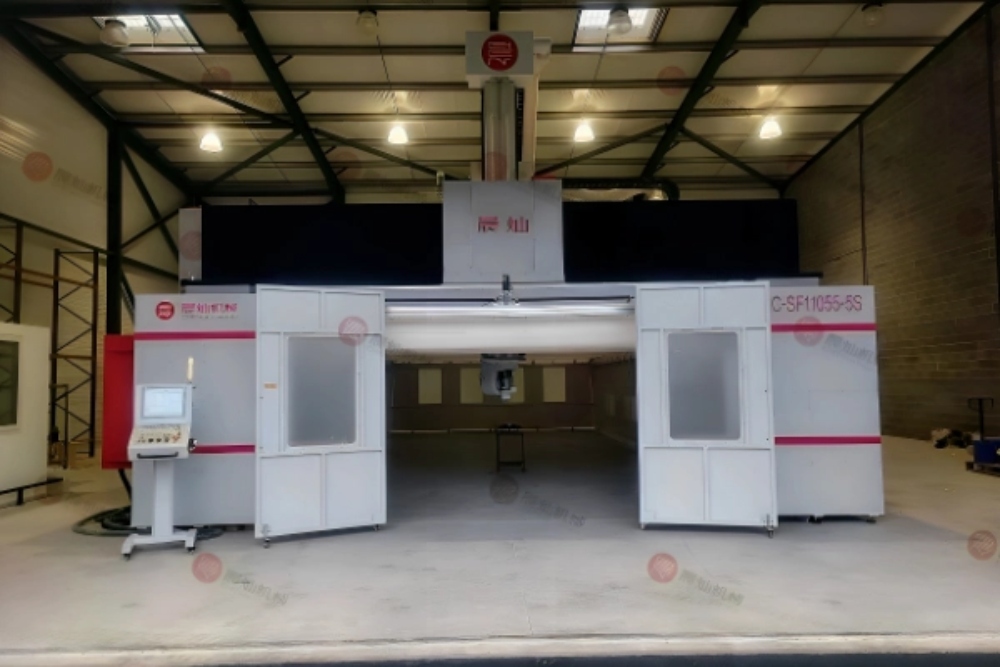
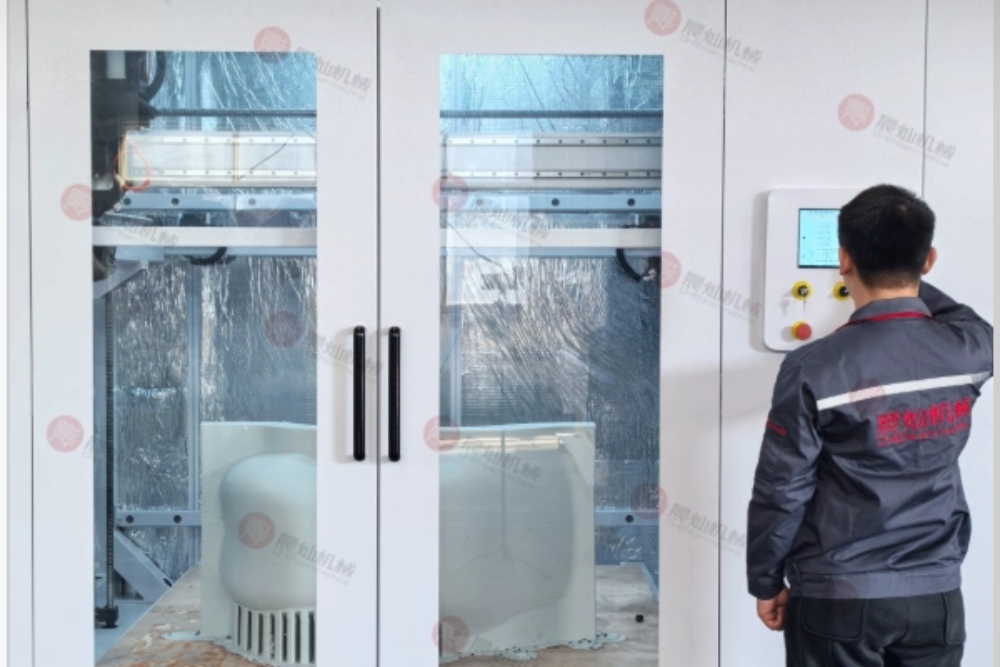
Many pattern and mold factories do not need the biggest 5 axis machine on the market. What they need is a machine that can remove material efficiently, keep surface quality stable, reduce hand finishing, and stay within a realistic investment range. That is why the real buying question is not simply about spindle power or machine size. It is about which 5 axis CNC router can support daily mold work with a better balance of speed, accuracy, footprint, and long term return.
For medium-size mold shops, automotive model suppliers, sanitary ware mold makers, and composite pattern workshops, this balance matters more than marketing language. A machine that looks impressive on paper but creates rework, takes too much floor space, or stretches budget too far can quickly become a burden instead of a production asset.

Why Do Mold and Pattern Factories Need a Balanced 5 Axis CNC Router?
In real production, profit does not come from cutting speed alone. It usually comes from lower rework rates, smoother surfaces, shorter polishing time, and more reliable delivery schedules. A balanced 5 axis CNC router should match the material, part size, and process target instead of forcing every buyer into an oversized configuration.
Common factory pain points include:
– Foam and wood molds need high roughing efficiency, but the final surface still needs to stay smooth.
– Resin, epoxy, putty, and composite molds lose value when tool marks are too obvious.
– Automotive and sanitary ware molds often include curved surfaces that are slow and expensive to repair by hand.
– Marine plug molds and railway components require long, stable contours and repeatable accuracy.
– Many medium-size factories do not have enough space or budget for a very large gantry structure.
This is where a table move type 5 axis CNC router can become a practical choice. It gives real 5 axis capability while keeping machine layout and investment pressure under better control.
How Does Table Move Structure Help Control Cost?
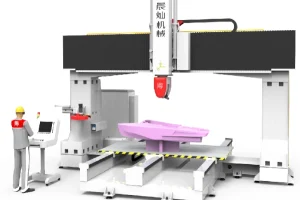
A table move type structure is often a smart middle path for medium-size and light-weight workpieces. The worktable moves actively while the spindle linkage handles multi-angle machining. Compared with larger gantry machines, this structure is often easier to install, easier to access, and easier to fit into an active workshop.
إن SF2513Q-5S Table Move Type 5 Axis CNC Router for Mold Making offers a standard stroke of X 2500 mm, Y 1300 mm, and Z 1200 mm, with a 5 axis working size of X 2500 mm, Y 1300 mm, and Z 800 mm. For many pattern and mold factories, this range already covers daily production without forcing them to pay for unnecessary travel length.
This creates several practical benefits:
– Smaller floor space requirement
– Lower machine purchase pressure
– Easier workshop layout planning
– Better operator access around the machine
– Better fit for mixed-batch and medium-volume orders
For buyers mainly processing bathroom molds, automotive mockups, resin models, lightweight composite molds, or medium-size patterns, this structure is often a more cost-effective solution than a larger machine platform.
What Makes Speed Useful Instead of Risky?
A fast machine is valuable only when it can hold the toolpath consistently. In mold manufacturing, a machine that moves quickly but leaves chatter, vibration marks, or unstable edges does not save cost. It simply transfers cost from machining to polishing and repair.
The SF2513Q-5S comes with a 15 kW spindle as standard, with higher power options available. Its spindle speed reaches 24,000 rpm, which supports smoother finishing on foam, wood, resin, and many composite materials. The HSK 63F tool holder also helps improve tool holding stability during high-speed machining.
The machine uses high precision ball screws on XYZ axes, AC servo drive, and an 8-position tool changer. Rapid speed reaches X/Y/Z 60/60/20 m/min, while working speed reaches X/Y/Z 40/40/10 m/min. For a mold shop, these numbers matter because they reduce non-cutting time and support more stable productivity across complex 3D toolpaths.
In practice, better speed control can bring:
– Less sanding on curved surfaces
– Fewer fixture changes
– Cleaner wall transitions
– Better repeatability across similar parts
– Faster delivery for urgent samples and trial pieces
Hand finishing will still exist in mold work, but a balanced machine turns hand work into a final refinement step instead of a rescue step.
Which Accuracy Details Should Buyers Check?
Accuracy claims should never be judged by one number alone. Buyers should check machine structure, stress relief process, guide rail layout, rotary head design, and long-cycle stability.
The SF2513Q-5S uses an internally reinforced compressive structural beam made from high yield strength alloy steel. After welding, the frame goes through high temperature tempering, aging, and five-sided machining. This matters because an unstable frame can gradually lose precision during long production cycles.
The machine also uses a triangular stepped guide rail structure. Three guide rails create a more stable support shape, while a counterweight balancing design helps manage forward tilting force on the Z axis. The guide rail system uses positioning pressure blocks to improve rigidity.
Its H type 5 axis head provides A axis ±120° and C axis ±360° movement. Axis positioning accuracy is listed at ±30”, with maximum working speed up to 120° per second. For factories cutting curved mold surfaces, cavity angles, and detailed pattern geometry, this rotary head capability is one of the machine’s most valuable features.
What Materials and Industries Fit This Machine Best?
A 5 axis CNC router should be selected by core materials before price discussions go too far. Buyers who ask for one machine for every possible application usually end up with the wrong expectation. The better approach is to define the main jobs first and then match the machine configuration accordingly.
The SF2513Q-5S is positioned for pattern and mold manufacturing with high requirements for precision and finish. Typical materials and applications include:
– Automotive work using wood, MDF, PVC, and foam
– Aerospace work using composite materials
– Marine work using epoxy and putty
– Railway work using FRC and GRC
– Pattern and mold work using resins
– Sanitary ware work using light alloys
This makes it suitable for buyers focused on molds, patterns, resin models, foam, wood, composites, and light alloy applications. For factories mainly processing heavy aluminum or more demanding metal cutting tasks, a different machine route may be more suitable.
How Does Supplier Strength Reduce Buying Risk?
For B2B buyers, purchasing a CNC router is not only about machine specifications. It also includes process advice, workpiece evaluation, trial cutting, delivery control, installation, training, spare parts support, and long-term technical service.
تشينكان has worked in CNC machining solutions since 1998. According to its company information, it has two production bases, large factory space, in-house structural component processing, and certified quality systems. For overseas buyers comparing risk, service depth, and delivery reliability, this matters.
A serious buyer should check whether the supplier can:
– Review drawings before quotation confirmation
– Offer sample testing or workpiece trial processing
– Explain structure and configuration logic clearly
– Support customization based on real workpieces
– Arrange installation guidance and training after shipment
– Respond with technical support during operation
The company’s published service information includes installation, maintenance training, operation training, CNC programming support, repair, and refurbish service. That kind of support can significantly lower buying risk for mold factories that need stable production after installation.
How Should Buyers Decide Whether SF2513Q-5S Is the Right Choice?
The best buying decision starts with real workpieces, not machine size alone. Buyers should review part length, width, height, weight, material, surface finish target, tolerance expectation, tool length, dust condition, and expected monthly output.
The SF2513Q-5S deserves serious review when most of the following are true:
– Most workpieces fit within X 2500 mm, Y 1300 mm, and Z 800 mm for 5 axis machining
– Main materials are foam, wood, resin, epoxy, putty, composites, or light alloys
– The factory wants to reduce hand finishing time
– Floor space is limited
– The buyer needs a more economical option than a large gantry machine
– Tool change, probe, dust collection, camera, or vacuum table options may be needed
– On-site installation and training are important after delivery
For many pattern and mold factories, the best 5 axis CNC router is not the biggest one. It is the one that gives enough working area, enough stiffness, enough speed, and a more realistic payback path.
Conclusion
For medium-size pattern and mold factories trying to balance speed, accuracy, and budget, the SF2513Q-5S table move type 5 axis CNC router is a practical option worth serious evaluation. Its compact structure, stable drive system, high-speed spindle setup, and mold-oriented application range make it especially suitable for buyers who want real 5 axis capability without moving into oversized investment territory.
Instead of chasing the largest machine, buyers should focus on fit. When the machine fits the workpiece, the workflow, and the budget, it creates value long after the quotation stage ends.
أسئلة متكررة
Q1: Which factories are best suited for this 5 axis CNC router?
A: It is best suited for pattern and mold factories processing medium-size, light-weight workpieces, including automotive mold shops, sanitary ware mold makers, marine plug mold suppliers, railway part mold producers, and composite pattern workshops.
Q2: Why choose a table move type 5 axis CNC router instead of a larger gantry machine?
A: A table move type machine is often more practical when workpieces are not extremely large. It can save floor space, reduce purchase pressure, and still provide real 5 axis machining for curved mold surfaces and precision 3D work.
Q3: What are the key technical highlights of SF2513Q-5S?
A: Key highlights include X 2500 mm, Y 1300 mm, Z 1200 mm stroke, 5 axis working size of X 2500 mm, Y 1300 mm, Z 800 mm, 15 kW spindle, 24,000 rpm spindle speed, HSK 63F tool holder, 8-position tool change, high precision ball screws, A axis ±120°, and C axis ±360°.