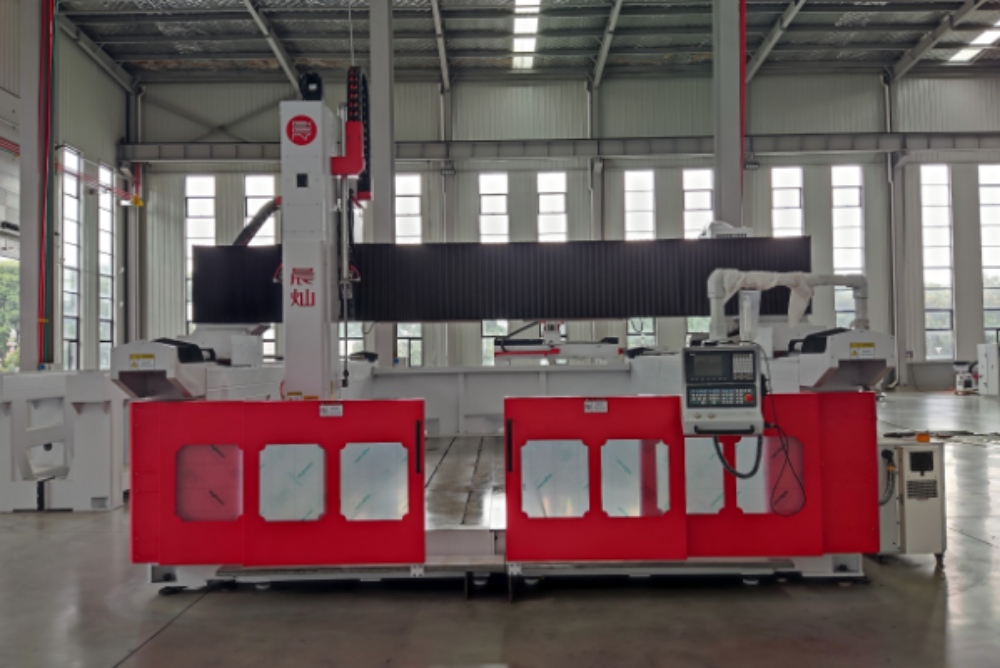
A mold CNC router should do more than move fast on paper. In real production, the right machine reduces sanding, correction work, re-clamping, alignment loss, and tool-change delays. For foam molds, wooden patterns, casting molds, sanitary ware tooling, sculpture models, and marine plugs, a better machine is the one that helps the factory finish parts with fewer surprises and less rework.
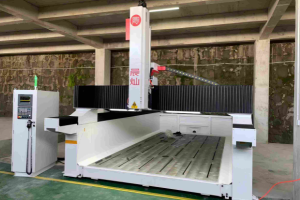
Why Do Mold Makers Lose Time After the Cutting Program Is Done?
A mold CNC router works in a real workshop, not in a clean catalog photo. Foam dust builds up, deep curved surfaces need stable tool contact, and large patterns may run for many hours. Buyers should judge a mold CNC router by the total production result, not by maximum travel speed alone.
This is where CHENcan kann fits the discussion. The company has long served mold, aerospace, marine, automotive, casting, sculpture, and composite-processing customers. For mold makers comparing equipment, the question is whether the mold CNC router reduces downstream polishing and correction work, not just whether it can move quickly in a sample video.
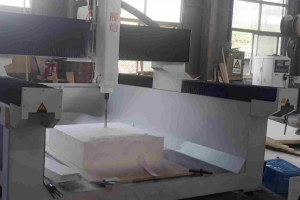
For mold makers comparing equipment, the BS1325B 4 * 8 Form CNC Router für Form und Skulptur Herstellung is a useful model to study because it is built around the daily pain points of mold and sculpture cutting: stable structure, accurate drive, smooth movement, high-speed spindle work, testing before shipment, and long-term support.
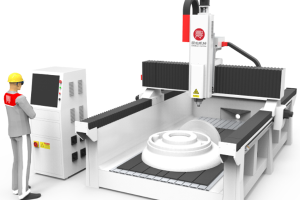
What Are the Top 7 CNC Router Features That Reduce Rework?
The seven features below are not marketing decoration. They are the things that affect edge quality, surface marks, repeatability, tool-change time, and operator workload. A buyer may not notice them during the first online search, but the production team will notice them after the first batch.
1. A Rigid Welded Frame That Stays Stable Over Long Jobs
Large foam blocks, resin boards, wood patterns, and composite blanks can run for hours. If the machine frame is weak, chatter and vibration show up on the workpiece even when the toolpath looks correct in software. Any mold CNC router used for large pattern work needs a rigid structural foundation first because that is the first defense against sanding and repair time.
The BS1325B uses a thick-walled square tube welded body, and key structural parts are stress-relieved through high-temperature tempering. For mold factories, that matters because the goal is not one clean sample. The goal is repeatable stability across many workdays.
2. Precision Ball Screws for Clean Positioning
A mold CNC router needs to return accurately after long moves, especially on curved surfaces and detailed sections. High-precision ball screws help the machine position more reliably and reduce the mismatch between roughing and finishing passes. When positioning is unstable, operators end up compensating by hand, and that is exactly the rework buyers want to avoid.
The BS1325B lists positioning accuracy of X/Y/Z 0.08/0.06/0.05 mm/m and repeatability of X/Y/Z 0.06/0.04/0.03 mm/m. For mold work, those numbers connect directly to edge quality, surface consistency, and second-side alignment.
3. Square Linear Rails for Smoother Motion
Long flowing curves are common in mold and sculpture work. Square linear rails help the machine move more smoothly during high-speed travel and directional changes, which reduces chatter on large contours. In practice, smoother movement often means less polishing on foam, resin, wood, or plug models after machining.
4. An ATC Spindle That Supports Both Roughing and Finishing
Mold work almost never uses one tool from start to finish. Shops usually need a roughing cutter, semi-finishing tool, finishing ball nose, and detail tool. An automatic tool change spindle reduces downtime between those steps and makes it easier to run a more complete process on one setup.
The BS1325B is equipped with a 7.5 kW ATC spindle, 20,000 rpm spindle speed, a BT40 taper, maximum tool diameter of 32 mm, and maximum tool weight of 5 kg. In daily use, a mold CNC router with ATC support is far easier to organize around roughing and finishing stages.
5. Stable Servo Motion Control
A strong spindle does not help much if motion control is inconsistent. Mold surfaces need continuous, controlled movement, especially when the toolpath changes direction frequently. AC servo drive systems help the router accelerate, decelerate, and hold contour quality more smoothly than weaker motion setups.
The BS1325B uses AC servo drive with bus-based communication. For buyers, the important takeaway is simple: cleaner control usually means fewer strange pauses, fewer signal issues, and more predictable surface quality.
6. Enough Z Travel and Working Envelope for Mold Blanks
Flat sheet cutting and mold cutting are not the same job. Mold makers often need extra Z travel for tall blocks, sculpture forms, and plug shapes. If the machine envelope is too small, the factory is forced into extra setups, awkward fixturing, or segmented machining that creates more alignment risk.
The BS1325B provides a 2500 x 1300 mm table size with X 2500 mm, Y 1300 mm, and Z 800 mm travel. Those numbers are important because they support taller workpieces and reduce the need to compromise on setup strategy.
7. Material Fit for Real Mold and Sculpture Jobs
The best mold CNC router is the one that fits the shop’s real material list and order mix. A machine that works well on foam, wood, resin, fiberglass, and composite-related materials is more useful to many mold shops than a machine that only looks impressive in a brochure.
The BS1325B is positioned for automotive, aerospace, marine, railway, casting pattern, sanitary ware, and sculpture engineering applications. Its standard iron table with T-slot suits many block and irregular blanks, while a vacuum table can be selected when flatter or lighter workpieces justify it.
For buyers who need broader production planning, CHENcan also provides industry solutions across mold, composite, panel, 3D part, and industrial machining applications. The important step is to send actual drawings, material density, desired finish, and daily output target before quoting.
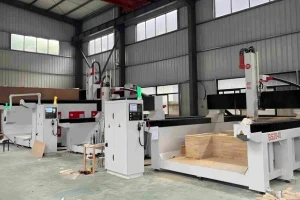
How Should B2B Buyers Judge a Mold CNC Router Before Purchase?
A mold CNC router is a production asset. It should be checked like one. Price matters, of course, but a low purchase price can disappear quickly if the machine leaves tool marks, needs constant adjustment, or cannot get technical support when production stops. A mold CNC router should be judged by how much finishing effort it removes after machining, not only by the speed written on a brochure.
Match Workpiece Size Before Comparing Price
The BS1325B has a 2500 x 1300 mm table size and a working area of X 2500 mm, Y 1300 mm, Z 800 mm. Its gross weight is listed at 2.7 tons. These numbers are useful because mold work often needs more Z travel than flat sheet cutting.
Before ordering, prepare a simple checklist:
- Maximum block size
- Common material density
- Required surface finish
- Roughing and finishing tool sizes
- Dust suction needs
- Workshop power and air supply
- Installation space and loading route
This sounds basic, but many buying mistakes start here.
Ask for Proofing, Not Only a Brochure
Specification sheets are useful, but proofing is more convincing. A sample test can show the actual surface quality, contour behavior, edge result, and finishing burden on the customer material. For mold makers handling sculpture or complex pattern work, proofing is often the fastest way to avoid a wrong machine choice.
Check Service Readiness Before the Machine Ships
A mold CNC router may run for years, so service support is worth reviewing during procurement, not after a fault happens. Buyers should check installation support, training, warranty, spare parts readiness, calibration, maintenance, remote diagnosis, and long-term technical service before signing off on the order.
For international buyers, a quick Kontakt with drawings and material details is more useful than asking for a general price only.
FAQ (häufig gestellte Fragen)
Q1: What CNC Router Feature Reduces Mold Rework the Most?
A: There is no single magic feature. Rework usually drops when structure stability, positioning accuracy, rail smoothness, spindle capability, and motion control all work together.
Q2: Is the BS1325B Suitable for Foam Mold Making?
A: Yes. It is well suited to foam and other common mold-related materials such as MDF, wood, plastic, epoxy, putty, fiberglass, FRC, and GRC.
Q3: Why Does Spindle Speed Matter in Mold Machining?
A: A suitable high-speed spindle helps the machine cut soft mold materials more cleanly and gives finishing tools a better chance to leave a smoother surface.
Q4: Should Buyers Choose a Vacuum Table or T-Slot Table?
A: It depends on the workpiece. T-slot clamping is often practical for block materials and irregular blanks, while vacuum holding can help with flatter and lighter workpieces.
Q5: What Should Be Confirmed Before Buying a Mold CNC Router?
A: Buyers should confirm workpiece size, material, Z-height needs, tool size, surface finish, dust control, electrical requirements, shipment method, installation support, warranty, and technical service.