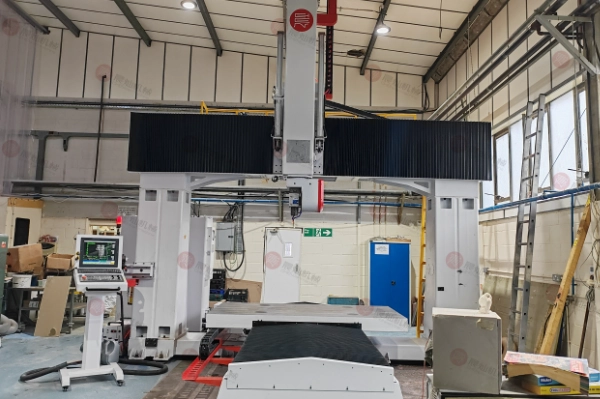
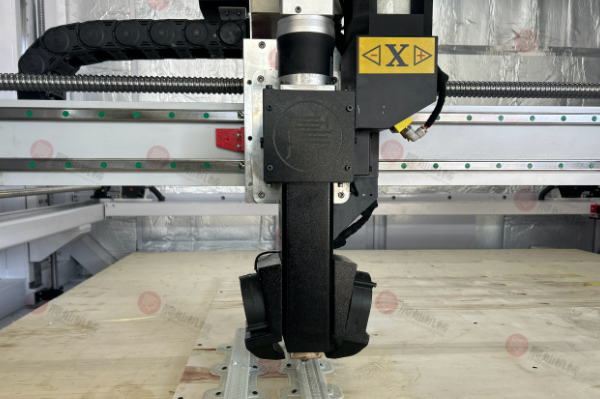
Manufacturing complex industrial mold components requires accurate, reliable, and versatile machinery. Automotive styling models, composite panel trims, and sand casting patterns have zero margin for error. Traditional three-axis machinery often fails when handling heavy undercut profiles, complex geometries, or massive scale requirements. A five-axis machine tool completely changes the game. This configuration allows simultaneous tool movements along the X, Y, and Z axes while rotating on the A and C axes, allowing industrial operators to reach any angle on a workpiece with a single setup. For factories looking to upgrade their production capabilities, investing in a high-speed five-axis woodworking system offers massive gains in operational efficiency and structural accuracy.
The Dynamics of Advanced Industrial Pattern Making
High-precision industrial pattern making serves as the absolute blueprint for successful heavy manufacturing. Whether milling dense foam substrates for concept cars or machining massive solid wood castings for industrial molds, the accuracy of your pattern directly determines the quality of the final poured metal or molded composite part.
Overcoming Geometric Limits with Simultaneous Multi-Axis Motion
Traditional three-axis routing creates massive production bottlenecks when dealing with deep pockets, draft angles, and negative slopes. Operators must constantly stop the machine, rotate the heavy workpiece manually, and recalibrate the system. This manual intervention wastes hours and introduces structural errors. Simultaneous five-axis motion solves this by maintaining continuous tool engagement at the exact angle needed, effortlessly navigating complex contours in a single operation.
Material Versatility in Modern Industrial Workshops
Industrial pattern workshops do not just process standard lumber. A standard production schedule might demand high-density EPS foam in the morning, solid wood composite panels in the afternoon, and lightweight engineering plastics the next day. A professional-grade CNC gantry center cuts through these varied materials with ease, maintaining stable material removal rates without burning wood fibers or melting composite edges.
Five Decisive Technical Benefits for Industrial Operations
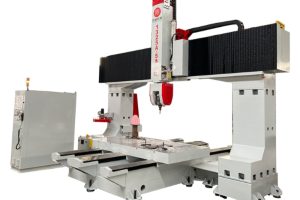
Choosing a dedicated large-format five-axis routing platform yields clear, measurable operational improvements. Based on decades of technical feedback from real shop floors, we have broken down the five most critical advantages that directly impact your production throughput and final component accuracy.
1. Superior Surface Quality and Complex Under-Cut Machining
One major headache in pattern making is sanding down rough tool marks left by traditional step-over milling methods. Standard three-axis routers rely on the tip of a ball-nose end mill, which varies in surface speed and creates a ribbed finish. A five-axis head tilts to let the tool cut with its side flank, achieving an incredibly smooth finish.
This multi-angle versatility allows operators to easily machine deep undercuts, negative draft angles, and intricate compound curves. Think about automotive interior console molds or curved engine blocks; those tight cavities are impossible to clean up properly without continuous rotational axis control. Eliminating manual post-processing saves immense time and keeps your operators focused on higher-value assembly work.
2. Massive Reduction in Workpiece Setup Time
In traditional milling setups, completing a highly complex casting pattern forces your operators to flip the heavy part four or five times to reach every face. Every single flip requires painstaking alignment checks with indicators, wasting hours of valuable spindle runtime.
With five axes of freedom, the spindle moves completely around the stationary pattern. You load the block onto the heavy-duty T-slot table once, execute the nesting program, and let the machine do the work. It drills side alignment holes, mills top profiles, and finishes side draft angles in a single continuous cycle. Your spindle keeps running instead of sitting idle during manual repositioning.
3. Maximum Tool Rigidity and Extended Spindle Life
When using a standard three-axis machine to reach deep down into a massive foam mold or wood casting pattern, you have no choice but to use an extra-long, thin tool extension. Long tools deflect easily under load, causing chatter marks, poor dimensional accuracy, and snapped bits.
A five-axis double-swing head tilts the entire spindle structure closer to the cutting face. This means you can use much shorter, rigid tools to clear out deep pockets. Shorter tools minimize vibration, allowing faster feed rates and cleaner cuts while protecting the internal bearings of your expensive spindle motor from premature wear.
4. Immense Work Envelope for True Large-Format Component Scaling
Automotive styling designs, marine plug molds, and wind turbine blade patterns require massive machine envelopes. A high-end gantry machine tool features a rigid, stress-relieved steel frame designed specifically to handle massive volumetric travels without sacrificing micron-level tracking precision.
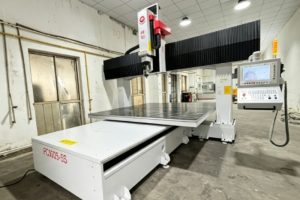
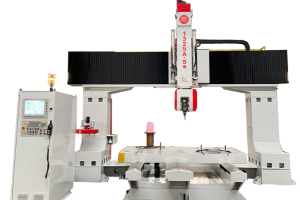
For instance, industrial operators looking for an optimal balance of heavy-duty capabilities and high-precision woodworking often select our specialized SF2030Q-5S 5-axis CNC Machine Center For Wood Working, which features a generous 3000 mm by 2000 mm working table to comfortably process massive casting patterns and structural automotive shapes in one continuous operation. Having that kind of space eliminates the need to cut patterns into separate small blocks and glue them together later, which always risks line misalignment.
5. Seamless Multi-Process Hybrid Capability
Modern industrial manufacturing demands more than just standard material removal. Advanced CNC router platforms easily handle multi-process operations, supporting everything from high-speed milling and saw cutting to high-precision drilling within the same automated workflow.
The machine can utilize a high-capacity automatic tool changer (ATC) system to switch from a large roughing mill to a fine engraving tool, or a dedicated saw blade, in seconds. This unified approach ensures that all features, whether they are deep milled cavities or precision-drilled locating pin holes, remain perfectly aligned to the exact same global coordinate reference system.
Engineering Excellence Built for the Global Manufacturing Stage
Industrial durability cannot be faked with thin sheet metal or cheap off-the-shelf electronics. At CHENcan kann, we have spent over 27 years refining our heavy industrial machinery manufacturing workflow. We operate two massive, modern production and research facilities in Qihe, Shandong, and Sihong, Jiangsu, spanning over 60,000 square meters of floor space.
Our operational foundation relies on strict industrial capabilities:
- We maintain a dedicated team of over 270 professionals, with more than 10% completely focused on active R&D.
- Our factories are fully ISO9001 and CE compliant, allowing us to meet strict international production standards.
- We invest over 10% of our annual revenue directly back into technical research each year.
- Our intellectual property catalog includes more than 140 global patents and utility rights.
We do not just assemble parts bought from third parties; every single heavy structural component of our machinery is manufactured, stress-relieved, and precision-milled completely in-house to guarantee total structural rigidity and controllable delivery schedules. Every machine tool that leaves our facility carries full compliance certifications, ensuring it stands up to the grueling, multi-shift production schedules of the global automotive, marine, and aerospace sectors. Learn more about our manufacturing standards on our our factory page.
The Real-World Impact of Premium Component Integration
To maintain stable accuracy over years of continuous use, we build our machines using heavy-walled square tubes that undergo complete stress-relief heat treatment and long-term aging processes. Our drive systems utilize high-precision ballscrews and absolute servo motor configurations to maintain flawless position tracking. We integrate advanced bus-based five-axis CNC control systems featuring real-time Tool Center Point Management (RTCP) functionality. This advanced logic automatically calculates and compensates for the exact position of the tool tip as the dual-rotational axis head articulates, preventing binding or gouging during complex, simultaneous five-axis movements.
Our systems maintain compatibility with elite industrial CAM software platforms, including Mastercam, PowerMill, and UG, allowing your programming office to output clean, reliable toolpaths straight to the workshop floor. Discover our full range of manufacturing answer sets on our Lösung directory.
Maximizing Your Investment with Proactive Support
Purchasing a large-scale five-axis gantry center is a long-term capital decision, and we treat it as a deep, ongoing technical partnership. We maintain an experienced team of over 40 technical sales professionals to help map out your specific production requirements long before a purchase order is ever signed. To learn more about our foundational mission, visit our about-us page.
Verified Testing and Transparent Logistics
We believe in physical verification over empty promises. While we do not supply unverified factory prototypes, we strongly encourage comprehensive material proofing. Your engineering team provides the exact CAD drawings of your most challenging pattern or mold component, and our technicians run live test cuts on our factory machines to verify surface finish metrics, cycle times, and dimensional tolerances before you pay a single dollar.
Once parameters are finalized and the order is locked via standard T/T or L/C terms, our logistics division coordinates safe containerized shipping, typically utilizing standard 40HQ ocean freight due to the massive weight of these industrial structures. Read our complete corporate timeline on our history archive.
Elite Field Service and Lifetime Technical Security
Every large-scale gantry routing platform includes comprehensive on-site installation, precision tuning, and detailed operator training conducted directly at your facility by our specialized field service engineers. We operate two dedicated machine tool maintenance service corporate divisions staffed by nearly 40 veteran service technicians who specialize in complex mechanical overhauls, relocation projects, and precision calibration for domestic and international brands.
Our customer service journey follows four clear phases:
- Pre-sales: Free technical consultation, custom processing solutions, and direct CAD proofing tests.
- Logistics: Full container shipping using secure 40HQ ocean or rail paths depending on your region.
- Deployment: Comprehensive on-site installation, component alignment, and systematic operator training.
- After-sales: A reliable 1 to 2-year warranty paired with 24/7 remote technical guidance for the lifetime of the machine.
Our workshops utilize top-tier diagnostic instrumentation, including Swedish laser calibrators, British precision turntables, and advanced laser interferometers, to measure and compensate for linear pitch errors down to the micron. We stand behind our machinery with a robust warranty alongside free, lifetime remote technical guidance available 24 hours a day, 7 days a week. See our detailed service packages on our Service page. For immediate machinery consultations, get in touch via our contact-us page.
FAQ (häufig gestellte Fragen)
Q1 What specific materials can be processed on a five-axis wood CNC router?
A: Beyond traditional timber, these industrial systems easily machine high-density polyurethane foam, EPS foam, carbon fiber composites, fiberglass composites, ABS, engineering plastics, wood substitutes, and soft non-ferrous metals like aluminum alloys and brass.
Q2 What is RTCP and why is it mandatory for industrial pattern making?
A: RTCP stands for Rotating Tool Center Point. It is a real-time CNC system function that automatically tracks and adjusts the coordinate system to match the exact point where the tool touches the material as the spindle tilts, preventing dimensional distortion during complex motion.
Q3 How does the factory handle machinery verification before shipping?
A: We provide custom trial processing services where clients send over their part drawings. Our technicians execute the program on our factory floor, producing a physical proof that verifies the machinery’s accuracy, speed, and overall finish quality.
Q4 What are the regular maintenance requirements for a large-format gantry router?
A: Basic up-keep involves clearing chips from guide rails, checking lubrication oil lines, draining compressed air water filters, and cleaning the spindle taper hole. Advanced professional checkups include adjusting axis clearances, testing belt tension, and running laser interferometer pitch compensations to restore absolute geometric alignment.
Q5 What payment and logistics options are standard for international orders?
A: Orders are generally placed via standard T/T or L/C payment systems. Due to the heavy industrial construction of these machine tools, which easily weigh several tons, shipments are packed securely into full 40HQ ocean freight containers or handled via sea-rail combined transport depending on your location.