
Selecting between FDM and SLS can seem risky if you lack knowledge about how the plastic’s internal makeup withstands stress. I have spoken with numerous factory managers who purchased a printer from an attractive catalog, yet discovered the components breaking easily during a simple assembly check. At CHENcan kann, we have dedicated 28 years to refining the demands of industrial production. From our expansive 60,000 square meter facilities in Shandong and Jiangsu, we have assisted more than 12,000 firms in striking the proper equilibrium between efficiency and durability. We do not merely put together devices; instead, we construct essential frameworks internally to ensure they endure actual workshop conditions. Whether you are shaping large molds or fabricating detailed designs, we understand that material failure renders the entire effort costly waste.
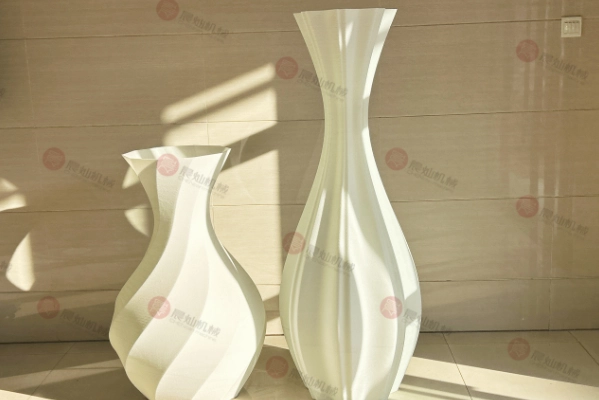
Why Does Material Strength Matter in Industrial 3D Printing?
In a professional workshop, discussing strength goes beyond checking if a component fractures upon falling. Rather, it involves assessing how it copes with the warmth from a vacuum forming operation or the ongoing tremors from a machining unit. If the layers fail to adhere seamlessly, the result resembles a fragile stack of cards.
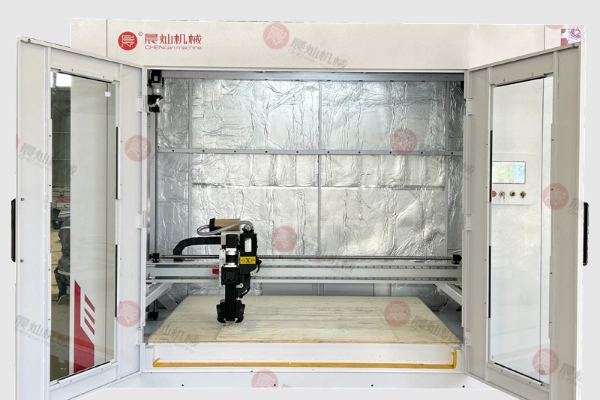
Functional Prototype Durability
A prototype must perform beyond mere visual appeal on a workbench, as it should endure the identical mechanical strains as the end product. When such a prototype collapses under testing due to excessive brittleness in the material, it can lead to flawed design decisions that incur significant expenses down the line. Therefore, selecting robust materials ensures reliable outcomes in development phases.
Long Term Structural Integrity
Materials evolve with exposure over time, and certain plastics become fragile under workshop lubricants or ultraviolet radiation. We prioritize industrial options that preserve their form and resilience even following prolonged use on a production floor. This approach guarantees sustained performance in demanding environments.
Impact Resistance Requirements
Unexpected incidents occur frequently, such as tools dropping or equipment colliding. A durable printed item ought to dissipate impact energy without disintegrating, which proves vital for jigs and fixtures managed daily by workers. Consequently, high resistance enhances operational safety and longevity.
How Do FDM Filaments Compare to SLS Powders?
These two technologies construct components in markedly distinct manners; envision FDM as depositing material in successive layers, whereas SLS resembles fusing a powder layer with laser precision. This variance explains why one yields a compact, uniform solidity, while the other risks delamination under improper stress directions.
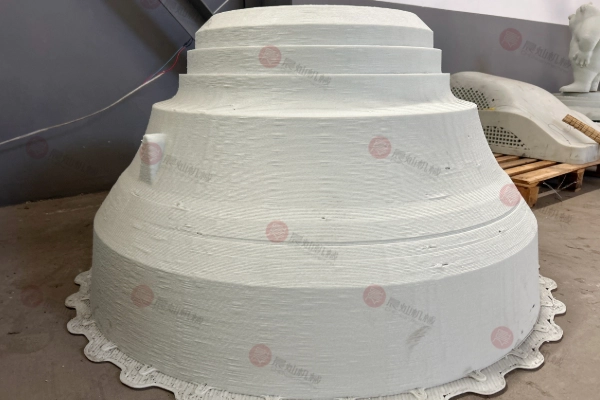
Anisotropic Layer Bonding
FDM frequently exhibits vulnerability perpendicular to the build direction, known as the Z-axis, since the material forms in linear paths that separate readily under tension. This issue poses challenges when components must withstand forces from various orientations. As a result, designers often adjust orientations to mitigate such weaknesses.
Isotropic Powder Fusion
SLS employs laser sintering of powder to generate a highly consistent internal framework, rendering parts nearly isotropic with comparable strength across all axes. This uniformity positions it as the preferred method for intricate, operational components. Hence, it supports applications requiring balanced mechanical properties.
Thermal Stability Variances
Filament-based prints typically yield at reduced temperatures relative to the engineered powders in SLS systems. In warm environments or near heat sources like motors, FDM items may deform or distort, whereas SLS maintains rigidity. This difference influences suitability for thermal-intensive settings.
Is Pellet 3D Printing the Superior Alternative for Molds?
In mold fabrication, conventional filaments prove inefficient and insufficiently robust, prompting us to create the DF2030 High Efficiency Pellet 3D Printing Equipment for Mold Making. Utilizing raw plastic pellets over slender filaments enhances bonding strength and enables the system to match rigorous production timelines.
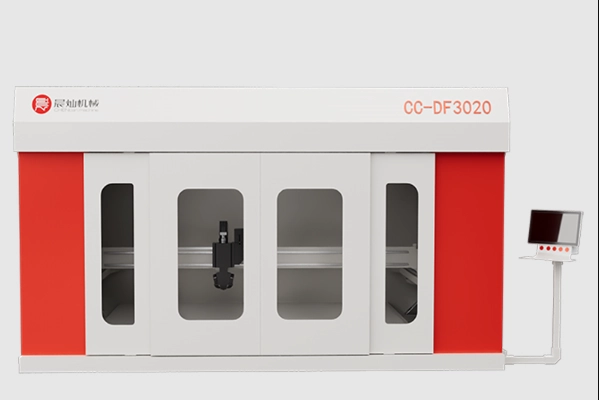
Cost Effective Raw Materials
Pellets cost considerably less than filaments, as they represent the basic feedstock employed in injection molding, thereby reducing operational expenses substantially. This benefit becomes evident when producing a substantial 50-kilogram mold. Moreover, it allows for economical scaling in high-volume scenarios.
High Speed Deposition Rates
The DF2030 operates swiftly without unnecessary delays, extruding material at elevated rates. For creating oversized molds in EPS or casting processes, waiting days for completion is impractical, but our pellet approach accomplishes it in mere hours. Thus, it optimizes workflow efficiency.
Robust DF2030 Equipment Performance
Built upon a sturdy CNC-inspired chassis, the DF2030 ensures stability and minimal vibration during operation. Drawing from our extensive background in metalworking, we achieve precise motion control alongside reliable material delivery. This integration supports consistent, high-quality results.
Which Machine Best Suits Your Pattern Making Needs?
For pattern and foundry tool production, achieving the right mix of accuracy and size is crucial. Our DF2016 Industrial 3D Printer Machines for Pattern Making deliver a smooth finish that requires minimal post-processing before sand mold integration.
Industrial Grade Precision
Pattern creation demands precision at the millimeter level, so we incorporate advanced drive mechanisms to maintain dimensional fidelity. A slight deviation in the pattern can spoil the eventual casting, and we avoid such pitfalls through rigorous engineering. This focus ensures dependable fabrication outcomes.
Versatile DF2016 Pattern Solutions
The DF2016 accommodates diverse industrial resins, from those suited to elevated temperatures to resilient options for repeated pours. It adapts seamlessly to the selected material, broadening its utility across applications. As such, it provides flexible solutions for varied production needs.
Efficient Large Scale Production
Featuring an ample build volume, the DF2016 enables single-piece printing of sizable patterns, eliminating the need for segmentation and assembly. This method conserves time while avoiding vulnerabilities at adhesive seams. Consequently, it streamlines large-scale manufacturing processes.
How to Evaluate Mechanical Properties for 2026 Standards?
By 2026, the sector shifts from superficial assessments to data-driven validations, requiring precise quantification of part capabilities prior to deployment. Increasingly, clients demand empirical test data, marking a welcome evolution in standards.
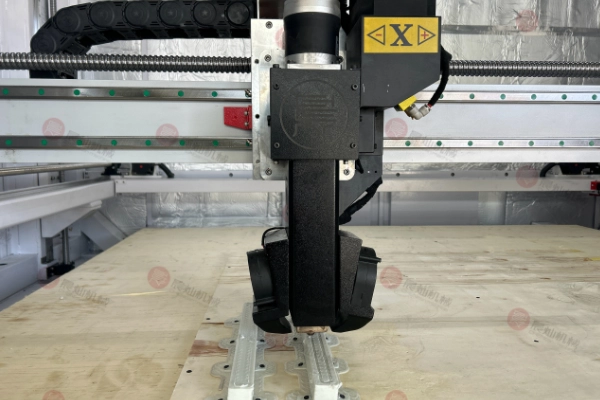
Tensile Strength Benchmarks
Tensile strength measures the force needed to cause failure, serving as a primary indicator of durability. Our pellet-extruded components frequently match the robustness of professional FDM while approaching SLS levels, offering reliable performance without powder handling complexities. This positions them well for industrial demands.
Heat Deflection Temperatures
Factories rarely maintain constant ambient conditions, with equipment generating substantial heat. We rigorously evaluate our printed assemblies to confirm they resist deformation under solar exposure or brief thermal surges. Such testing affirms their viability in operational settings.
Chemical Resistance Profiles
Jigs and similar tools inevitably encounter coolants, oils, and contaminants during use. Selecting a material-printer pairing that withstands these without degradation or expansion is essential for longevity. This compatibility ensures sustained functionality amid chemical exposures.
What Are the Core Advantages of CHENcan Technology?
Established in 1998 as a High-Tech Enterprise with over 130 patents, we sustain success by transparently detailing machine capabilities. Our emphasis remains on foundational elements like robust chassis, quality components, and responsive customer assistance.
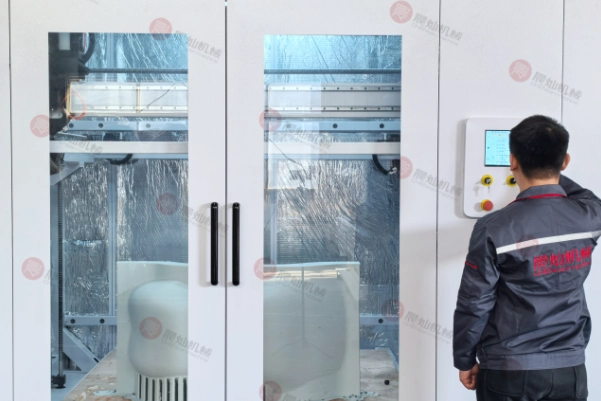
Advanced In House Manufacturing
In contrast to assemblers reliant on external suppliers, we fabricate our structural elements internally, granting complete oversight of machine integrity. This internal process allows precise quality management at every stage. It ultimately delivers superior reliability to end users.
Proven Decades of Expertise
Over 28 years, we have witnessed countless advancements in 3D printing and CNC technologies, concentrating on proven methodologies. With a dedicated 10% R&D team, we test rigorously in controlled settings to prevent field failures. This experience fortifies our offerings against real-world challenges.
Global Technical Support Network
Serving more than 70 nations across Europe, South America, and Southeast Asia, our support infrastructure ensures prompt access to spares and expertise. We uphold integrity as the cornerstone of our international presence. This commitment fosters enduring client relationships worldwide.
FAQ (häufig gestellte Fragen)
Q1: Can I use recycled pellets in the DF2030 machine?
A: You can, but we recommend mixing them with virgin material for the best strength. Using 100% regrind can sometimes be a bit unpredictable for high-precision molds.
Q2: How does the surface finish of pellet printing compare to FDM?
A: Pellet printing usually has thicker layers, so the “staircase” effect is more visible. However, it is much faster to sand down, and for large molds, the speed-to-strength trade-off is usually worth it.
Q3: Do CHENcan machines come with a warranty?
A: Yes, all our industrial 3D printers and CNC machines come with a standard warranty and full access to our professional after-sales service team.
Q4: Is the DF2016 easy for a beginner to use?
A: It is an industrial machine, but we designed the interface to be straightforward. We provide training to make sure your team can get it running without a steep learning curve.
Q5: Why is the frame construction so important for 3D printing?
A: If the frame shakes even a tiny bit, the layers won’t align. Our heavy, tempered steel frames stop that vibration, which is the secret to why our prints are so much stronger.


