
Automotive mold manufacturers face ongoing pressure to shorten development cycles while keeping dimensional accuracy and surface quality at the required level. As EV programs, lightweight structures, and aerodynamic body parts grow more complex, conventional machining workflows often create bottlenecks in mold production. Multiple setups, repeated manual alignment, and long polishing cycles can delay delivery and raise production costs.
A well-configured 5 axis CNC center solves these issues by combining multi-face machining, higher geometric accuracy, and better surface consistency in a single workflow. For automotive mold shops producing large dies, styling models, prototype tooling, and composite molds, the result is shorter lead time, lower rework risk, and more predictable throughput.
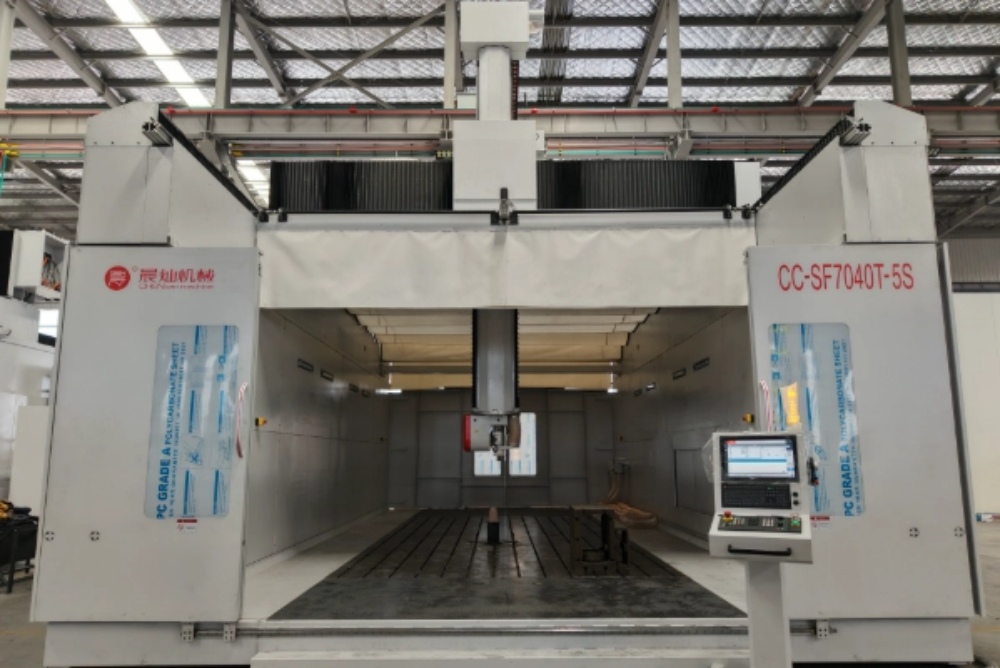
Why Lead Time Has Become a Core Competitive Factor in Automotive Mold Making
Vehicle development programs now move faster than ever. OEMs and suppliers must release new models, facelifts, and EV components on compressed schedules. This means mold makers must deliver accurate tooling in less time while still meeting increasingly strict surface and tolerance requirements.
The biggest delays usually come from three areas: repeated repositioning of large workpieces, manual correction after machining, and inconsistent accuracy over long cutting cycles. When these problems stack up, mold validation, trial fitting, and downstream production all slow down.
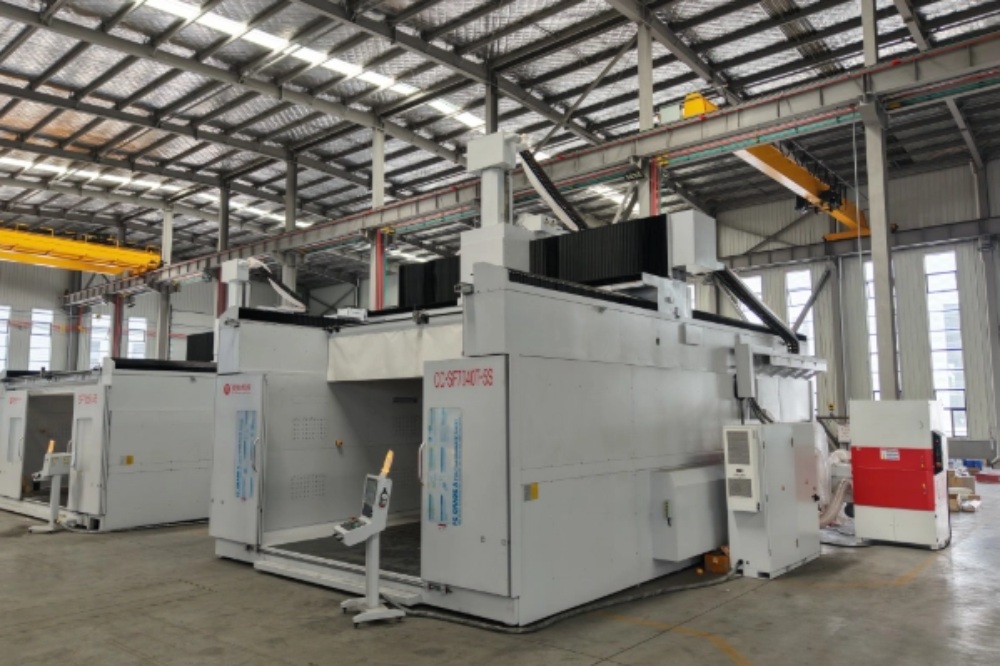
How 5 Axis Machining Shortens Automotive Mold Production Time
The main advantage of 5 axis machining is that it allows the cutting tool to reach complex surfaces from multiple angles in one setup. Instead of stopping to rotate the part or reset fixtures, the machine keeps the workpiece aligned and the tool path continuous. This reduces non-cutting time and improves consistency across the entire mold surface.
For automotive molds with deep cavities, flowing surfaces, and detailed contours, 5 axis machining also makes it easier to use shorter tools. Shorter tools are more rigid, which helps maintain accuracy, reduce vibration, and improve finishing quality at higher machining speeds.
Single Setup Machining Reduces Rework and Alignment Errors
Large molds are difficult to reposition accurately. Every manual realignment creates an opportunity for accumulated error, especially in multi-face machining. A 5 axis CNC center can process multiple sides of a mold in one clamping cycle. This reduces operator intervention and lowers the risk of mismatch between surfaces. As a result, shops can avoid extra correction steps and keep the entire workflow moving forward without repeated adjustments.
This is especially valuable in automotive die and mold production, where even small deviations can affect part fit, surface quality, or assembly performance.
How High Speed 5 Axis CNC Centers Improve Surface Finish
Lead time is not only determined by cutting speed. It is also heavily influenced by how much finishing work is required after machining. A stable high speed 5 axis CNC center can produce smoother surfaces directly on the machine. This reduces the need for manual polishing and secondary correction. For automotive mold applications, this matters because polishing often consumes a significant share of total project time. Better surface finish from the first machining pass helps shops move faster into inspection, fitting, and production validation.
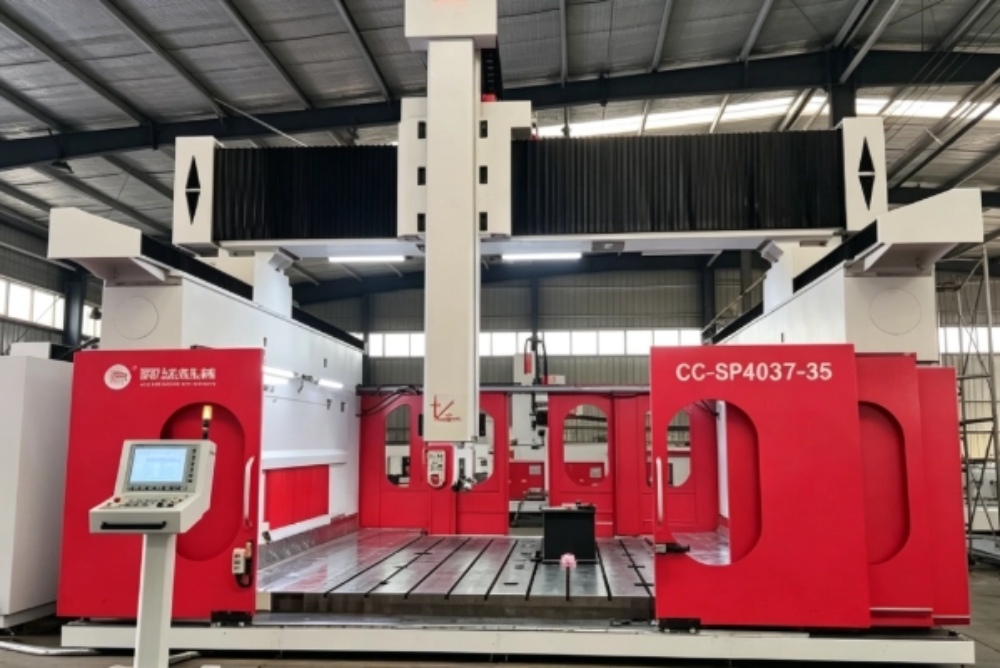
Where the SF4030T-5S Fits in Automotive Mold Applications
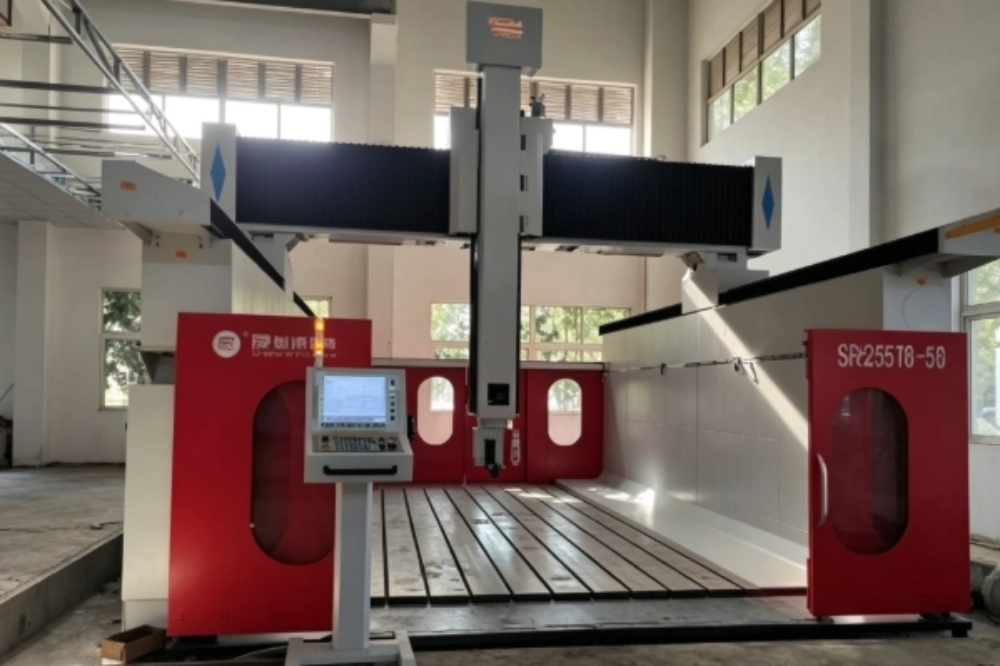
The SF4030T-5S High Speed 5 Axis Mould CNC Center is well suited for automotive mold finishing, prototype tooling, and complex curved surfaces that require both speed and stable accuracy. Its high-speed linkage capability supports smooth tool movement over demanding geometries. This helps reduce cycle time while maintaining surface integrity. For manufacturers processing interior molds, exterior panels, or lightweight composite tooling, this type of machine can improve both throughput and visual finish quality.
For manufacturers processing interior molds, exterior panels, or lightweight composite tooling, this type of machine can improve both throughput and visual finish quality.
Why High Accuracy Matters for Large Automotive Dies
When mold sizes increase, maintaining dimensional stability becomes harder. Long machining cycles, machine structure deflection, and thermal variation can all affect final accuracy. In these cases, a high accuracy 5 axis CNC center is essential for keeping the entire machining envelope stable over time.
The SF7035T-5S High Accuracy 5 Axis CNC Center is designed for large automotive dies and high-precision mold applications where consistency across long travel distances is critical. Advanced structural rigidity and compensation control help the machine maintain reliable positioning during extended production runs.
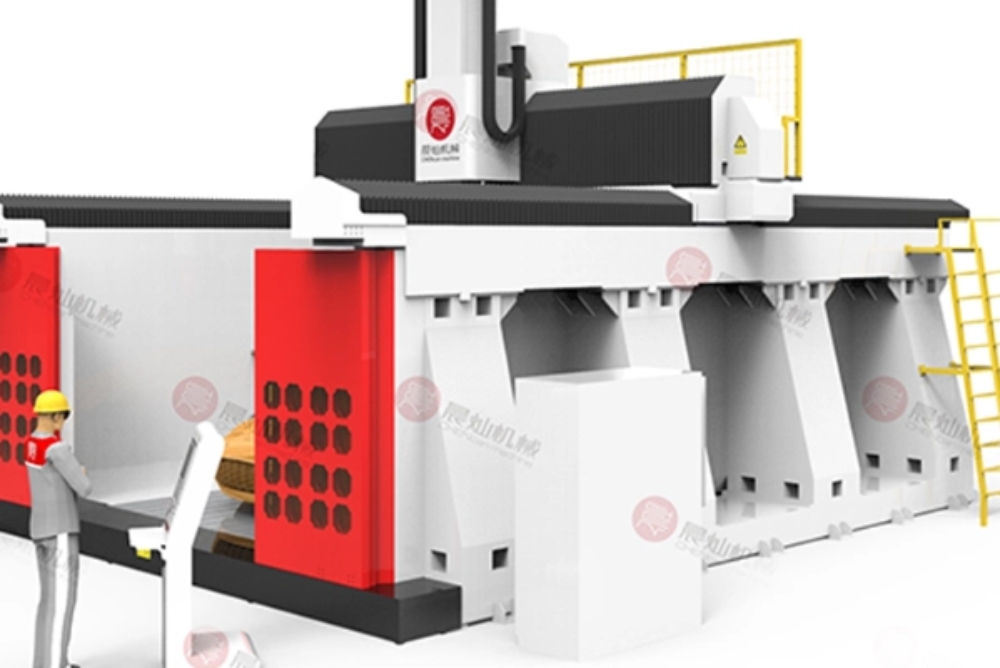
How 5 Axis Technology Solves Traditional Automotive Tooling Pain Points
Compared with traditional machining routes, advanced 5 axis processing helps mold manufacturers in several practical ways. It reduces setup changes and fixture adjustments. It improves the accuracy of complex surfaces and deep features. It lowers material waste by following more precise tool paths. It extends tool life by maintaining better cutting angles and chip load conditions. It decreases manual finishing time, which shortens the full mold delivery cycle. These benefits combine to support faster mold turnover without sacrificing quality.
Why CHENcan Can Support High Performance Automotive Mold Manufacturing
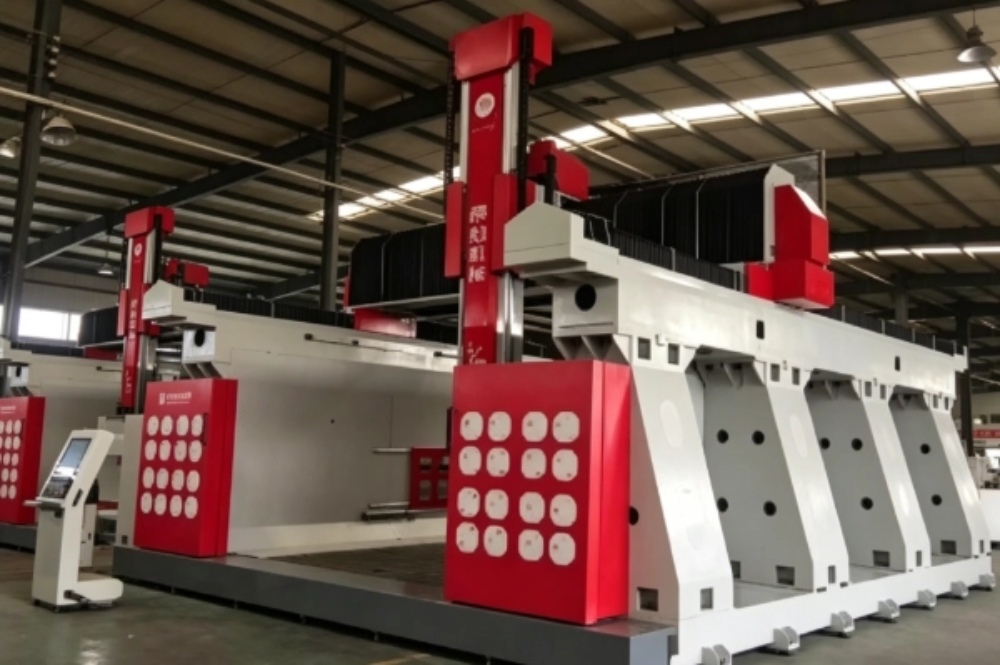
For buyers evaluating 5 axis equipment, machine capability is only part of the decision. Application support, structural manufacturing quality, and long-term service also matter. CHENcan has focused on CNC equipment development since 1998 and supports customers in automotive, composite, mold, and industrial manufacturing sectors across multiple countries.
Its manufacturing system covers R&D, structural processing, assembly, and quality control. This helps maintain delivery reliability and machine consistency. For automotive mold manufacturers that need a customized solution, this kind of engineering support can be as important as spindle speed or travel range.
Conclusion
If your automotive mold production is limited by setup time, hand polishing, or accuracy drift on large complex surfaces, a 5 axis CNC center can significantly improve efficiency. The right machine helps reduce lead time by simplifying setups, stabilizing high speed cutting, and producing better surfaces directly from the machining process. For complex automotive mold manufacturing, the real advantage of 5 axis technology is not just faster cutting. It is faster delivery with more consistent quality.
For complex automotive mold manufacturing, the real advantage of 5 axis technology is not just faster cutting. It is faster delivery with more consistent quality.
Preguntas frecuentes
Q1: How much lead time can 5 axis machining save in automotive mold production?
A: Savings depend on part size and process complexity, but many mold shops reduce total production time by cutting setup changes and minimizing manual polishing after machining.
Q2: Why is single setup machining important for automotive molds?
A: It reduces cumulative alignment error, improves consistency across multiple faces, and shortens the time spent repositioning heavy workpieces.
Q3: What is the difference between a high speed 5 axis center and a high accuracy 5 axis center?
A: High speed machines are optimized for faster finishing and smooth tool motion, while high accuracy machines are built to maintain stable precision over large work envelopes and long machining cycles.
Q4: Is 5 axis machining only useful for steel automotive molds?
A: No. It is also effective for aluminum tooling, composite molds, prototype materials, and other complex automotive applications that require multi-angle machining.
Q5: What should buyers evaluate besides machine specifications?
A: They should also assess application engineering support, machine structure quality, service responsiveness, and the supplier’s ability to match the machine to actual mold production needs.


