
Mold making looks simple on paper: load the model, cut the material, check the surface, and send the part to the next process. Real workshops know it is more complicated. A large wooden pattern can move slightly after roughing. Foam can tear at the edge. A casting mold can contain hidden steel nails. Late-stage rework can delay delivery by days, not hours. For B2B buyers, the real question is not only whether a machine can cut. It is whether the machine can keep cutting fast, stably, and accurately when the job becomes difficult.
That is where a high-speed CNC router becomes more than another machine on the shop floor. In mold production, it can solve problems linked to cycle time, surface quality, material changes, operator pressure, and repeat accuracy. Not every machine can do that well. Structure, spindle torque, drive system, testing standards, and after-sales support all matter.
Why Do Mold Shops Lose Time Before Cutting Even Starts
Before any cutting begins, many mold makers already lose time on machine selection, fixture planning, tool changes, and risk checks. This is especially true when one workshop handles wood patterns, MDF, PVC, foam, plastic, resin, putty, composite materials, and casting molds in the same week.
A general CNC router may be fine for flat panels, but mold making is different. Parts are thicker, shapes are more three-dimensional, tool paths are longer, and materials do not always behave the same from one batch to the next. One small setup mistake can later become a poor surface, incorrect allowance, or a corner that needs hand repair.
Mixed Materials Create Hidden Risk
The CHENcan product range covers CNC routers, high-speed mold CNC machines, five-axis CNC centers, industrial 3D printers, and panel cutting equipment. That matters because mold shops often need more than one cutting method. The same buyer may process casting patterns today and composite tooling tomorrow.
For the SF series, the knowledge base positions high-speed gantry machining centers mainly as three-axis systems, with four-axis customization available when required. It also separates material direction clearly: BS series for softer materials such as foam, SF series for wood and materials with certain hardness and precision requirements, and SM series for soft metals such as aluminum alloy and copper.
That classification helps buyers avoid a common mistake: selecting only by table size. Working area matters, but it does not show whether the machine can maintain accuracy under heavier cutting conditions.
Can High-Speed Cutting Reduce Delivery Pressure
Delivery pressure is one of the biggest mold-making problems. A casting supplier, automotive prototype shop, bathroom mold factory, or sculpture project does not only care about one good part. They care about a schedule that will not collapse after one unexpected problem.
High-speed cutting can help, but speed alone is not enough. If faster movement creates vibration, cutter marks, or tool breakage, the workshop only moves the problem from machining time to repair time. A useful high-speed CNC router must combine speed with rigidity, transmission accuracy, and stable servo control.
Faster Machining Must Still Protect Mold Geometry
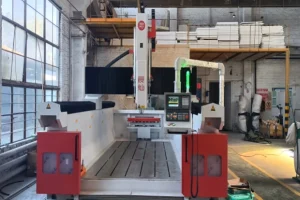
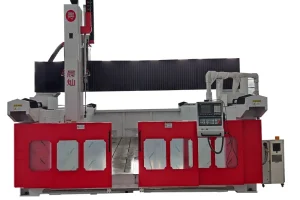
The SF2040 High Precision Wood Pattern CNC Router for Mold Making is designed for hard patterns, molds, and sculpture processing. Its product page lists high working speed as a core advantage intended to reduce processing time in casting mold production.
The SF2040 working area is X 4000 mm, Y 2000 mm, and Z 1000 mm. That suits large wooden patterns, model blocks, bathroom molds, and sculptural forms where extra setups would slow production and increase alignment risk.
The machine also lists maximum rapid speeds of 55 m/min on X and Y and 20 m/min on Z. Maximum working speed is listed as 30/30/15 m/min on X, Y, and Z. In practical terms, this means the machine is designed for long tool paths and larger molds, not only for light engraving work.
How Can a CNC Router Handle Hard Molds with Hidden Steel Nails
Hidden steel nails are a real problem in wood pattern and casting mold work. Recycled boards, assembled patterns, or repaired blocks may contain metal that is not easy to detect. When a weak spindle hits those materials, the result can be tool damage, spindle stalling, ruined surface quality, or machine downtime.
A mold shop does not always have time to inspect every block perfectly. That is why torque and mechanical strength become purchasing factors, not just technical specifications.
Strong Torque Reduces Unexpected Stalling
The SF2040 product page highlights powerful torque as one of its core selling points. It is described as capable of cutting hard molds that contain hidden steel nails without additional processing, reducing the stalling and equipment damage often seen on lighter traditional machines.
This does not mean material inspection should be ignored. Good operators still check the workpiece carefully. But a stronger spindle system gives the machine more tolerance for real-world shop conditions, where material is not always as clean as the purchase order suggests.
The SF2040 uses a powerful mechanical ATC spindle, a 7.5 kW spindle motor, BT40 spindle cone, 10000 rpm spindle speed, maximum tool diameter of 32 mm, and maximum tool weight of 5 kg. For buyers, BT40 is important because it supports heavier cutting than many light-duty router spindle setups.
Why Does Machine Rigidity Decide Mold Accuracy
A mold can look acceptable during visual inspection and still fail in later use. The surface may appear smooth, but the geometry may drift. On a large pattern, even a small curve error can affect casting quality. Mold making exposes weak structure very quickly.
Rigidity affects vibration, tool marks, repeatability, finishing quality, and machine life. It also affects how much manual polishing a team must do after machining. That final handwork is expensive because it depends on skilled labor and is difficult to schedule.
Stable Structure Cuts Rework
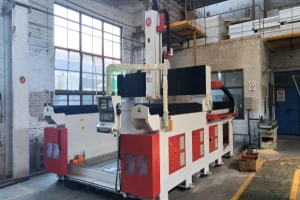
The SF2040 product page states that its highly rigid structure and precision transmission system help maintain long-term machining stability, protect mold accuracy, and reduce rework risk. The XYZ axes use high-precision ball screws, and all XYZ axes are equipped with square rails to suppress vibration during high-speed movement.
The product details also mention high-temperature tempering for key mechanical parts. That is significant because heat treatment helps reduce internal stress in major components and supports long-term dimensional stability. In a busy workshop, that matters far more after years of production than during an initial showroom test.
CHENcan’s knowledge base also states that mechanical structural parts are processed in-house, with stable quality and controllable delivery time. It lists production and testing assets such as pentahedron gantry machining centers, precision milling equipment, a tempering and aging furnace, a coordinate measuring machine, laser calibrator, laser interferometer, ballbar, and RTCP calibrator. That gives buyers a stronger reason to trust machine geometry before shipment, not only after installation.
What Surface Quality Problems Can Be Reduced
Many mold buyers focus on dimensional accuracy first, but surface quality often decides how much time is lost after machining. Poor surfaces mean sanding, filling, coating correction, or even recutting. On large molds, that becomes expensive quickly.
Common surface problems include chatter marks, step marks, edge tearing, inconsistent tool lines, and rough transitions between roughing and finishing areas. These issues usually come from vibration, weak guideways, poor feed strategy, insufficient cooling, or unstable tool holding.
Smooth Motion Helps Finishing Work
The SF2040 uses square rails for guiding performance and a bus-based AC servo drive system. The product page notes that this layout improves resistance to signal interference and makes maintenance easier.
That may sound like a control-cabinet detail, but it matters in high-speed 3D machining. The machine must respond cleanly across long curved paths. If the motion is not smooth, the final mold surface will show it.
Maintenance also affects surface quality. The product page recommends daily table cleaning, regular checks on guide rails and transmission systems, spindle and collet inspection, lubrication checks, temperature control, and water chiller use to protect spindle and tool life. Basic maintenance prevents expensive mold problems.
How Does One Machine Help More Industries
Mold making no longer belongs to one narrow industry. A supplier may serve automotive, aerospace, marine, railway, casting patterns, sanitary ware, sculpture engineering, and composite applications. The knowledge base also lists foundry wooden molds, lost-foam casting molds, composite molds, sand molds, boat plug molds, deck molds, hull molds, fiberglass mold trimming, rail-transit parts, bathroom molds, and real-estate models.
A machine that handles only one narrow task can still be useful. But for export buyers and project-based factories, flexibility often matters more. Orders change, materials change, and the machine must stay productive across more than one application.
Suitable Applications Are Wider Than Wood Patterns
The high-precision wood pattern CNC router is listed for automotive materials such as wood, MDF, PVC, foam, and plastic, as well as aerospace composite materials, marine epoxy and putty, railway FRC and GRC, casting patterns and molds, fiberglass, sand-related mold work, sanitary ware, and sculpture engineering.
That makes the machine useful for buyers who do not want equipment sitting idle between mold projects. A pattern shop may start with casting molds, then expand into bathroom molds, large sculpture forms, or foam machining. Wider material capability gives the factory more ways to keep the machine profitable.
What Should Buyers Check Before Placing an Order
A B2B buyer should not judge a mold CNC router by price alone. The better question is where the wrong machine will lose money: through downtime, rework, operator training burden, weak support, or poor spare-parts planning.
A simple checklist helps:
- Is the working area large enough for the real mold size, including clamping space?
- Is the spindle strong enough for hard pattern cutting?
- Does the machine structure support long tool paths without vibration?
- Are the guide rails, servo drive, and ball screws suitable for stable mold work?
- Is the machine tested before shipment?
- Can the supplier provide installation, training, programming help, repair, and maintenance support?
- Is the machine built by a factory that also controls key mechanical parts?
Support After Delivery Is Part of the Machine Value
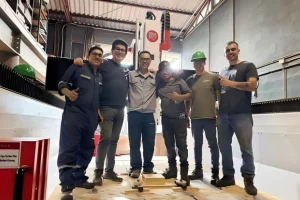
The CHENcan service page states that support covers installation, maintenance training, operation training, CNC programming, repair, and refurbishing. It also notes that engineers are available online around the clock and that the service team can assist with installation, maintenance, training, operation, and CNC programming.
For overseas buyers, this part is not optional. A mold machine is not a simple plug-in tool. It requires training, process discussion, toolpath adjustment, and sometimes fine correction after production begins. The service process also includes request confirmation, technical confirmation, product planning, quotation, and discussion before order confirmation.
A final useful detail is that the SF2040 product page says each machine goes through a 24 to 48 hour continuous motion test before delivery. It also lists an 18-month warranty and lifetime technical support. For a procurement manager, that reduces risk in a way a lower purchase price often cannot.
Preguntas frecuentes
Q1: What mold-making problems can a high-speed CNC router solve? A: It can reduce long machining time, unstable surface quality, repeated setup, hidden material risk, manual repair, and delivery pressure. For large wood patterns or casting molds, stable high-speed cutting can shorten the full production cycle.
Q2: Is the SF2040 only for wood pattern cutting? A: No. It is designed for wood pattern and mold work, but it can also process MDF, PVC, foam, plastic, epoxy, putty, composite materials, fiberglass, sand-related mold work, sanitary ware molds, and sculpture engineering parts.
Q3: Why is BT40 important for mold CNC machining? A: BT40 supports heavier cutting than many light router spindle setups. For hard molds, larger tools, and longer roughing paths, a stronger spindle cone helps improve cutting stability and reduce risk during demanding jobs.
Q4: How does machine rigidity reduce rework? A: A rigid machine suppresses vibration, keeps the tool path stable, and protects mold geometry during long cutting cycles. That helps reduce chatter marks, poor fitting, finishing errors, and late-stage hand correction.
Q5: What should be sent before asking for a quotation? A: Send the mold size, material type, 3D model if available, required accuracy, current production time, power-supply condition, and any known problems such as hidden nails, heavy roughing, dust, or surface-finishing issues.


