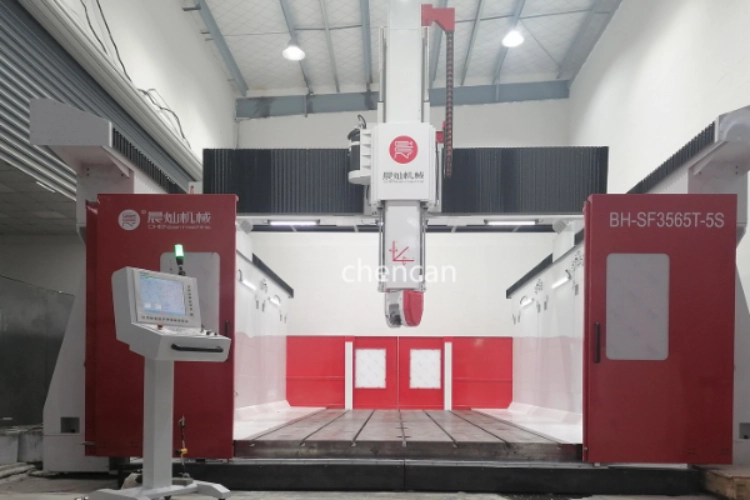
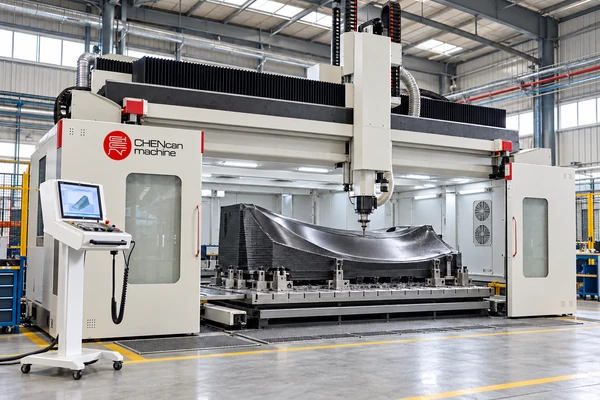
A vibration alert appears while a large CNC machine is roughing resin. The reference reading came from foam machining with a different tool. Has the spindle changed, or has the cutting process changed? A useful predictive maintenance data baseline records enough context to distinguish those possibilities before a maintenance decision is made.
Start with a machine in an assessed, documented condition, select repeatable operating states, and collect comparable measurements. Record sensor setup, acquisition settings, and job context, then connect alerts to inspection findings. This establishes condition monitoring as a foundation for predictive maintenance. Detecting a deviation alone does not establish its cause or predict remaining service life.
Choose a Failure Mode and a Maintenance Decision
Begin with a recurring failure or costly interruption, such as unplanned spindle stoppage. Review work orders, alarms, lubrication records, and operator observations to identify possible warning signs. Select measurements that address the suspected failure mode; vibration, temperature, current, or lubricant condition may each answer different questions. A reliability or service specialist should confirm the measurement plan.
Define what an earlier warning would allow the team to do: inspect a component, arrange a planned stop, or obtain a spare. An axis positioning problem needs different evidence from a spindle-bearing concern. Assess warning lead time, missed faults, false alerts, and the work needed to investigate each event. Refine an unhelpful monitoring rule without disabling machine protection or ignoring an unresolved fault.
Record the machine you actually own
Record the machine ID, serial number, controller and software versions, spindle, drives, axis configuration, and relevant auxiliaries as fitted today. Link the current parameter backup, service history, and known accuracy concerns. Before learning a normal reference, investigate active defects and document the assessed condition; otherwise an existing fault can become part of the baseline.
Assign each measuring point an ID and retain a photograph showing location and direction. Version the baseline after a spindle replacement, alignment, sensor change, or other intervention that affects the signal. Preserve the earlier data and maintenance event rather than deleting the old trend. CHENcan publishes installation, maintenance, repair, and refurbishment information; confirm the actual inspection and data-support scope for your machine.
Define Repeatable Operating States and Data Fields
Use defined states such as after the prescribed warm-up, at an approved no-load spindle speed, and during a representative cutting operation. Record actual speed and load rather than relying only on commanded values. On large gantry or five-axis machines, include axis position and head orientation where they affect structural response. Keep separate comparison groups for materially different states.
For every record, capture machine and point IDs, timestamp with time zone, operating-state ID, sensor ID, metric, value, and units. Add actual speed, relevant load, tool and holder, material, program revision, warm-up duration, ambient conditions, and recent maintenance. Use consistent names and synchronized clocks when combining sources. Flag missing, stale, or invalid values instead of replacing them with zero.
Keep Sensor Mounting and Acquisition Settings Consistent
Mark the sensor location, direction, mounting method, and surface condition. A reading on a thin guard is not equivalent to one on a rigid housing. Record the sensor calibration status and any adapter or mounting change. For vibration, also retain sample rate, acquisition duration, frequency range, filtering, and metric definition, such as RMS or peak. Select these settings for the target fault; one logging rate is not suitable for every signal.
Collect repeated readings under each reference state and check repeatability before defining alert bands. Save raw waveforms or spectra when needed for diagnosis, alongside summary trends. For temperature, record the measurement method, elapsed run time, cooling state, and ambient temperature. A repeated change is evidence for investigation, not proof of a particular failed component.
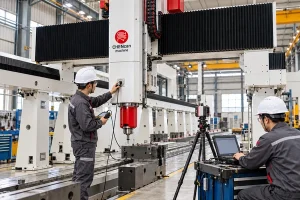
Put part quality beside machine condition
Condition signals and part quality provide complementary evidence. A low vibration reading does not rule out thermal drift, fixture movement, compensation errors, or geometry changes. Link inspection results to the relevant job, datum, machine state, and measurement method. Retain calibration records, alarms, and completed work orders so the team can trace a change to its operating context.
Choose inspection intervals according to the failure risk and manufacturer requirements. A short reference cycle may be repeated frequently, while qualified personnel perform geometry or positioning checks at planned intervals or after defined events. CHENcan describes precision measurement equipment in its service information, but the instrument, procedure, and acceptance limits must be agreed for the actual machine and production requirement.
Define Baseline Bands and the Response to an Alert
For each comparison group, summarize repeated measurements with a typical value and a measure of spread, and inspect the trend for outliers or drift. Have the responsible specialist approve provisional warning rules and the required response. State who checks data quality, who evaluates the condition, and who authorizes continued operation or a controlled stop. An urgent symptom or machine protection alarm takes precedence over a routine reference test.
Do not copy a limit from another spindle simply because the units match. Mounting, bandwidth, speed, load, machine structure, and failure consequences differ. Review baseline bands against assessed machine condition, relevant manufacturer guidance, and investigation results. Track false alerts and faults without warning; adjust the monitoring method with version control rather than continually widening limits to accept deterioration.
Use the repair to test the signal
After an alert, record the inspection finding, affected component, action taken, and release checks in the work order. Following repair, repeat comparable reference conditions and document any unavoidable differences. Compare both the signal and the machine or part result. A lower reading under a lighter load does not demonstrate that the original cause was corrected.
If the signal remains unchanged, investigate whether mounting, process variation, or another component explains it. Keep outcomes labeled as confirmed, unconfirmed, or unrelated where appropriate. These records support validation of future predictive models. A reliable estimate of failure probability or remaining life requires additional evidence and validation beyond a baseline trend.
Prepare a Focused Pilot and Evidence Pack
Start with one machine and one defined decision. Give the supplier or service team the asset record, target failure mode, measurement-point map, data dictionary, representative operating states, recent trends, and quality evidence. Agree collection intervals, storage, access permissions, retention, and review ownership. Use approved controller interfaces and change-control procedures so data collection does not interfere with machine operation.
Discuss equipment and service requirements with CHENcan using that evidence pack. Confirm whether the project needs external sensors, controller data access, inspection support, or a separate monitoring platform; general CNC service information does not establish an included predictive-maintenance system. A useful pilot deliverable is a repeatable baseline, documented alert workflow, and review of actual outcomes before expanding coverage.
Frequently Asked Questions
How long should a predictive maintenance baseline take?
There is no universal number of days. Collect enough valid repeats to characterize the selected operating states and their normal variability, after assessing machine condition. Add coverage for relevant changes in load, temperature, or duty cycle. Treat early limits as provisional and review them as evidence accumulates; waiting for a complete baseline must not delay action on an existing fault.
Are controller alarms enough for predictive maintenance?
Not by themselves. Controller alarms, load, speed, and temperature can provide useful context, but the available signals and logging rates may not detect the target failure mode. Combine appropriate measurements with operating-state records and inspection findings. An alarm history supports investigation; it does not automatically provide a validated failure forecast.
Does predictive maintenance replace scheduled work?
No. Continue manufacturer-required maintenance, safety inspections, lubrication, and other applicable tasks. Condition data can support changes to selected maintenance activities only through an approved, evidence-based process. Monitoring alerts do not replace protective functions or the need to investigate abnormal machine behavior.