
What Is a Machine Cell Changeover?
A machine changeover is the set of steps by which a working cell that has run one material is returned to a checked state before a fixture and material of another kind are put into it.
Where Dust Hides
Cutting composite materials produces fine dust that settles inside the enclosure and is carried by airflow behind guards and into duct joints. Carbon fibre dust is electrically conductive and can harm electrical contacts and drives if it accumulates.
Dust settles on the table, fixture pads, local extraction hoods and the inner side of the enclosure panels.
Dust adheres to the duct walls; the joints and flexible sections are the usual places for deposits to grow.
Release Checks and Limits
A cleaning route that follows the path of the previous material can be checked point by point and recorded with signatures. A release point is a named place on the machine where an observation of cleanliness is made before the next material is admitted.
Inspect the seals of the local extraction hood and the flexible duct sections.
Remove dust from above the electrical cabinets with a vacuum cleaner that captures fine particles.
Wipe the table and the fixture pads with a material that does not leave fibres.
Cleaning the Old Fixture
Fixtures can carry residue in slots, feet, and contact faces, so the old fixture is taken out and cleaned outside the enclosure before a new one enters.
Do not use compressed air for cleaning inside the enclosure, since it lifts settled dust into the air and spreads it along the duct.
Tools and Holders
Fixtures, collets, holders, and probe tips can carry residue in slots and contact faces and are cleaned outside the enclosure.
Dry and Wet Systems
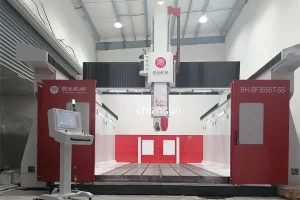
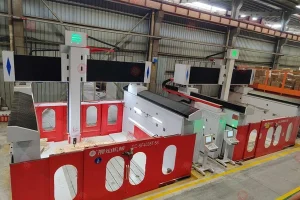
Compressed air used for cleaning can lift fine dust and spread it through the machine room instead of removing it. Coolant applied after dry composite work can wash hidden dry residue out of pockets and carry it across the working area. CHENcan lists enclosed five-axis machines and dust-management arrangements among its machine range.
Stop the cell and record the state of the previous material.
Check the cutters and holders and the probe tip.
Record the completion of each step in the changeover log with the operator’s name.
Vacuum the table and the local extraction hoods using a cleaner that captures fine particles.
Vacuum the inner side of the enclosure panels and the areas protected by guards.
Dry the cleaned surfaces before the new fixture is placed.
Wipe the table and fixture pads and replace the filters or inspection plates.
Wipe the local extraction hood and the flexible duct joints.
Set the new fixture and verify contact at the table pads.
Run a dry cycle before the first cut with the new material.
Check the electrical cabinets for dust ingress.
Check the condition of the enclosure seals and panel gaps.
Gather the steps completed and confirm there is no foreign material in the cell before operation resumes.
Two-Signature Release
Check that the enclosure and the table are free of residue from the previous material.
Check that the flexible ducts and joints are free of visible deposits.
Check that the enclosure seals are intact.
Check that the table is dry and no coolant or cleaning liquid remains.
Check that the changeover log is complete.
Check that the new fixture is seated and the contact faces are clean.
Check that no foreign material remains in the cell before operation resumes.
Questions Before Delivery
Before a cell is handed back after a changeover, the operator confirms that the cell is clean and that the material of the next batch enters a working cell that is free of residue from the previous material.
Check the seals of the local extraction hood and the flexible duct sections.
Vacuum the table, the fixture pads, and the inner side of the enclosure panels.
Wipe the contact faces that take the new fixture.
Common Changeover Failures
A seal that is not cleaned, a joint that is left unopened, or a panel that is not wiped can carry residue into the next material.
Compressed air used inside the enclosure can lift settled dust and redistribute it onto cleaned surfaces.
About the machine supplier
CHENcan supplies five-axis CNC machines, including enclosed configurations for composite and pattern work. The CHENcan contact channel carries machine drawings, material sequences, fixture lists, and extraction interface details, so the changeover route can be agreed against the quoted model rather than a general description.


