
Production lines in RV and cold chain vehicle manufacturing encounter ongoing demands. These demands include quicker delivery times, stricter tolerances, and superior insulation results, while manual cutting of sandwich panels often leads to delays. Panels move during handling, edges become uneven, dust spreads throughout the workspace, rework accumulates, and schedules fall behind. Such common issues reduce earnings and hinder steady expansion of production. Modern panel cutters address these challenges effectively by combining quick operation, exactness, firm grip, and neater performance in one unit.

Manufacturers in this field benefit greatly from suitable equipment over many years, which alters routine outcomes significantly. CHENcan emerges as a reliable collaborator that experts often suggest. The firm began operations in 1998 and has dedicated the past 28 years to useful advancements and steady excellence. CHENcan creates and produces essential parts internally, maintains ISO9001 and CE certifications, possesses over 140 patents, and supplies more than 12,000 businesses across over 70 nations. International branches in China, the United States, India, and Russia ensure prompt regional assistance.
Why Is Sandwich Panel Processing So Challenging in RV and Cold Chain Manufacturing?
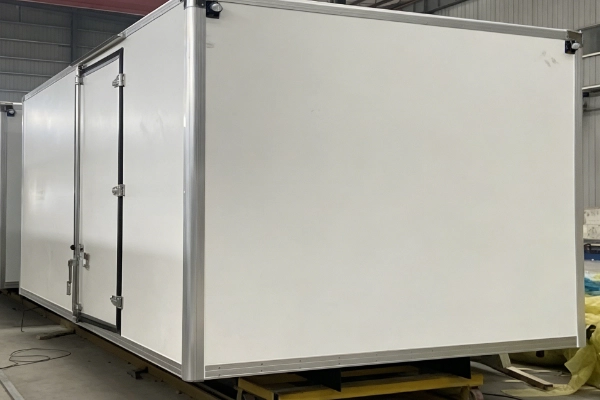
Sandwich panels provide the durability, low weight, and thermal protection needed for RV walls and cold chain truck bodies, yet their multi-layer design poses distinct obstacles during cutting. Foam or honeycomb cores rest between FRP, aluminum, or PVC outer layers, and errors can rapidly impact assembly fit, sealing integrity, and heat retention.
Thick and Layered Material Issues
Numerous panels range from 70 to 170 mm in thickness. Forceful advances or shaking lead to delamination, which separates layers and compromises the whole assembly, while manual devices frequently produce irregular borders that complicate sealed joining and diminish insulating capability.
Dust, Noise, and Health Risks
Processing foam centers and combined surfaces releases tiny particles that linger in the facility and cover machinery. Ongoing rapid tasks also create substantial sound levels, and without proper management, these factors result in worker concerns, reduced pace during shifts, and regular interruptions for clearing detectors or barriers.
Manual Cutting Inefficiencies and Errors
Portable techniques require several adjustments and rely strongly on worker skill. Uneven force and positioning cause discarded pieces, additional adjustment periods in vehicle building, and differing standards from panel to panel.
How Can Modern Panel Cutters Increase Cutting Speed and Throughput?
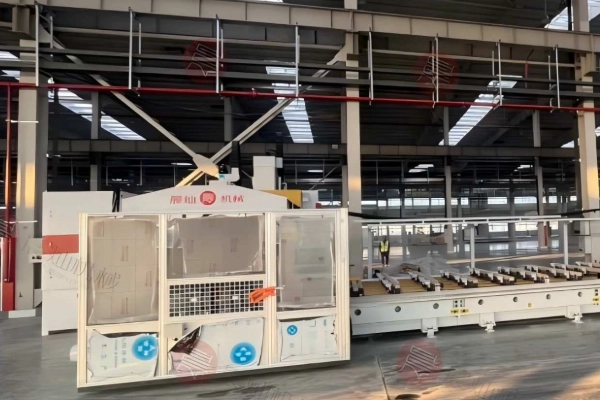
Sophisticated CNC panel cutters confront these pace restrictions directly, as high-capacity motors, expansive surfaces, and swift starts enable facilities to handle full-scale panels more rapidly, all while maintaining firmness and correctness.
High-Speed Transmission Systems
Rack-and-pinion setups on X and Y directions combine with ball screws on Z to offer fluid, speedy movement, which pairs with exact servo engines that react without delay and support fast travel rates up to 60 m/min in units built for intense workloads.
Oversized Work Tables for Large Panels
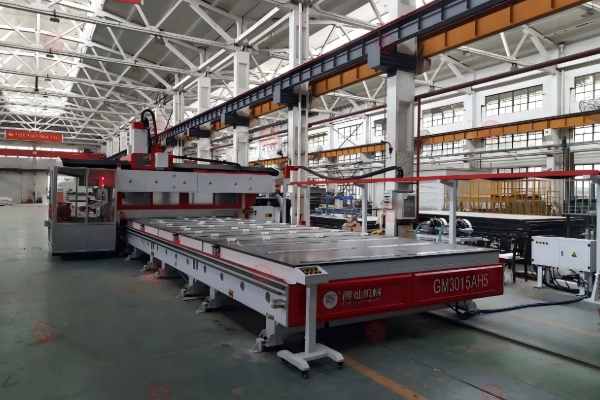
Surfaces extending to 3000 × 10000 mm or larger fit entire RV side sections and cold chain truck panels without division, so avoiding the necessity to divide or readjust components saves considerable duration and upholds ideal positioning over broad areas.
Rapid Acceleration and Feed Rates
Rates exceeding 5 m/s² permit abrupt beginnings and halts minus shaking, and operational feeds attain 30 to 35 m/min, which transforms extended hand-operated sequences into brief, productive sessions that elevate daily yields substantially.
What Role Does Vacuum Fixation Play in Preventing Delamination and Waste?
Shifting during cutting damages panels swiftly, but robust, dependable securing averts this issue and lowers costs by cutting down on discarded materials.
Strong Hollow Vacuum Adsorption
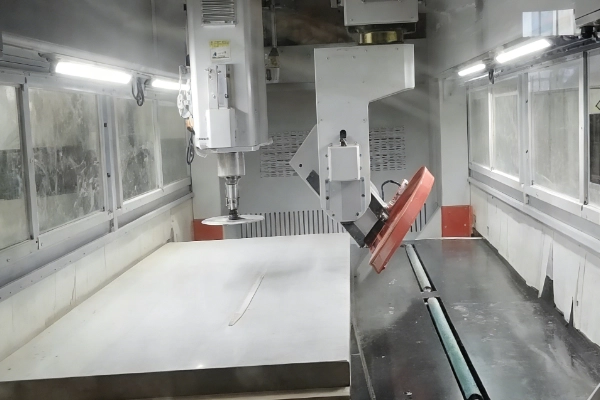
Several 5.5 kW vacuum units produce intense, uniform pull over hollow surfaces, which secures dense or slim panels firmly and halts any motion that might cause separation or size inaccuracies.
Direct Waste Channel Design
Waste falls immediately via the hollow surface into gathering areas underneath, so facilities devote much less effort to clearing or drawing in particles, and the processing zone remains unobstructed for reliable outcomes.
Reduced Rework and Material Scrap
Dependable securing, along with improved arrangement patterns, lessens excess remnants, and precise, smooth borders appear on initial attempts, which allows panels to join flawlessly in building and decreases waste markedly.
How Does Multi-Function Integration Reduce Setup Time and Transfers?
Shifting panels among various devices introduces positioning mistakes and downtime, whereas genuine multi-task cutters execute multiple steps in single securement to simplify the full procedure.
One-Clamping Multi-Process Capability
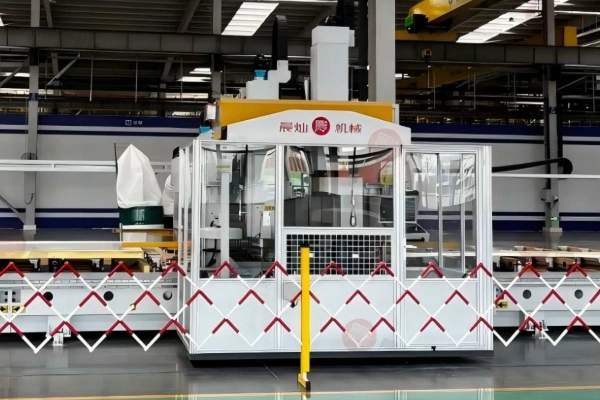
A lone holder enables slicing, boring, routing, slotting, and further actions minus readjustment, which locks in precision and shortens durations for grouped or personalized requests.
5-Axis Sawing for Complex Cuts
The Multi-functional 5 Axis Panel Cutting Machine features a 7.5 kW 550 mm blade that manages slanted and bent slices on panels reaching 170 mm thick, and this function matches the curved forms typical in RV layouts and particular cold chain structures.
Drilling, Milling, and Sawing in One Machine
Automated changer systems shift smoothly between rotors and blades, so a single attendant oversees the complete order, which releases trained personnel for more important duties as total capacity increases.
Can Enclosed Cabin Designs Improve Workshop Safety and Cleanliness?
Current facilities emphasize secure, quieter, and purer settings, and enclosed layouts confine dangers so groups focus on output rather than handling threats.

Sealed Processing Environment
Portable enclosures create an almost sealed area that holds particles and sound within, which keeps the main floor orderly even amid heavy slicing activities.
Noise and Dust Containment
Enclosure barriers reduce audio volumes notably, and built-in draw hoods plus elective pulse units seize bits directly from origins, which aids in fulfilling wellness and ecological standards.
Operator Health Protection
Managed particles and lessened sound safeguard enduring health, while CE-approved power setups, crisis halts, and evident guard elements provide solid protections across each period.
What Makes CHENcan Stand Out in Modern Panel Cutting Solutions?
Steady function arises from careful design and solid backing, as CHENcan constructs units with these sectors in view and supports them via years of knowledge.
Decades of Specialized Expertise
From 1998 onward, the enterprise has advanced limits in combined material handling, including initial creations such as China’s premier large-scale blade-routing hub for sandwich panels in 2016, which guarantees useful answers for actual output difficulties.
Tailored Machines for RV and Cold Chain Needs
The Composite Board Processing Center aims at fast level panel tasks for recreational vehicles, whereas the 5-axis unit shines in intricate cold chain demands, and both include vast bases, potent vacuum setups, and sturdy structures suited to panel dimensions and depths up to 170 mm.
Proven Reliability and Global Support
Internal production, strict evaluations, and durable builds yield extended usability, along with an 18-month guarantee, field setup and staff instruction, ongoing distant aid, and branches in four nations that sustain smooth operation wherever clients function.
Conclusion
Modern panel cutters resolve the main worries in RV and cold chain vehicle manufacturing, such as low output, material loss, uneven standards, particle dangers, and security threats, and these approaches assist facilities in generating more panels each period with reduced flaws and tidier areas. If such issues resonate, reach out via https://www.chencancnc.com/contact-us/ for an in-depth talk, as guidance toward swifter, more gainful output occurs daily for numerous producers.
FAQ
Q1: How thick can these machines handle sandwich panels?
A: They process panels reliably from 70 mm to 170 mm thick, using strong vacuum fixation and suitable tooling to avoid delamination and deliver clean results.
Q2: What speeds do the machines achieve for large panels?
A: Rapid traverse reaches up to 60 m/min on 3-axis models and 50 m/min on 5-axis versions, with working speeds of 30 to 35 m/min, cutting full panel cycles much shorter than manual methods.
Q3: How do these machines control dust and protect operators?
A: Hollow vacuum tables channel debris downward, while 5-axis models include mobile enclosed cabins that contain dust and noise. CE-compliant components and effective suction improve air quality and safety.


