Grain direction matters because wood strength, moisture movement, and cutting behavior are anisotropic, so the same CNC path can produce different accuracy and edge quality in different directions. A wooden foundry pattern must preserve geometry while it is machined, sealed, stored, handled, and repeatedly withdrawn from molding material. Wood grain makes that task directional. Cutting parallel to fibers behaves differently from cutting across end grain, and moisture movement across the grain is much greater than movement along it.
CNC accuracy cannot remove this material behavior. A machine can follow the programmed path precisely and still produce torn edges, raised grain, or a pattern that changes after leaving the table. Grain orientation, stock preparation, toolpath, allowance, and surface treatment need to be planned together.

Wood Moves Differently in Three Directions
Longitudinal movement along the grain is usually much smaller than radial or tangential movement across growth rings. A wide solid blank can cup or change width as humidity changes. Laminated pattern stock can reduce this tendency when strips are conditioned, arranged, and bonded consistently, but adhesive lines and grain changes then become part of the cutting process.
Condition the Blank Before Establishing Datums
The moisture state of the blank should be close to the workshop and expected service condition before precision machining. A cold or damp blank brought directly to the machine may change after surfacing. Store it with airflow and support, record moisture at several points, and inspect for twist, checking, loose knots, and weak glue lines. Measure moisture at several depths or faces rather than relying on one surface reading.
Large patterns benefit from rough machining followed by a rest period and a second datum check. Roughing releases internal stress and exposes more surface area. If the blank moves, the finishing setup can correct within the retained allowance rather than discover the movement after the final pass.
Grain Direction Changes the Cutting Edge’s Work
With-grain cutting can leave a clean surface until the tool approaches reversing grain or an edge where fibers lose support. Across-grain and end-grain cuts sever more fibers and may require different engagement. Climb and conventional cutting can produce different tearout at opposite sides of the same contour.
Protect Edges Where the Grain Runs Out
A cutter exiting an unsupported corner can lift a splinter beyond the programmed boundary. Leave sacrificial stock, use a controlled lead-out, alter cutting direction, or finish the edge in a later light pass. Small radii, thin ribs, lettering, and draft edges deserve special attention because damage there changes molding release and final casting geometry.
Tool sharpness affects both finish and force. A dull edge compresses and tears fibers, creates heat, and may polish rather than cut resinous areas. Tool-life records should link cutting distance or hours with surface inspection. Waiting for obvious noise or dimensional error allows damaged grain to reach a valuable pattern.
Program Draft and Parting Features as Functional Geometry
Foundry patterns need draft, fillets, parting references, machining allowance, and sometimes core-print geometry. These features are not decorative. Grain tearout on a draft face can resist withdrawal, while a damaged fillet changes sand compaction. CAM verification should highlight shallow draft and tight concave areas where tool reach or step-over may compromise the intended surface.
Ball-nose finishing can follow raster, contour, or hybrid paths. The best direction depends on surface curvature and grain. A toolpath that looks uniform in software may alternate between favorable and unfavorable fiber cutting. Test a representative curved coupon in the real laminated stock before assigning the finish strategy to a large pattern.
Select the Machine Around the Pattern Envelope
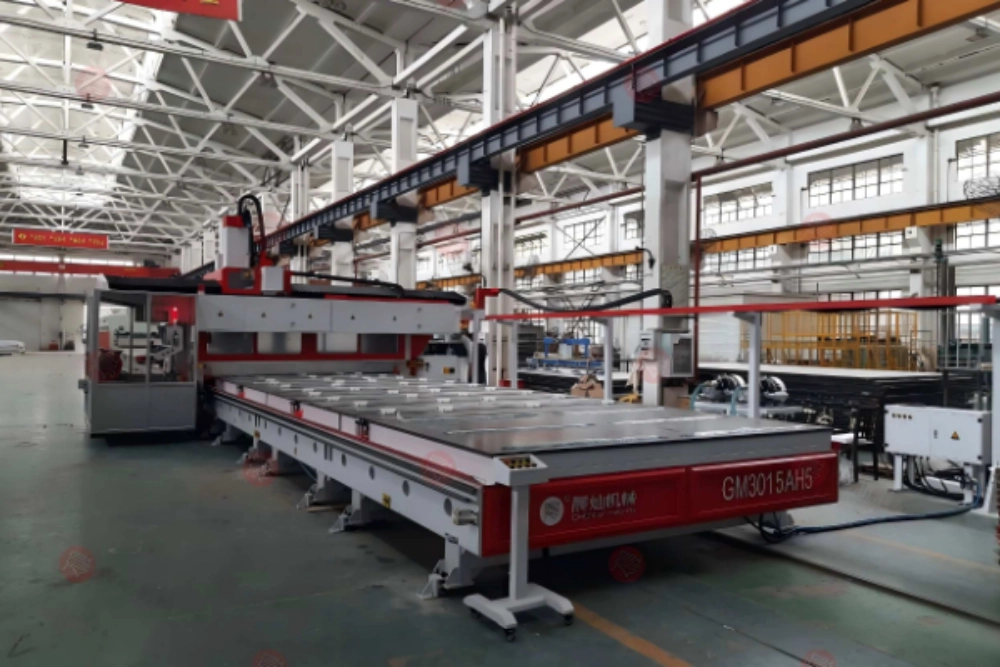
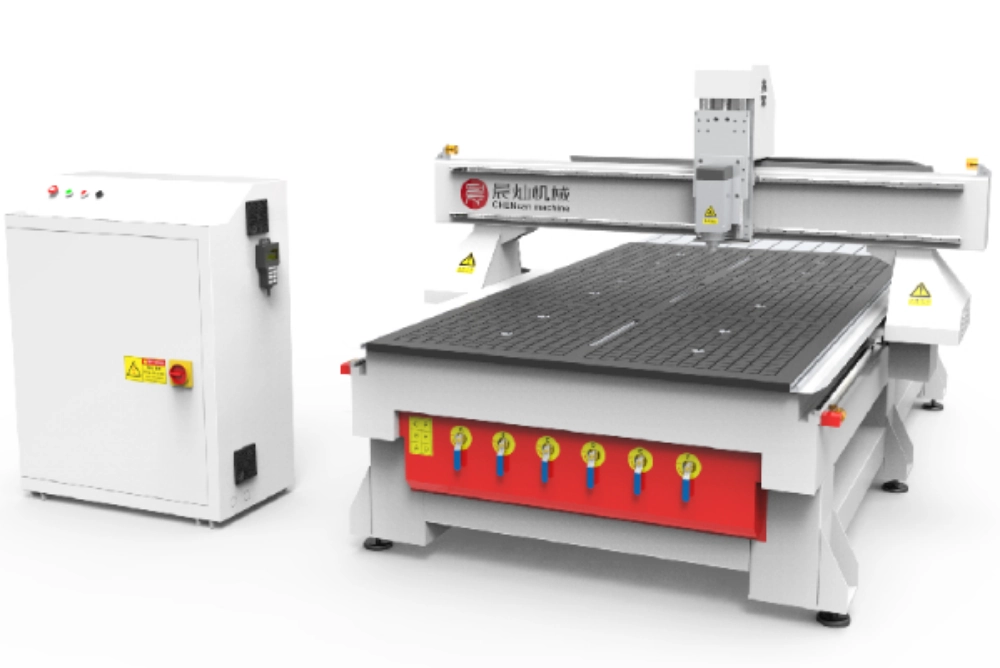
The SF1530 High Speed CNC Router Machine for Wood Pattern Making can be reviewed against the pattern’s working envelope, Z clearance, cutter reach, spindle duty, extraction, fixture method, controller, and required surface. A trial should use conditioned production stock and include end grain, reversing grain, draft, fillets, deep walls, and the final sealing allowance. The published SF1530 configuration provides a 3000 × 1500 × 800 mm working area, a 7.5 kW BT40 mechanical spindle rated to 10,000 rpm, and listed X/Y/Z working speeds of 30/30/15 m/min.
CHENcan supplies CNC processing equipment for mold and pattern work. A machine acceptance test measures dimensions across the bed and inspects the cut under side lighting. Surface quality should be evaluated before filler or sealer hides torn fibers, since hidden damage can reappear during sanding or repeated foundry use.
Hold the Blank Without Introducing a New Distortion
Vacuum or mechanical clamps must resist cutting forces while keeping the stock in its natural supported state. Pulling a warped blank flat and machining it can release a distorted part when clamps are removed. The setup should use stable support points, verified datums, and enough holding area after internal pockets reduce stiffness.
Seal the Pattern Without Losing Dimensional Control
Sealer, filler, primer, and topcoat reduce moisture exchange and improve release, but they add thickness and can raise grain. The process should specify sanding stages, coating build, curing conditions, and inspection after finishing. Coating only one face heavily can also create an unbalanced moisture barrier.
Measure critical datums before coating and after cure. The pattern drawing should clarify whether dimensions apply to machined wood or the finished coated surface. Holes, inserts, loose pieces, and parting interfaces need protection from coating buildup that changes assembly or registration. Also measure coating build on witness coupons.
Preserve Material and Process Traceability
Keep records for wood species or engineered stock, supplier and lot, lamination, moisture, blank dimensions, conditioning time, program revision, tools, roughing date, rest period, finish settings, coating, and final inspection. When two patterns move differently in storage, those records help separate material variation from machining or sealing.
CHENcan’s mold CNC machine range and contact channel allow a process discussion based on pattern size, wood construction, drawing, draft, tolerance, fixture, and finishing route. The most useful acceptance piece is one that contains the grain conditions and functional surfaces that normally create rework.
Storage after delivery remains part of pattern life. Support large patterns evenly, avoid direct heat and moisture, and inspect critical interfaces before reuse. CNC pattern making produces the intended geometry; controlled humidity and coating preserve it between foundry cycles.
Use a Grain Map Before CAM Programming
Photograph and mark grain direction, laminations, knots, and glue lines on the blank after surfacing. Overlay critical draft faces, thin ribs, and lettering. CAM can then alter entry, exit, cutting direction, or finishing sequence at vulnerable areas instead of applying one raster path across the entire pattern.
Prove the Pattern After Coating and Storage
Store the finished pattern under the expected shop condition for a defined period, then recheck datums, parting interfaces, draft, and inserts. This reveals moisture movement or coating imbalance that a same-day inspection misses. The release trial should use the finished sealed surface because exposed wood and coated wood interact differently with molding material.
Repairs should use a compatible filler or insert and restore the approved draft and surface. Record repair location and cause. Repeated damage at one grain transition may justify a laminated insert, changed orientation, or toolpath adjustment rather than repeated cosmetic filling.
FAQ
Q1: Why does wood grain direction affect CNC surface quality?
A: The cutter either shears with supported fibers or lifts and severs fibers across or against the grain, changing tearout and cutting force.
Q2: Should a wooden pattern be finish-machined in one setup?
A: Large or stress-sensitive blanks often benefit from roughing, resting, checking movement, and then finishing from renewed datums.
Q3: How does moisture affect a foundry pattern?
A: Moisture changes dimensions mainly across the grain and can cause cupping, twist, checking, or coating stress.
Q4: Why should draft surfaces receive special inspection?
A: Tearout or coating buildup on draft can hinder withdrawal and damage the mold cavity even if other dimensions pass.
Q5: What belongs in a wood pattern CNC trial?
A: Include production stock, grain reversals, end grain, draft, fillets, deep features, fixture release, moisture records, coating allowance, and dimensional checks.