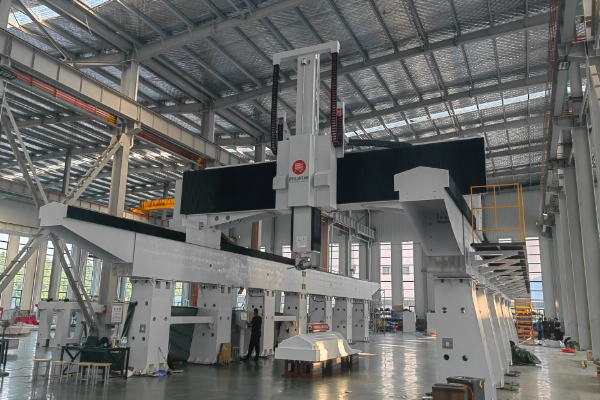
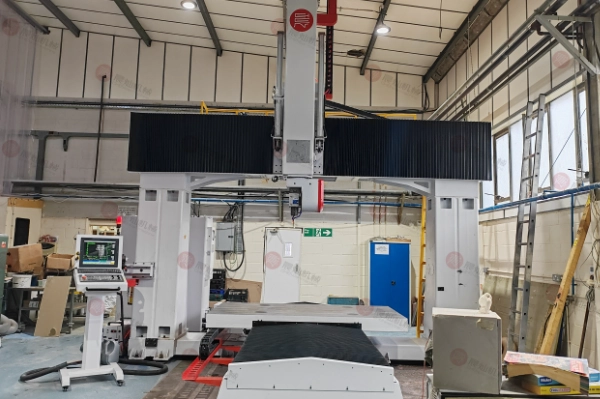
Mold CNC milling improves EPS foam pattern accuracy by keeping tool motion, surface geometry, and datum control consistent across the entire pattern. For foundry production, mold CNC milling helps reduce manual variation, hold machining allowance more accurately, and reproduce parting surfaces, bonding faces, and assembly features from one foam pattern to the next.
O Máquina de molho de alta qualidade CNC para a fabricação de areia e EPS Foam Mould from CHENcan is intended for foam patterns, sand molds, core boxes, and related model work. In practice, the value of mold CNC milling depends on the full process chain, including machine rigidity, workholding, spindle and tooling selection, CAM strategy, dust extraction, inspection, and operator discipline.
Where Do EPS Pattern Errors Enter the Casting Process?
An EPS pattern can look acceptable to the eye and still create downstream casting problems. Local overcut changes wall thickness, an uneven parting surface affects mold closing, and a shifted datum changes machining stock in later operations. When several foam sections are bonded together, small deviations can accumulate into a much larger dimensional mismatch.
Manual finishing is difficult to repeat across multiple patterns. A skilled worker may rescue one part, but that correction is often not captured in the digital model. Mold CNC milling keeps the geometry tied to approved CAD and CAM data, which makes later revisions easier to trace, repeat, and verify.
How Does CNC Milling Improve Pattern Repeatability?
Stable Datums and Workholding
Accuracy starts before the cutter touches the foam. The workpiece must be supported without crushing the EPS or allowing movement under tool pressure. Vacuum fixtures, sacrificial boards, locating pins, or custom supports should match the pattern size and local geometry. Good mold CNC milling also depends on a repeatable datum when the component is rotated or repositioned for another side.
Toolpaths Designed for Low-Density Material
Foam does not need the same cutting strategy as metal. Excessive step-over can leave visible scallops, while a poor entry move can tear edges or pull weak features. Roughing should remove volume efficiently without destabilizing thin sections, and finishing should use a tool diameter, step-over, and tolerance setting that match the required surface quality. This is where mold CNC milling directly affects both finish and repeatability.
Controlled Multi-Surface Machining
Large casting patterns often include draft angles, fillets, deep pockets, and freeform surfaces. Mold CNC milling allows these features to be generated from one coordinate system instead of being blended by hand. When machine travel, gantry clearance, and tool length are selected correctly, fewer manual transfers are needed and the relationship between critical features stays more stable.
Repeatable Revision Management
Foundry patterns are often modified after trial castings. A digital workflow makes it practical to update machining allowance, gating interfaces, or local geometry and then machine the next pattern from the revised file. That change is easier to document and approve than a hand-finished correction made on the shop floor.
Which Foundry Applications Benefit Most?
| Application | Typical Accuracy Risk | CNC Benefit |
| Lost foam patterns | Surface variation and assembly mismatch | Repeatable freeform machining and datums |
| Sand mold models | Uneven draft and parting surfaces | Consistent geometry across large areas |
| Core boxes | Misalignment of mating halves | Controlled cavities and locating features |
| Prototype castings | Frequent design revisions | Fast re-machining from updated CAD data |
The machine is especially useful when patterns are too large or too complex for conventional model-making methods, or when several identical patterns are required in the same batch. Mold CNC milling can also shorten the hand-finishing stage, although final inspection and local correction may still be needed for sensitive sealing faces or assembly areas.
What Machine and Process Details Should Be Checked?
Working Envelope and Clearance
Use the largest real pattern, including fixtures and tool reach, to confirm X, Y, and Z travel. Deep molds may require extra gantry clearance and long tools. Long tools reduce stiffness, so the process may need slower parameters, more support, or a different setup to protect final pattern accuracy.
Spindle, Tooling, and Surface Requirement
Spindle speed, collet range, and tool availability should match the foam and sand-related materials actually used by the shop. Surface requirement should be written as a measurable acceptance standard, such as maximum scallop height, dimensional tolerance at key datums, and allowable edge damage. Clear standards make mold CNC milling easier to qualify before production.
Dust Extraction and Machine Protection
EPS chips are light, mobile, and electrostatically attracted to surfaces. Effective extraction keeps the cutting zone visible and reduces contamination around guides, racks, sensors, and electrical cabinets. The extraction layout should collect chips close to the tool rather than relying only on general workshop ventilation.
CAM Post-Processor and Operator Training
A capable machine will not correct an unsuitable post-processor or an unsafe toolpath. Before production, confirm axis directions, work offsets, feed units, spindle commands, and safe retract moves. Operators should be able to set datums, verify tool length, run a dry simulation, and recover from an interrupted program without damaging the pattern.
How Should Accuracy Be Verified Before Production?
A sample cut should include representative features, such as a broad freeform surface, a deep pocket, a sharp edge, a datum face, and a section that must be repositioned. Measure the sample with the same method used in the foundry, not only with the machine controller. Templates, laser scanning, CMM checks, or documented hand gauges can all be appropriate depending on pattern size and tolerance.
It is also important to inspect the pattern after removal from the fixture. Foam can relax or deform when support is released. This helps the team distinguish machine positioning error from material movement or fixture weakness and improves the setup before batch production begins.
What Purchasing Mistakes Lead to Rework?
Buying on spindle power or travel alone is risky. A large machine may still produce poor patterns if the frame is unstable, the fixture cannot hold the work securely, the control cannot execute smooth freeform motion, or the dust system blocks visibility. The acceptance test should link machine performance directly to finished-pattern measurements.
Another mistake is treating training as a one-day handover. Pattern machining combines CAD preparation, CAM programming, setup, cutting, inspection, and revision control. A clear workflow, named responsibilities, and repeatable inspection usually create more value than simply increasing feed rate.
Conclusion
Mold CNC milling improves EPS foam pattern accuracy when the digital model, fixture, tooling, toolpath, and inspection method are managed as one system. The biggest gain is not only faster cutting. It is the ability of mold CNC milling to repeat approved geometry, control revision changes, and reduce foundry-side rework.
Foundries evaluating CHENcan CNC products should prepare a representative pattern, tolerance map, material description, and current workflow. That information makes machine selection, process design, and acceptance testing much more precise.
FAQ
Q1: Can a CNC Router Machine EPS Foam Without Damaging Edges?
A: Yes, when tool geometry, spindle speed, feed rate, entry moves, and workholding are suitable. A poor toolpath can still tear thin edges even if the machine itself is accurate.
Q2: Is Machine Positioning Accuracy the Same as Pattern Accuracy?
A: No. Final pattern accuracy also depends on fixture movement, tool deflection, foam deformation, toolpath tolerance, and the measurement method used after cutting.
Q3: Why Is Z-Axis Clearance Important for Mold Work?
A: Deep cavities and long tools require enough gantry and spindle clearance. A machine may have sufficient table area but still be unable to reach a deep feature safely.
Q4: What Should Be Included in a Sample Test?
A: Include freeform surfaces, datums, deep pockets, edges, and at least one repositioning operation. Measure the finished sample after it is removed from the fixture so support release can also be checked.
Q5: Does CNC Eliminate Hand Finishing?
A: It can reduce hand finishing substantially, but some patterns may still need local sealing, bonding, polishing, or final inspection before molding.