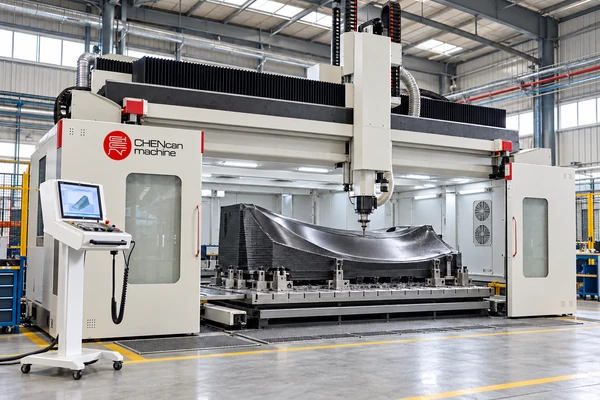
A useful RFQ for a large five-axis CNC machine gives every supplier the same manufacturing requirements, site information, scope, and acceptance criteria. Without those inputs, quotations may include different fixtures, software, installation work, or machine configurations. Comparing headline prices alone can hide those differences.
Prepare a controlled enquiry package containing representative parts, materials, production targets, site conditions, and a common supplier response sheet. State required outcomes and constraints, and ask each bidder to explain its proposed solution, assumptions, and deviations. This allows engineering and purchasing to compare both capability and total project scope.
The drawing review comes first
Select parts that represent the largest envelope, most difficult tool access, and most demanding finish or tolerance. The longest part does not necessarily determine the machine. A smaller mold with deep returns or steep walls may require more head clearance, a different rotary arrangement, or additional setups.
So the drawing pack needs a reasoned sample rather than the entire archive. Beside each chosen part, the buyer can write one plain sentence: “largest envelope,” “worst access,” or “surface used for final inspection.” The supplier’s application engineer then knows what the file is meant to prove.
Revision and units belong on the register, along with material, blank size, finished size, and weight. The buyer should identify datums and the faces that control acceptance. Early geometry is fine for a concept quote, provided that the file says “preliminary” and the open areas are named. Without that warning, a budget model has an unfortunate habit of becoming the production reference.
Confidential work needs a different model, not a meaningless one. Remove the proprietary shape but preserve whatever governs machining. That might be a deep wall, a forbidden clamp area, or the angle needed to reach a pocket. CHENcan can then discuss its five-axis CNC center range against the actual access problem without seeing the complete product.
Check the usable five-axis machining envelope with the blank, fixture, cutter, holder, and spindle head included. Linear travel alone does not establish access at every tool angle. Ask suppliers to identify restricted orientations, rotary limits, required tool lengths, and proposed setups. Include the loading route and the space needed to position the blank.
The material review is really a process review
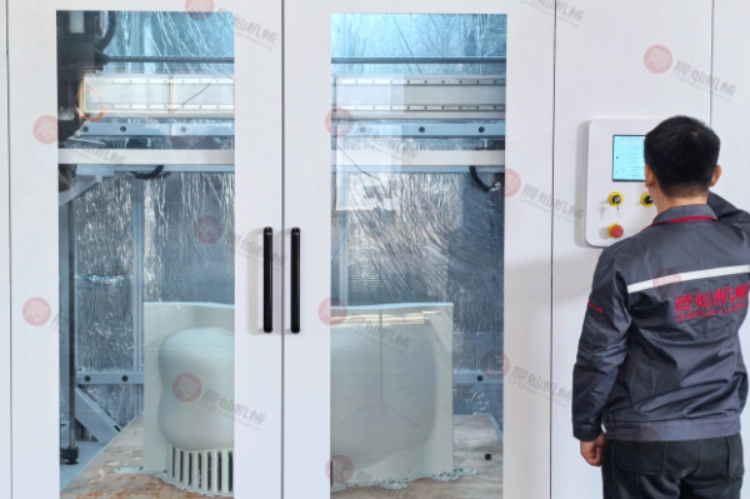
Buyers sometimes type “foam” in the material cell and consider the field complete. The supplier still cannot tell whether it will meet a light block, dense tooling board, reinforcement, or a bonded base. EPS, wood, FRP, and aluminum bring different cutting and handling issues. The useful entry is the production name or grade, followed by a few words on the condition of the arriving blank.
Add one annotated photo. It can show overall size, how the blank will be lifted, where the base sits, and which faces must stay clear. If the shop already fights abrasive dust or chipped unsupported edges, add that fact beside the image. The CHENcan high-speed mold CNC machine range now has a real process context rather than a one-word material label.
Scope follows naturally from the same picture. The buyer might own the CAM work and cutters, while the vendor develops the fixture concept and extraction interface. Another project may divide the work elsewhere. Whatever the split, the quotation needs to mirror it; otherwise both bidders can be honest and still price different packages.
Define Production Targets and Cycle Time Boundaries
State annual demand, batch size, shift pattern, and the required completion time for representative work. Define the timing boundary: loading, setup, probing, tool changes, cutting, unloading, and inspection should be included or reported separately. Ask whether each estimate comes from simulation, previous experience, or an agreed trial.
Volume changes the arithmetic. Setup dominates a one-off mold but spreads across a repeated batch. At concept stage, let the bidder use a range and explain its widest uncertainty. The explanation may be about fixture access, an unfinished program, or operator work; any of these is more useful than false precision.
Ask bidders to identify the main constraint and explain the effects of proposed fixtures, probing, tooling, and automation. Distinguish estimated cycle time from a contractual acceptance target. Where a time commitment is required, agree the part, material, program, tooling, and measurement boundary used to verify it.
Acceptance begins with one difficult question
Define factory and site acceptance responsibilities separately. State the machine checks and representative part features to be verified, the applicable procedures, agreed limits, instruments, and environmental conditions. For flexible molds or panels, specify whether inspection occurs supported, clamped, or released. Machine positioning specifications should not be treated as a guarantee of finished-part accuracy.
Evidence can stay proportionate. Familiar production may rely on standard geometry records and commissioning checks; an awkward feature or unfamiliar material may justify a trial. First write the decision the trial is meant to support. The detailed stock, fixture, feature, and inspection plan can follow, using CHENcan’s guide to preparing a CNC machine test cut as a reference.
Blank cells create their own argument at acceptance. Replace silence with four explicit states – included, optional, excluded, or still open. The response then shows which requirement has been priced and which one still needs an owner.
The site walk may change the quotation
Provide both a final layout and an unloading-to-foundation route. Record door and aisle dimensions, turning and overhead clearance, handling restrictions, and space for assembly and maintenance. Ask the supplier to identify package dimensions and weights for the proposed shipping configuration.
Include the available electrical supply, grounding arrangements, compressed air, extraction, cooling, and other relevant utilities. Record temperature variation, contamination, and nearby vibration where these could affect performance. Assign responsibility for verifying floor capacity, foundation design, anchoring, and service clearances against the selected configuration.
Foundation engineering can wait until the configuration is clearer. What cannot wait is notice of an unusual support load, shipping split, tight service side, or awkward utility entry. The CHENcan installation guide for large gantry systems helps assign the early work among civil contractors, riggers, electricians, the buyer, and the supplier.
Request a milestone schedule covering design approval, manufacture, factory acceptance, dispatch, arrival, unloading, installation, commissioning, training, and site acceptance. State which buyer approvals and site preparations each milestone depends on. Ask suppliers to distinguish transport estimates from manufacturing lead time and to identify schedule assumptions.
The final comparison keeps differences visible
Use a response sheet covering model, usable working envelope, rotary configuration, spindle, controller, tool capacity, probing, guarding, extraction, and software. For five-axis work, confirm indexed and simultaneous capability, relevant control functions, and responsibility for a validated machine-specific post-processor. Identify standard equipment, options, exclusions, documentation, training, warranty, and service separately.
Common fields should not ban alternatives. A longer axis may simplify the fixture; a compact machine may work with another loading plan. Shared inputs make the trade-off visible even when the designs differ.
The commercial page closes the remaining gaps. It states the currency and trade term, the packing and freight boundary, exclusions, payment points, and the date on which the offer expires. Travel costs can sit in a separate note, with responsibility for transport, accommodation, visas, rigging, and site materials assigned before anyone books a visit. The general CHENcan service capabilities cover several activities; the order still needs a plain statement of what this buyer is purchasing.
A controlled file is more valuable than a long file
Keep the drawing register, site pack, requirements, response sheet, and clarification log under one RFQ revision. Issue changes consistently to the relevant bidders and identify whether earlier prices remain valid. Resolve assumptions in the controlled package before they become purchase-order commitments.
O CHENcan contact team can then review identical inputs with sales and engineering. Page count is a poor measure of the finished CNC machine RFQ checklist. A better measure is whether each price points back to the same manufacturing case and carries its own assumptions.
Before issuing the RFQ, have engineering verify geometry and acceptance requirements, purchasing verify scope and commercial assumptions, and the installation lead verify route and site readiness. Each unresolved item should have an owner and a target date. A comparable quotation should trace back to the same revision of the manufacturing requirements.