
Choosing between 5 axis and 3+2 axis machining is not just a technical decision. For most manufacturers, it is really a question of part complexity, finish expectations, cycle time, budget, and how much manual intervention the process can tolerate.
Many shops assume full 5 axis is always the better option. In reality, that is not always true. For some parts, a 3+2 approach is efficient, stable, and cost-effective. For others, especially parts with deep contours, changing tool angles, or hard-to-reach surfaces, true simultaneous 5 axis is the better long-term solution.
At CHENcan, we work with customers across mold making, composites, large-format non-metal machining, and custom industrial applications. In projects like these, the right answer depends less on labels and more on the actual process requirement.
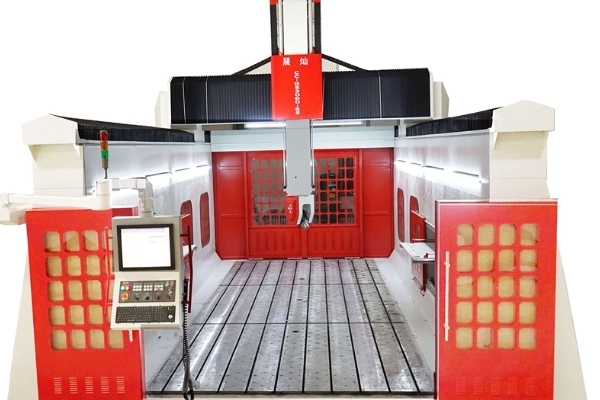
What Is the Difference Between 5 Axis and 3+2 Axis?
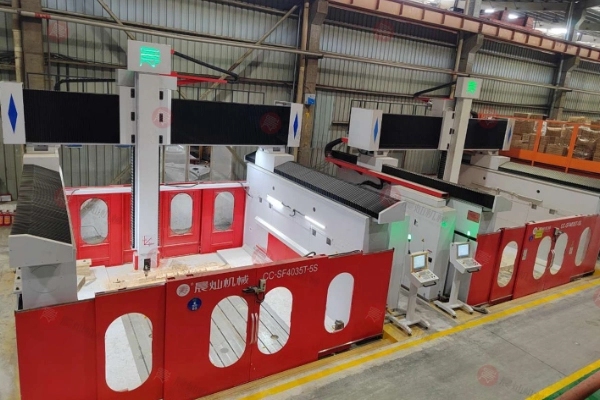
The main difference is how the rotary axes move during machining.
In 3+2 axis machining, the machine positions the workpiece or spindle using two rotary axes, then locks that angle and performs cutting with three linear axes. The tool cuts from a fixed orientation during each machining step.
In true 5 axis machining, all five axes can move together continuously during cutting. This allows the tool to follow complex surfaces more smoothly and maintain better tool orientation throughout the process.
Both methods can reach multiple sides of a part, but they solve the job in different ways.
When 3+2 Axis Is the Better Choice
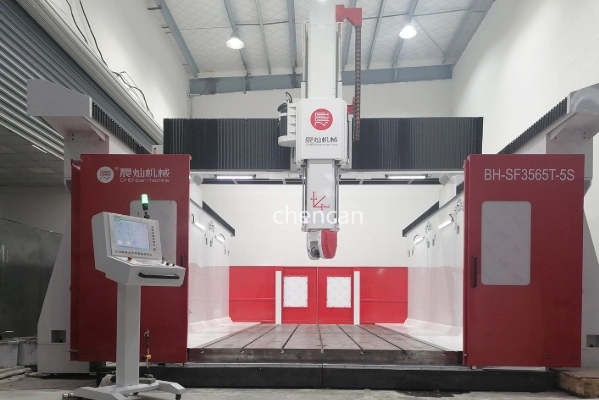
1. Better for simpler angled work
If the job mainly involves drilling, trimming, pocketing, or machining several faces at fixed angles, 3+2 is often enough. It gives the operator access to more surfaces without requiring full simultaneous motion.
2. Good rigidity for many standard parts
Because the rotary axes stop before cutting begins, the machining condition is often more stable. For many conventional industrial parts, this helps support reliable tolerance control and predictable cutting behavior.
3. Lower software and investment pressure
In many cases, 3+2 is easier to program and usually involves lower equipment cost than full 5 axis. For manufacturers stepping into multi-face machining for the first time, that can be a more comfortable entry point.
When True 5 Axis Becomes Necessary
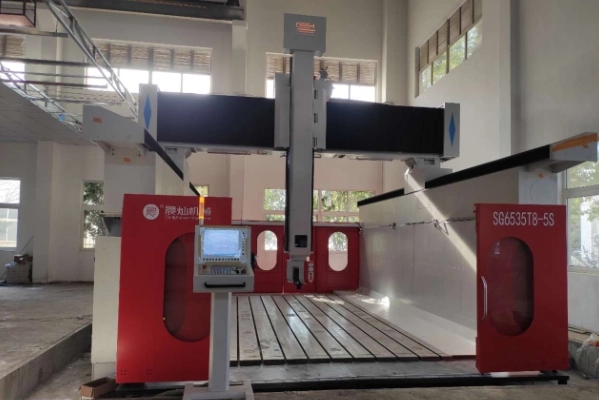
1. Complex surfaces and deep contours
If the part includes flowing surfaces, undercut-like access needs, deep cavities, or changing wall angles, true 5 axis gives much better tool access. The machine can keep adjusting the tool orientation as the geometry changes.
2. Better surface finish on demanding shapes
For molds, patterns, composite tooling, and precision parts, smoother toolpaths matter. Simultaneous 5 axis can reduce visible step marks and help lower manual finishing time after machining.
3. Fewer setups and less manual correction
A true 5 axis process can often complete more of the part in one cycle. That reduces repeated repositioning, lowers alignment risk, and helps improve overall workflow efficiency.
How to Decide Which One Fits Your Production
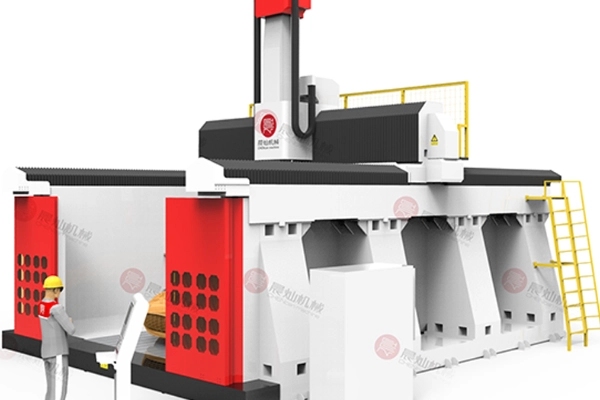
Choose 3+2 if:
– Your parts are mostly prismatic or only need fixed-angle access
– Surface continuity is important, but not extremely demanding
– You want multi-side capability with more controlled investment
– Your team is moving up from 3 axis machining and wants a more manageable transition
Choose true 5 axis if:
– Your parts have complex curves or changing machining angles
– You want to reduce polishing or manual finishing time
– You need better access to deep or difficult areas
– Your process depends on finishing more geometry in a single setup
Typical Applications Where 5 Axis Has a Clear Advantage
In CHENcan-related applications, true 5 axis is especially valuable in:
– large mold and pattern machining
– composite trimming and complex-profile parts
– prototype and tooling work with demanding surfaces
– large-format non-metal parts with deep geometry
– applications where surface quality and process continuity matter more than simple face-to-face cutting
How CHENcan Approaches the Choice
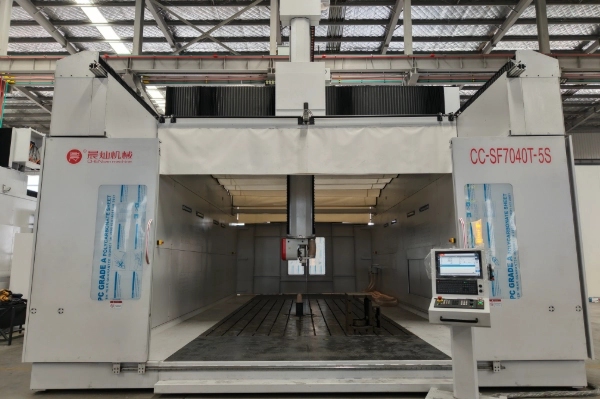
CHENcan does not treat every customer as if they need the same machine. The better starting point is always the application itself.
For some projects, a more stable and economical positional strategy is enough. For others, especially mold work, complex non-metal machining, and high-surface-demand parts, a 5 axis solution creates better process efficiency and better part quality.
Our work typically starts from questions like:
– What material are you machining?
– How complex is the geometry?
– Do you need simultaneous movement or just indexed positioning?
– Is the main pressure coming from finish quality, cycle time, or labor reduction?
– Are you trying to avoid secondary finishing or multiple setups?
That application-first approach usually leads to a much better equipment decision than simply comparing machine labels.
Final Thoughts
5 axis is not automatically the right answer for every workshop, and 3+2 is not an outdated compromise. Each has a clear place.
If your parts are relatively straightforward and mainly require fixed-angle access, 3+2 may be the smarter investment. If your parts involve complex curves, deeper access, better finish expectations, and fewer setup requirements, true 5 axis is often the stronger solution.
The key is to match the machining method to the real production task.
If you are comparing options for mold making, composites, or large-format industrial machining, CHENcan can help evaluate the application and recommend a solution based on process needs rather than generic machine promotion.
FAQ
- Is 3+2 axis the same as true 5 axis?
No. In 3+2 machining, the rotary axes position first and then stop while cutting happens. In true 5 axis machining, all five axes can move together during cutting.
- Is 3+2 axis enough for mold making?
Sometimes, yes. For simpler shapes or fixed-angle operations, it can work well. For more complex surfaces and better finish requirements, true 5 axis is usually the better option.
- Why does true 5 axis often improve surface finish?
Because the tool can stay better aligned to the part surface during machining, which helps create smoother toolpaths and reduces visible step marks.
- Is full 5 axis always worth the higher cost?
Not always. It depends on geometry, workflow, finishing requirements, and long-term production goals.
- How should a shop choose between the two?
Start from the part, material, process difficulty, and finish target. The right decision comes from the application, not from buying the most complex machine by default.


