
The specialty vehicle sector advances swiftly. If one continues to depend on hand-drawn patterns or simple saws for shaping composite boards, pressures from material losses and delayed processing emerge clearly. At CHENcan, we have dedicated 27 years to perfecting these approaches. From our expansive 60,000 square meter plant, a staff of 270 specialists constructs equipment suited to practical settings. Our processing centers are engineered to consolidate multiple manufacturing stages into a single, seamless operation. For constructing luxury recreational vehicles or cooled transports, our history of assisting 12,000 firms in 70 nations suggests we have addressed your particular manufacturing challenge previously. This experience ensures reliable solutions.
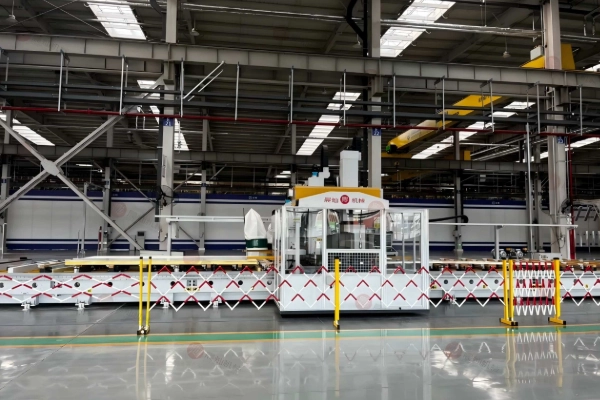
Why Is the Specialty Vehicle Market Shifting Toward Advanced Automation?
The period of basic assembly has concluded. Modern consumers seek vehicles that are lighter, more robust, and superior in thermal protection.
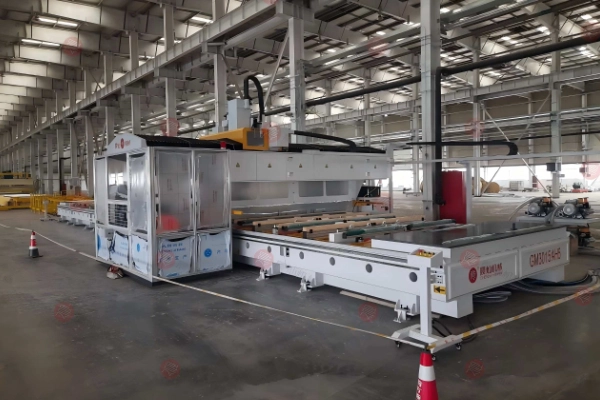
img.Specialty Vehicle Market Shifting Toward Advanced Automation.webp
Rapid Growth of the Camping Car Sector
Manufacturers must progress from isolated custom fabrications to structured, efficient industrial processes. This adaptation allows them to manage increasing orders effectively. Such shifts maintain operational balance in a growing field.
Increasing Demand for Lightweight Composite Materials
Concerns over fuel consumption and electric range propel the adoption of composites universally. Substances such as fiber-reinforced polymer, metal facings, and dense foam interiors excel in reducing mass. However, manual shaping risks fractures or layer separation. These challenges necessitate advanced tools for precise handling. Thus, automation becomes essential for quality outcomes.
Need for Unmatched Structural Precision
A camping car functions as a mobile dwelling rather than a mere enclosure. When panels fail to join seamlessly, thermal barriers weaken, and overall stability diminishes. Precision in fabrication exceeds optional enhancements for elite producers; it forms the essential standard for sustained viability. This requirement drives investments in capable machinery. It safeguards product reliability across applications.
How Does a CNC Cutting Machine Revolutionize Composite Board Processing?
Adopting a computer numerical control system extends beyond mere velocity. It transforms the fundamental operations within the facility. Rather than repeated verifications followed by single incisions, one inputs instructions once and generates numerous flawless components thereafter. This efficiency reshapes daily workflows significantly.
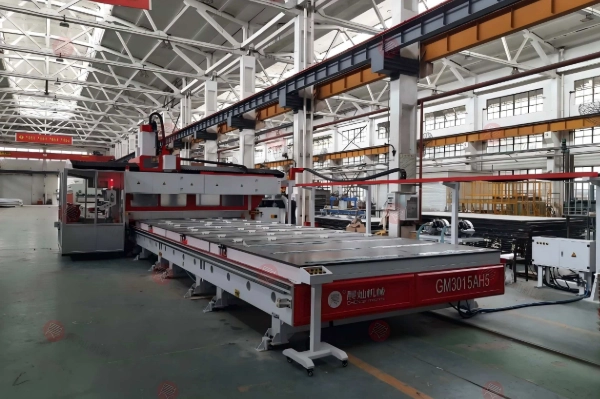
Integration of Multi-functional Milling, Sawing, and Drilling
Contemporary devices surpass linear tracing. Our advanced centers are simultaneously equipped with a high-power mechanical spindle and a 5-axis saw blade. This dual-system configuration allows a single machine to perform a complete suite of operations:
High-speed Cutting and Trimming: The 5-axis saw handles efficient straight and angled cuts.
Drilling and Tapping: The spindle creates precise attachment points and internal threads.
Grooving and Milling: Dedicated routing for cable channels and complex surface recesses. One machine now satisfies every stage of panel processing, removing inconsistencies from station transitions and elevating accuracy.
Elimination of Manual Measurement Errors
Numerous costly layered boards have been discarded due to imprecise gauging tools. Computer numerical control units adhere strictly to electronic blueprints. Provided the blueprint proves accurate, the output matches precisely on each occasion. This reliability minimizes waste occurrences.
Optimization of High-Performance Material Utilization
Through intelligent arrangement programs, a CNC Cutting Machine assembles components akin to interlocking segments. Consequently, greater yields emerge from each costly composite sheet. This improvement directly bolsters financial returns at period’s end.
What Makes the CHENcan Composite Board Processing Center the Best Choice for Camping Cars?
In developing the Composite Board Processing Center for Camping Car Making, we targeted the precise difficulties faced by recreational vehicle fabricators. We recognize the demands of oversized boards requiring smooth results. This focus ensures practical applicability in real scenarios.
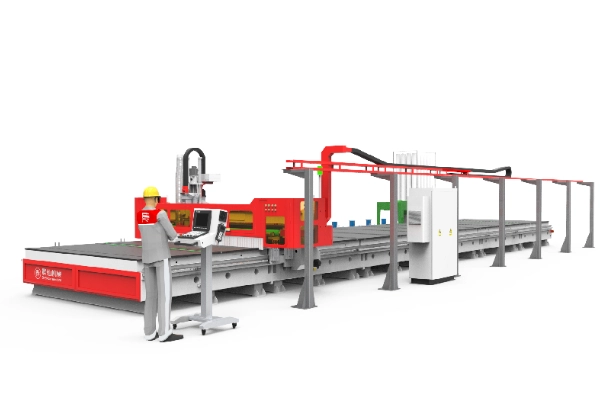
Tailored Design for Large Format Panels
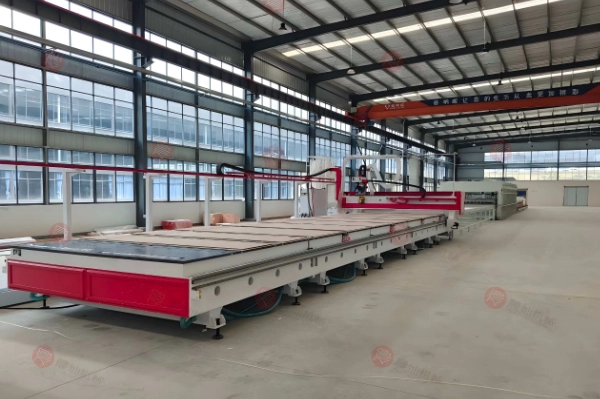
Recreational vehicles incorporate extensive sidewall sections. Our equipment includes prolonged platforms, extending to 65 meters in span at times. Thus, complete wall fabrication occurs without dividing materials or interrupting midway. This capability preserves material wholeness.
Dual-System Synergy for Complex Geometries
We merge a robust 5-axis linear sawing system for rapid direct paths with a high-torque mechanical spindle for intricate arcs and openings. This ensures that pace and multi-functional adaptability coexist on the identical surface.
Seamless Surface Finishing for Vehicle Aesthetics
Visual appeal holds significance in the camping car domain. Our routing sequences avert common irregularities like rough edges in composite work. Consequently, surfaces prepare directly for integration, bypassing prolonged manual refinement. This process saves time and labor. It upholds aesthetic standards consistently. Furthermore, our vacuum hold-down system and specialized tool geometries prevent delamination, ensuring the structural unity of expensive composite layers is never compromised during high-speed processing.
Why Is 5 Axis Technology Crucial for Cold Chain Vehicle Manufacturing?
Thermal transport demands exact tolerances measured in fractions of millimeters. Should gaps appear at intersections in cooled truck enclosures, heat transfer compromises isolation. Here, five-axis capability shifts from enhancement to imperative. This precision underpins performance in demanding conditions.
Complex Geometry Handling for Insulated Panels
Conventional three-axis units limit motion to vertical, horizontal, and lateral directions. Cold chain production frequently requires sloped margins or angular incisions for secure connections. A five-axis mechanism executes these intricate orientations with ease. This adaptability ensures superior joint formation. It maintains panel cohesion throughout.
Multi-dimensional Movement for Perfect Corner Joints
Achieving hermetic closure demands panels that interlock flawlessly. The Multi-functional 5 Axis Panel Cutting Machine facilitates concurrent motions that shape these unions in one sequence. Thereby, thermal barriers remain uncompromised. This technique guarantees enduring efficiency. It meets rigorous industry expectations.
Enhanced Thermal Integrity via Precise Cutting
Accurate incisions preserve the layered structure of boards intact. No gaps form between exteriors and interiors. As such, cooling persists effectively while external warmth dissipates. This performance aligns with client investments in quality. It reinforces product dependability over time.
How Can the Multi-functional 5 Axis Panel Cutting Machine Boost Your Productivity?
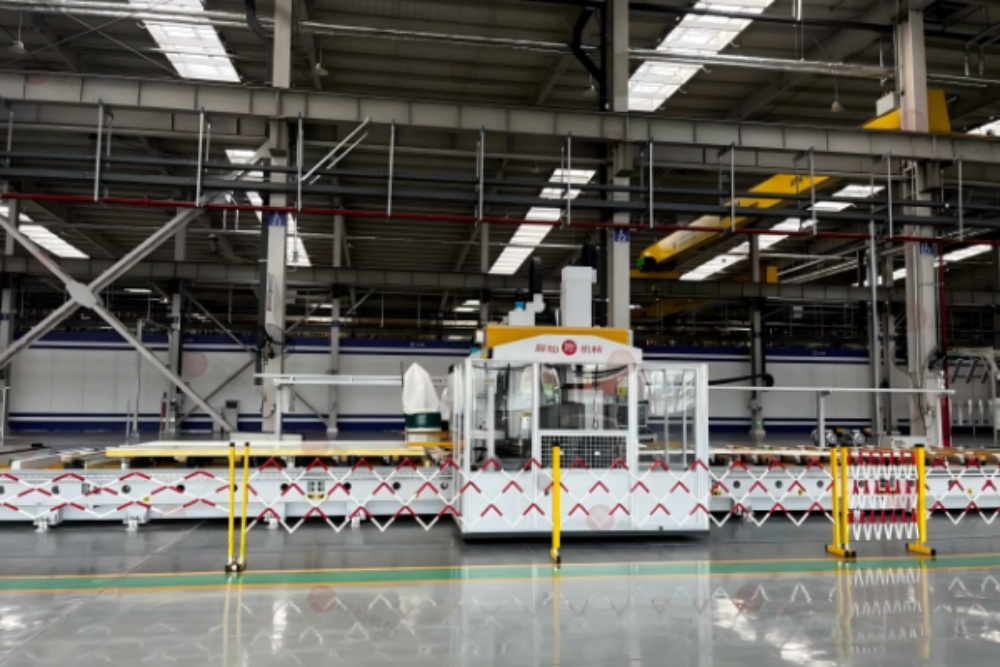
Facility managers often express concerns regarding the adaptation to five-axis equipment. Yet, in practice, the device assumes demanding tasks, easing operator burdens. The emphasis lies on intelligent effort rather than exhaustive labor.
Reduction in Secondary Finishing Operations
In typical workshops, boards undergo initial shaping before relocation for edge preparation or manual boring, which consumes considerable time. Our 5-axis configurations complete items with such refinement—combining milling, sawing, and drilling—that they proceed immediately to assembly. This total process integration shortens manufacturing cycles significantly and optimizes labor allocation.
High-Speed Spindle Performance for Industrial Scale
We employ durable rotary mechanisms capable of traversing foam and fiber-reinforced polymer at velocities reaching 60 meters per minute. When applied across full operational periods, this pace generates remarkable volume increases relative to traditional techniques.
Intelligent Control Systems for Continuous Operation
Our units endure prolonged usage. Equipped with certified electrical components and effective particulate removal, they support extended schedules without interruption. This robustness positions them as steadfast assets, free from routine downtimes. Consequently, reliability enhances overall throughput. It sustains high-volume demands reliably.
Why Is CHENcan the Global Leader in Specialized CNC Solutions?
Over almost three decades, we have engaged with clients from Vietnam and Latin America to Europe, identifying common failures and operator conveniences. This insight informs our continuous improvements. It positions us at the forefront of the industry.
Decades of Industry Expertise and Innovation
From 1998 onward, we have specialized in advanced computer numerical control applications. Holding more than 130 patents stems from ongoing refinements in configurations. We distinguish nuances between processing resins and timber, which our equipment embodies precisely.
State-of-the-Art Manufacturing and Quality Control
Beyond component assembly, we produce core elements internally. This oversight grants complete authority over framework stability and positioning, forming the bedrock for every precise operation. Such control guarantees consistent performance. It underpins long-term durability in use.
Comprehensive Global Service and Technical Support
Acquiring equipment establishes an ongoing collaboration. We offer field-based setup and practical guidance for personnel. Should obstacles arise, our serviço networks and virtual assistance restore functionality swiftly.
Key Features of the CHENcan Composite Panel Processing Center
| Feature | Industrial Benefit |
| All-in-One Integration | Combines a high-power spindle and a 5-axis saw to handle cutting, trimming, drilling, tapping, and milling in a single setup. |
| 5-Axis Linkage | Enables precise machining of 3D surfaces and complex angular joints essential for thermal insulation. |
| Flexible Table Sizes | Customizable bed lengths (from 6m to 30m+) to accommodate full-size sidewall panels for extra-long specialty vehicles. |
| Broad Material Compatibility | Specifically designed for FRP, XPS foam, aluminum-faced sandwich panels, and honeycomb cores. |
| Vacuum Hold-Down System | High-strength vacuum ensures panel stability, reducing vibration and preventing delamination/layer separation. |
| High-Speed Spindle | Offers traversing speeds up to 60m/min for high-volume industrial output. |
| Intelligent Nesting | Maximizes material yield from expensive composite sheets through electronic blueprint synchronization. |
FAQ
Q1: What materials can the CHENcan processing centers handle?
A: Our machines are designed specifically for the tough stuff—FRP, aluminum-faced sandwich panels, XPS foam, honeycomb cores, and even thick plywood or PVC used in vehicle floors. These configurations accommodate diverse substrates effectively. They ensure versatile processing capabilities.
Q2: How do you prevent the layers of a composite panel from separating during the cut?
A: We use a combination of high-diameter saw blades, specific tool geometries, and a very strong vacuum hold-down system. This keeps the panel stable and reduces the vibration that usually causes delamination.
Q3: Can these machines be customized for my specific factory floor size?
A: Absolutely. We don’t just sell stock models. We can adjust the bed length and width to fit your space, whether you need a 6-meter table or a 30-meter one for ultra-long specialty vehicles.
Q4: What kind of maintenance is required for a 5-axis machine?
A: It’s simpler than you’d think. Regular lubrication of the rails, keeping the dust collection filters clean, and checking the tool wear. We provide a full maintenance schedule and training during the installation phase. These protocols ensure optimal condition.
Q5: Is it difficult to switch from a 3-axis to a 5-axis system?
A: There is a small adjustment in the programming side, but the physical operation is very similar. Our engineers stay on-site with your team until they feel comfortable running the 5-axis paths and handling complex angled cuts.


