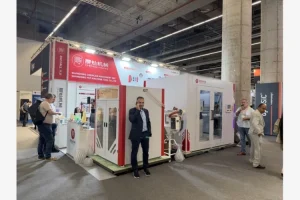
CHENcan is now exhibiting at Formnext 2026 in Frankfurt. From November 17 to 20, visitors can see the DFM1010 and DF1615 pellet 3D printers at Hall 11.0, Booth D42, watch live printing and discuss industrial additive manufacturing projects with the CHENcan team.
Venue address Ludwig-Erhard-Anlage 1, 60327 Frankfurt a. M., Germany
Meet CHENcan at Hall 11 Booth D42
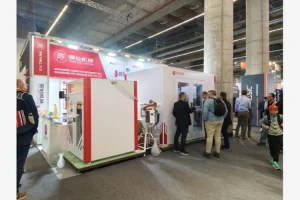
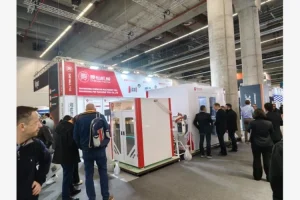
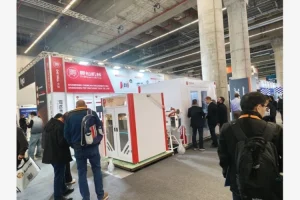
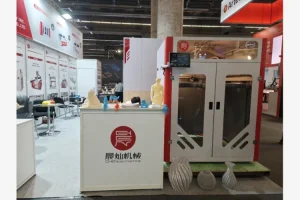
CHENcan is exhibiting at Formnext 2026 in Frankfurt from November 17 to 20. Visitors can find our team in Hall 11.0 at Booth D42, where the DFM1010 and DF1615 pellet 3D printers are running alongside a selection of printed parts.
The booth is arranged for practical conversations. Visitors can look through the machine windows, examine the printed surfaces at close range and discuss their own part size, material and production requirements with our team. The official Formnext 2026 event schedule confirms the four exhibition days in Frankfurt.
A running machine gives visitors a better basis for technical questions. They can observe how the pellet feed reaches the print area, how the deposited bead forms a wall and how the operator accesses the enclosed workspace. The purpose is not to judge an entire production process from a few minutes at a trade show. It is to identify which questions need a longer application review, including part orientation, build strategy, material preparation, cooling, finishing and the space required around the equipment.
Two Pellet Printers on the Booth
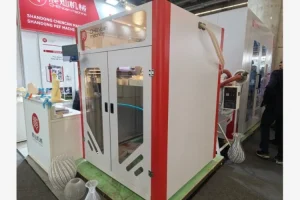
Both machines at D42 use pellet feedstock, but they address different demonstrations on the stand. The DFM1010 is presented as a fine detail pellet 3D printer. The DF1615 is presented as an industrial pellet 3D printer and is shown producing a large cylindrical part during the exhibition.
For buyers comparing a Formnext 2026 pellet 3D printer, a live demonstration is more useful than a specification sheet alone. It allows the team to discuss material delivery, layer formation, machine access and the practical steps around a print while the equipment is operating. Visitors can also review CHENcan industrial 3D printer solutions before or after their booth meeting.
The two displays should not be read as a simple small-versus-large ranking. A buyer needs to start with the job. A detailed prototype, a mould, a fixture and a large visual component may place very different demands on bead size, surface expectations, build volume and downstream work. Seeing DFM1010 and DF1615 together helps visitors explain where their priority lies. CHENcan can then discuss the application around the part instead of treating machine size as the only selection criterion.
DFM1010 Fine Detail Pellet Printing
The DFM1010 occupies a compact enclosed footprint on the booth. Printed figures, decorative objects and small demonstration parts are displayed next to the machine so visitors can compare the equipment with the finished output. This makes the DFM1010 a useful starting point for conversations about detailed pellet printing and smaller production work.
At the show, CHENcan staff can explain what information is needed before a machine recommendation is made. A useful discussion starts with the target part, the expected material, the required surface and the planned post processing route. Those details matter more than choosing a model from one headline number.
Visitors considering the DFM1010 can use the displayed parts to make the conversation specific. Useful questions include which features must remain visible after printing, which surfaces will be machined or coated and whether the part is a prototype, a tool or an end-use component. The team can also review the available CAD data and the expected batch pattern. These details help separate a demonstration sample from a repeatable production requirement and make the next technical discussion more productive.
DF1615 Industrial Pellet Printing
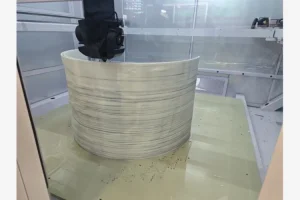
The DF1615 demonstration focuses attention on a larger enclosed printing area and an active pellet deposition process. The sample visible inside the machine shows the layer build as it develops, giving visitors a direct view of how the machine handles a large printed form.
The DF1615 product page provides additional background for companies evaluating industrial additive manufacturing equipment. At Booth D42, the discussion can move from the web page to the actual project: part dimensions, feedstock choice, output expectations, downstream machining and the factory conditions in which the machine will operate.
For a larger-format project, the printed geometry is only one part of the planning work. Buyers should also consider how material will be stored and supplied, how the finished part will leave the machine area, what lifting or handling method may be required and where trimming, milling or coating will take place. Bringing these points into the booth discussion helps expose layout and workflow questions early. It also gives both sides a clearer list of information to confirm after the exhibition rather than relying on a general request for a large printer.
Printed Samples and Material Discussions
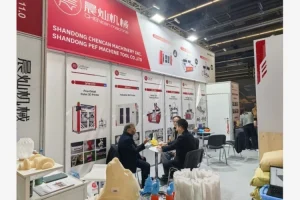
The booth includes samples in several shapes and sizes, from small character models to large ribbed vessels and an in process cylindrical print. Pellet containers and sample pieces help make material questions concrete. Visitors can point to a surface, geometry or part scale and explain what they want to reproduce.
That is also why the Formnext 2026 pellet 3D printer display includes finished pieces beside the machines. The samples provide a common reference for discussing layer appearance, part geometry and the amount of finishing a project may require. CHENcan does not treat every sample as a promise for every material; the intended application still needs to be reviewed case by case.
Material discussions should begin with the required result, not with a pellet name alone. The same geometry may need different stiffness, temperature behaviour, appearance or finishing depending on its use. A visitor can improve the discussion by bringing a material data sheet, a current manufacturing method and a note about the service environment. CHENcan can then identify what still needs to be tested. A sample observed at the show is evidence of a particular demonstration, while suitability for another part depends on the material, geometry, process settings and acceptance criteria used for that project.
Conversations at the CHENcan Booth
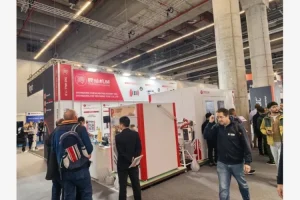
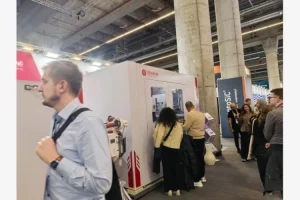
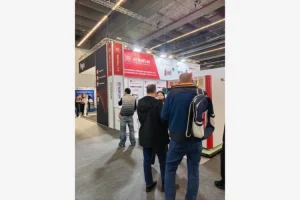
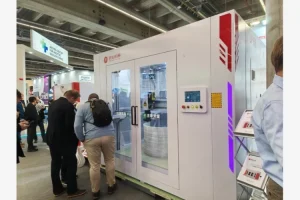
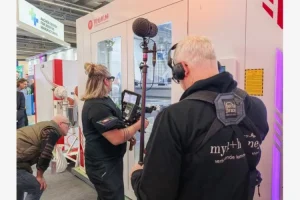
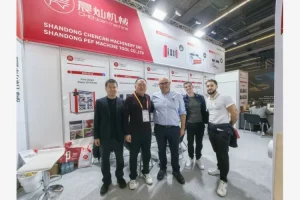
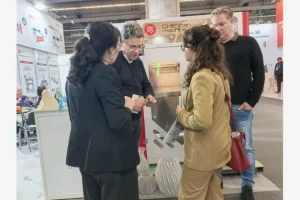
The first exhibition day brought equipment demonstrations, customer meetings, group visits and media activity to D42. The photos below record those conversations as they happened. They also show that the stand is set up for both short technical questions and longer project discussions.
Companies that cannot attend Frankfurt can learn more about CHENcan and send a drawing or application brief through the CHENcan contact page. Including the part size, material, expected quantity and finishing requirement will help the technical team prepare a more focused reply.
A short project brief is the most useful item to bring to D42. It can include the part envelope, CAD format, target material, expected annual quantity, critical surfaces, tolerance-sensitive areas and any required secondary process. Photos of the current part or tool can also help. With that information, a booth conversation can move beyond a general introduction and produce a practical follow-up list. The next step may involve a drawing review, material confirmation, sample request or a more detailed discussion of installation and production workflow.
Visit Before November 20
Formnext 2026 continues through November 20. Visit Hall 11.0, Booth D42 to see the DFM1010 and DF1615, review printed samples and speak directly with the CHENcan team. If you are comparing a Formnext 2026 pellet 3D printer for an industrial project, bring a part drawing or a clear description of the job so the booth discussion can address your actual production need.