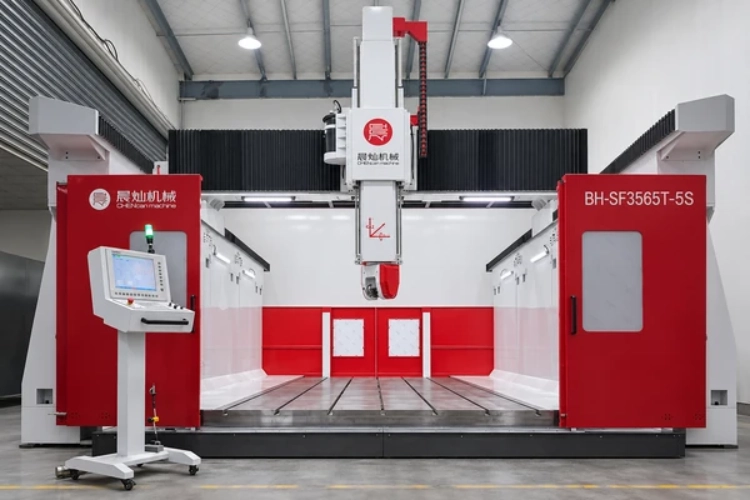
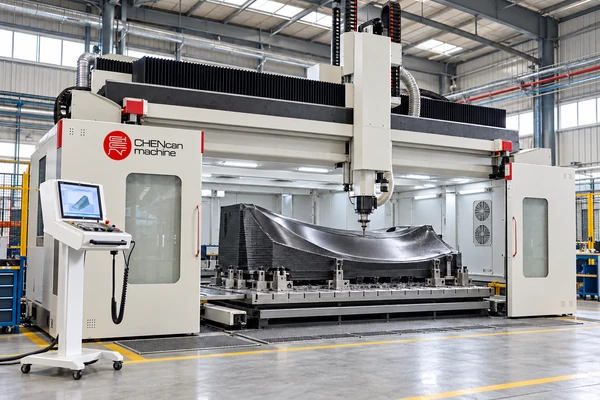
Overseas CNC buyers should confirm a configuration-specific spare-parts list and a documented service route before shipment. A stocked drive may still be unusable if its hardware revision, firmware, connector, or parameter requirements differ from the installed unit. Recovery depends on compatible parts, qualified replacement work, and access to the right technical information.
Review spare parts, warranty, remote support, onsite service, training, and backups together. Ask the supplier to identify what is included, what is chargeable, who is authorized to intervene, and how a repaired machine will be checked before production resumes.
Begin with the machine that was actually delivered
The commercial model name is a poor parts reference. Controller generations change, optional heads are added, and apparently similar motors or drives may use different interfaces. Machines that began in one product family can therefore leave the factory with different component sets.
After configuration freeze, build the parts record around the machine serial number and delivered bill of materials. Record the component manufacturer, complete part number, hardware revision, firmware where relevant, and supplier ordering code. Retain a legible nameplate photograph and update the record after approved changes.
Put the record with the machine drawings and attach any approved successor notice to the original number. Different arrangements appear across the CHENcan five-axis CNC center and high-speed mold CNC machine families. The delivered serial number, not a familiar housing, settles the compatibility review.
Make the shelf explain itself
Separate consumables, site-dependent wear items, and production-critical assemblies. For each recommendation, identify the failure or consumption risk, proposed quantity, normal lead time, and whether an approved local source exists. A generic starter kit should be checked against the delivered machine and operating conditions.
Balance expected consumption with shelf life, storage conditions, and replenishment time. Confirm requirements for batteries, seals, lubricants, electronic assemblies, and other storage-sensitive items where applicable. Approve local substitutes against the required specification before the original stock is exhausted.
The site supplies the evidence for wear items. Conditions that punish a cable or sensor in one workshop may be harmless in another. Operator observations therefore improve a generic starter kit.
For an expensive or long-lead assembly, compare stocking cost with the likely time for diagnosis, authorization, dispatch, customs clearance, installation, and release testing. Confirm whether repair, exchange, or loan arrangements are available. Ask whether lead times refer to stock availability, dispatch, or arrival at the buyer’s site.
For that reason, a CNC machine spare parts proposal should show why each quantity has been suggested. “Two required” is much easier to review when the next column says “routine annual use,” “site wear risk,” or “production-stopping lead time.”
Record what replacement really involves
Identify the tools, software licenses, parameter files, lifting equipment, alignment work, and calibration needed to replace each critical assembly. Confirm who supplies these items and who is qualified and authorized to perform the work. A spare motor or drive alone may not provide a complete recovery solution.
The authorization line becomes critical for work involving electrical isolation, stored energy, lifting, rotary calibration, or a safety circuit. The box can belong to the buyer while the intervention remains a supplier task.
Request a written substitution notice linking old and new references. It should identify any connector, firmware, parameter, software, or installation changes and the required checks after replacement. Do not assume that a newer or physically similar component is interchangeable.
Test the support route during commissioning
Test the support contact route during commissioning. Agree operating hours, time zone, language, case-opening method, and escalation contacts. Distinguish acknowledgement time from technical assessment, parts dispatch, onsite arrival, and restoration; a prompt reply does not establish a guaranteed repair-completion time.
Use the same exercise to agree on a first fault report. The serial number and alarm provide the starting point; event time, machine state, recent work, and photographs add context. Keep observation separate from checks that need authorization. One practice case can reveal a broken contact chain while the machine is still running.
Agree how remote access will be authorized under the buyer’s network rules. Identify who starts and supervises a session, which data can be transferred, and how changes and session records are retained. Remote troubleshooting does not remove the need for qualified onsite personnel or approved procedures for hazardous work.
CHENcan describes installation, programming, training, repair, and refurbishment within its general service support. The purchased terms should turn those broad capabilities into a route for the selected machine: who receives the case, what information starts it, and what triggers escalation.
Price the visit before the machine stops
Obtain the basis for onsite charges before a breakdown. Separate labor rates, minimum charges, travel time, transport, visas, accommodation, and other applicable expenses. Confirm who arranges access permissions, tools, rigging, and local assistance. Where a distributor participates, define responsibility for case ownership, technical decisions, and invoicing.
Site prerequisites deserve a short attachment. It can identify access and isolation needs, local trades, network permission, and any workpiece required for the test. A technician should not spend a paid day waiting for an item that could have been prepared.
Require a closing report identifying the fault, diagnosis, work completed, replacement parts, parameter or software changes, and verification results. Define the acceptance or release checks for the intervention. Any temporary operating restriction should have a documented owner, duration or review point, and condition for removal.
Treat warranty as a working procedure
Confirm the warranty duration, start event, covered configuration, exclusions, and claim procedure in the accepted order. Identify the treatment of wear items, replacement parts, labor, freight, customs costs, travel, and third-party components. General website statements should not substitute for the terms agreed for the delivered machine.
Agree what evidence opens a claim, who authorizes corrective work, and how defective parts are returned or retained. Clarify return deadlines, packaging, freight responsibility, and the treatment of replacement or repaired parts. Keep service and operating records available, while limiting local checks to tasks approved for the site team.
Use the wording accepted for this machine. Terms copied from another order may describe a different configuration, destination, or service arrangement.
Use training and backups as recovery tools
Operator and maintenance training solve different problems. Record the people, language, and practical work completed, with a clear boundary between routine site tasks and supplier-only intervention.
Keep dated, machine-specific backups using the controller manufacturer’s supported method. Depending on the system, include programs, parameters, offsets, software versions, and recovery instructions that may lawfully and technically be backed up. Record custody and access, verify readability, and confirm how licenses, passwords, or hardware-bound data will be restored. Do not test restoration on a production control without an approved plan.
The CHENcan article on installation planning and acceptance recommends keeping commissioning, training, and follow-up records together. The opening CNC machine spare parts list, approved substitutions, and replenishment route can sit in that same handover pack.
Let production correct the opening estimate
Review the opening stock plan after an agreed operating period and after major configuration changes. Compare actual consumption, failures, storage condition, and supplier lead times with the original assumptions. Investigate incompatible stock immediately instead of treating the starter list as permanently valid.
Maintain machine applicability, full part reference and revision, stock location, quantity, reorder point, lead time, storage rule, approved substitutes, replacement dependencies, and authorization in the register. Quarantine obsolete or mismatched items and record their disposition so they cannot be issued accidentally.
Contacts age too. Preserve the route from case opening through technical escalation and commercial approval to onsite dispatch, even when individual names change.
A local equivalent requires documented checks of ratings, interfaces, firmware, parameters, environmental suitability, and any safety-related function. Obtain approval from the responsible technical authority and, where required, the machine supplier before installation. Retain the compatibility evidence and update the machine record after an approved substitution.
Close the recovery gaps with the order
Ask the CHENcan technical and sales contact team to return its recommendation against the frozen configuration. Unresolved points stay beside the order, with an owner, until they are closed.
A focused spare-parts plan should reduce recovery time without creating unnecessary stock. Before shipment, close the gaps between part identification, replacement authority, support contacts, agreed service charges, backups, and release checks. Assign unresolved items to named owners and retain the final records with the machine handover package.