Complex surface CNC machining is not only about spindle speed or cutting power. For car molds, boat plug molds, composite tooling, sculpture models, and large industrial patterns, the bigger challenge is keeping the tool at the right angle while the surface keeps changing.
A flat area is easy. A deep curve, side wall, narrow transition radius, or steep pocket is where machining difficulty rises quickly. That is exactly why A axis and C axis movement matter in 5-axis CNC machining.
For buyers evaluating a 5-axis CNC router, rotary-axis performance is not a small technical detail. It directly affects surface finish, setup count, manual polishing time, and overall delivery risk.
What Do A Axis and C Axis Do in 5-Axis CNC Machining?
In a 5-axis CNC router, the linear axes move the tool across the workpiece, while the rotary axes change the tool direction.
The A axis typically controls spindle tilt. The C axis typically controls rotation around the vertical direction. Together, they allow the cutter to approach the workpiece from more useful angles without repeatedly moving or re-clamping the part.
That extra flexibility is what makes 5-axis machining more effective on large curved surfaces and complex mold geometry.
Why Do Rotary Axes Matter So Much on Complex Surfaces?
For many mold factories, the real problem is not whether the machine can cut the material. The real problem is whether the machine can keep the correct tool angle in the correct area without repeated repositioning.
Every extra setup creates risk:
- The workpiece can shift slightly
- The reference point may need to be rechecked
- The tool path may need adjustment
- Manual handling increases labor and delays
Good A axis and C axis movement reduces those risks by letting the tool reach more areas within one continuous machining strategy.
How Does the A Axis Improve Surface Machining?
The A axis changes the tilt of the spindle head. That means the cutter does not need to stay vertical when the part surface is curved, sloped, or recessed.
This improves machining in several ways:
- The tool can stay closer to the ideal cutting direction
- Long tools are needed less often, which helps control vibration
- Deep or sloped areas become easier to reach
- Surface marks can be reduced, which lowers later polishing work
For example, on a car bumper mold or sanitary ware mold, the surface usually includes smooth curves, local transitions, and deeper zones. A vertical tool may reach some of those areas, but not always with the best angle. A tilting spindle can follow the geometry more naturally.
How Does the C Axis Improve Access Around the Workpiece?
The C axis rotates the tool direction around the workpiece, allowing the spindle to approach the same feature from different sides.
This is especially useful on wide molds, large foam patterns, marine models, and composite tooling where the machine may need to attack the surface from multiple directions within one program.
Instead of stopping the job to reposition the part, the machine changes approach direction through programmed rotary motion. That means:
- Fewer setup interruptions
- Less re-clamping
- Better consistency from one feature to the next
- Lower risk of small positioning errors caused by manual intervention
Why Does Rotary Range Matter in Real Mold Work?
When buyers ask whether a machine is “5-axis,” that is only the starting point. The more useful question is how much rotary movement the machine actually provides and whether that range is practical for the target workpiece.
Complex mold surfaces do not need one fixed angle. Some areas need a slight tilt. Others need a larger swing or continuous directional change around the part. Without enough rotary range, blind areas and awkward tool positions become more common.
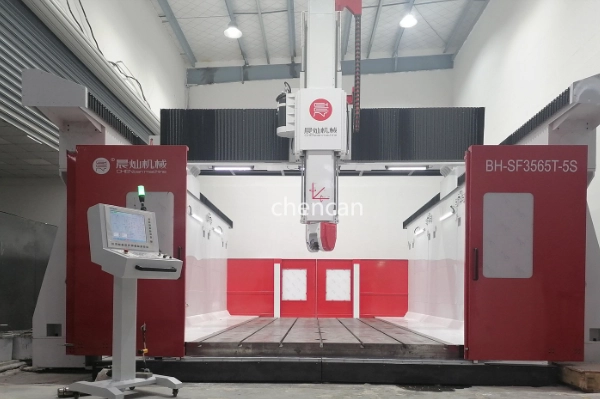
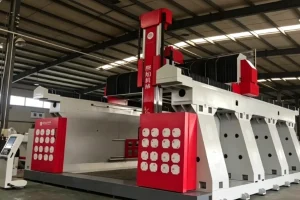
According to CHENcan’s current machine information, the SF3565T-5S Big Size 5 Axis CNC Router for Car Mold Making offers A axis ±120° and C axis ±360°.
For large mold machining, that is a practical range because it helps the cutter reach more side surfaces and curved zones without forcing the operator to flip or reposition the workpiece repeatedly.
How Do Better Tool Angles Improve Surface Finish?
A poor tool angle often leaves uneven cutting marks, unstable edge quality, or surfaces that require extra repair.
The part may still be “machined,” but the shop then loses time in sanding, polishing, or manual correction. In mold work, that extra post-processing can remove much of the time saved during rough cutting.
When A axis and C axis movement are matched well to the geometry, the cutter can stay on a more natural cutting path. The contact condition between tool and material becomes more consistent, and surface quality often improves.
This does not mean rotary movement solves everything. Material density, tool quality, spindle condition, and programming strategy still matter. But good rotary performance gives the process a much better starting point.
What Other Machine Details Support Accurate Rotary Machining?
Rotary axes alone are not enough. For consistent 5-axis machining, the machine also needs structural stability, spindle performance, accurate transmission parts, and repeatable positioning.
1. Gantry-Move Structure Helps on Large Workpieces
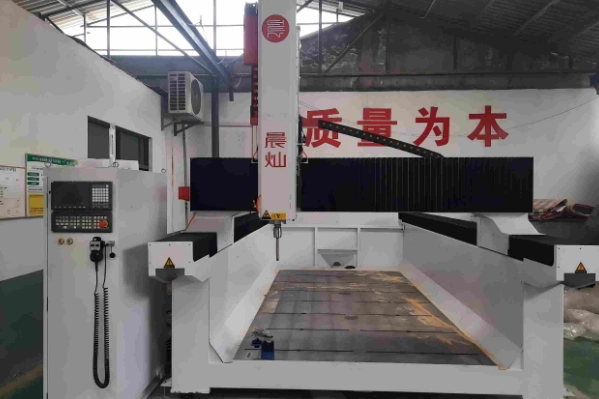
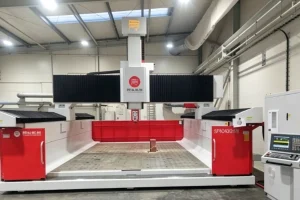
CHENcan presents this model as part of the SF Gantry Move Series. A gantry-moving structure is useful for large molds because the workpiece stays fixed while the gantry carries the machining movement.
For heavy or oversized workpieces, this is often more stable than repeatedly moving the workpiece itself.
The published machine stroke is X 6500 mm, Y 3500 mm, Z 2500 mm, with a 5-axis working size of X 5500 mm, Y 2500 mm, Z 2100 mm. That gives the machine the scale needed for large car molds, patterns, and industrial models.
2. Spindle Speed and Tool Change Affect Daily Efficiency
The machine uses a 15 kW spindle with speed up to 24,000 rpm. For materials such as foam, wood, resin, MDF, PVC, and some composite-related applications, high spindle speed can support cleaner cutting when tool selection and feed rates are matched well.
The product information also mentions automatic tool changing with an 8-position tool system and short tool-change time. In mold work, fast switching between roughing, semi-finishing, finishing, and detail tools helps reduce non-cutting downtime.
3. Drive Accuracy Supports the Final Result
If the linear axes are not stable, rotary motion alone cannot protect the final surface quality.
According to the current product details, this model uses high-precision ball screws on the XYZ axes and lists positioning accuracy of 0.04 mm/m with repeatability of 0.025 mm/m. For buyers, repeatability is especially important because long cutting hours matter more than a single ideal test result.
Which Industries Benefit Most From A Axis and C Axis Rotation?
Rotary-axis value becomes most obvious when the part has a true 3D shape rather than a simple flat profile.
This is why 5-axis CNC machining is widely used in:
- Automotive mold making
- Marine plug and hull mold work
- Aerospace tooling and model production
- Composite mold production
- Sculpture and industrial model machining
- Large pattern and prototype work
CHENcan’s published application scope for the SF3565T-5S includes automotive, aeronautical, marine, sanitary ware, and composite component production. The listed materials include wood, MDF, PVC, foam, composites, epoxy, putty, FRC, GRC, resins, and light alloys.
These application materials help explain why rotary motion matters. Foam and resin can cut quickly, but good angle control still matters for surface quality. Composite-related molds need better edge control. Marine and automotive molds often combine wide smooth surfaces with difficult transition zones.
How Should Buyers Judge a 5-Axis CNC Router Before Ordering?
A large 5-axis CNC router is a serious investment. The right evaluation should start from the workpiece, not only from the machine name.
Before choosing a machine, buyers should prepare:
- Maximum workpiece length, width, and height
- Main material and density
- Required surface finish level
- Expected daily or monthly output
- Tooling and clamping method
- Whether dust control or vacuum holding is needed
- Available power, air, and workshop space
These details help determine whether the machine’s rotary range, spindle, table design, travel, and service support match the real job.
Why Supplier Capability and Service Still Matter
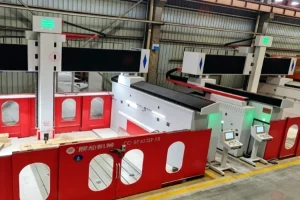
Large 5-axis equipment should not be treated like a simple standard tool purchase. Installation, training, calibration, maintenance, and spare-parts response all affect production stability.
According to تشينكان’s current company information, the company was founded in 1998, serves customers across more than 70 countries and regions, operates production and research bases covering more than 60,000 square meters, and holds ISO9001 and CE certification.
For overseas buyers, after-sales support should be discussed early, including installation guidance, commissioning, training, maintenance, and long-term technical support.
Final Takeaway
A axis and C axis rotation improve complex surface CNC machining because they let the tool approach curved, deep, and side-facing areas from better angles with fewer setups.
That leads to more stable machining paths, reduced blind areas, better surface quality, and less manual repair work after cutting.
For buyers working on large molds, composite tooling, marine models, and industrial patterns, rotary-axis capability should be evaluated as a core productivity factor, not just a specification line.
أسئلة متكررة
Why are A axis and C axis important in 5-axis CNC machining?
The A axis changes spindle tilt, and the C axis changes rotational approach direction. Together, they help the cutter reach curved surfaces, side walls, and deep areas with fewer setups.
Is A axis ±120° and C axis ±360° enough for large mold machining?
For many car mold, marine mold, foam model, resin pattern, and composite mold applications, that range is practical because it gives the tool more approach freedom and reduces blind cutting areas.
Does 5-axis CNC machining always give better surface finish?
Not automatically. Surface finish also depends on material, tool quality, feed rate, spindle speed, and programming. But better rotary movement helps the tool stay at a more suitable cutting angle, which often reduces later sanding and repair.
What materials can this type of machine process?
Based on the current product information, the SF3565T-5S is positioned for materials such as wood, MDF, PVC, foam, composites, epoxy, putty, FRC, GRC, resins, and light alloys.
What should buyers check before buying a big-size 5-axis CNC router?
Buyers should check workpiece size, material, surface requirement, spindle power, rotary-axis range, machine accuracy, table type, dust handling, tool-change needs, delivery plan, installation support, and after-sales service.