Factory buyers often compare 3D printing and laser engraving as if they compete for the same job. In real production, they usually solve different problems. One builds the shape. The other adds detail, marks, or light cutting after the shape already exists.
For mold shops, pattern makers, composite tooling teams, and model workshops, the more useful question is not “Which technology is better?” It is “Which process removes the current bottleneck with the least waste, rework, and delay?”
If the problem is creating a large irregular body, industrial 3D printing is often the better starting point. If the problem is surface marking, traceability, shallow texture, or clean detail on a finished part, laser engraving is usually the better fit.
What Is the Core Difference Between 3D Printing and Laser Engraving?
The difference is simple, but it changes almost every buying decision.
3D printing is an additive process. It builds a part layer by layer from digital data. Laser engraving is a surface process. It uses a focused beam to mark, texture, etch, or cut selected areas on an existing part.
That means 3D printing is usually chosen when the workshop needs volume, geometry, or rapid pattern development. Laser engraving is usually chosen when the workshop needs identification, decorative detail, alignment marks, or controlled surface treatment.
When Does 3D Printing Make More Sense?
Industrial 3D printing is strongest when the challenge is shape rather than surface detail. A large mold body, pattern blank, sculpture base, tooling structure, or curved model can take too long to build by hand or machine from a solid block.
In those cases, additive manufacturing gives the team a more direct path from CAD data to a near-shape part.
1. It Cuts Early-Stage Development Time
In mold and pattern work, the first physical version is rarely the final one. Engineers may still adjust wall thickness, split lines, draft angles, shrinkage allowance, local reinforcement, or surface transitions.
That is where industrial 3D printing helps. A team can produce a near-shape blank faster, then finish it through machining, sanding, coating, inspection, or local correction. This reduces the cost of changing large parts after design updates.
2. It Handles Large Irregular Shapes Better
Large patterns and tooling parts are not just “bigger prototypes.” Their scale changes the whole workflow.
A machine that works well on a small sample may struggle when the project becomes a vehicle model, boat plug, hull mold section, wind blade mold component, sculpture structure, or foundry pattern. The larger the part becomes, the more expensive waste, bonding, alignment, and manual correction become.
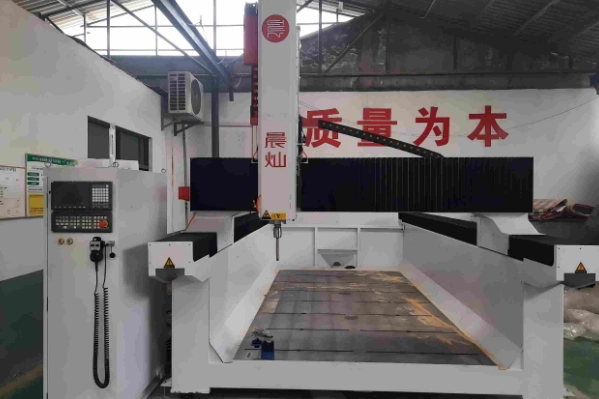
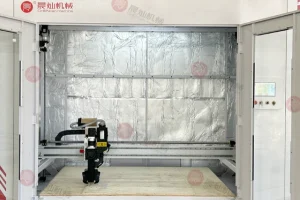
A large-format pellet 3D printer such as CHENcan’s DF2016 is more relevant in this context than a desktop filament printer. Based on CHENcan’s product information, the DF2016 is aimed at industrial mold and pattern work and uses pellet-based FDM printing for large thermoplastic or composite parts.
3. It Reduces Material Waste in Pattern Making
Machining a large pattern from a solid block can be slow and wasteful, especially when much of the original stock will be removed. Additive manufacturing avoids that problem by placing material only where it is needed to form the basic structure.
For buyers working on custom molds, one-off patterns, or complex curved forms, this can reduce both raw-material waste and the time spent roughing oversized blanks.
4. It Supports Industrial Pellet Materials
Industrial-scale pellet printing is different from hobby-level filament printing. Pellet systems are more relevant when the workshop needs larger output, broader thermoplastic material options, and a more production-oriented process.
According to CHENcan kann’s existing product information, its industrial 3D printing line supports thermoplastic materials such as PP, PE, PS, nylon, PVC, ABS, PA, PPS, acrylic, and related plastic or composite materials.
There is also a clear limit. This type of machine does not print metal. If the job is mainly metal marking, metal texturing, or fine detail on an already formed metal surface, laser processing is usually the more suitable direction.
When Does Laser Engraving Make More Sense?
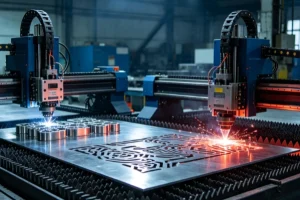
Laser engraving is not intended to replace additive manufacturing. It solves a different group of problems, mainly around speed, detail, marking quality, and repeatability on finished or semi-finished parts.
1. It Works Well for Marking and Traceability
Many factories need more than shape. They need readable part numbers, QR codes, reference marks, logos, and assembly guidance.
A mold insert with the wrong identification can delay the entire shop flow. A composite panel without clear marks may create avoidable assembly mistakes later. Laser engraving helps because it can add readable information without direct tool contact on the surface.
This is especially useful when parts need:
- Part numbers
- QR codes or serial identifiers
- Assembly position marks
- Logos or branding marks
- Process tracking information
2. It Adds Fine Surface Detail Efficiently
Laser engraving is also useful when shallow texture, fine lines, small characters, or controlled visual detail matter more than bulk material removal.
Compared with mechanical engraving, laser processing often reduces tool wear concerns and can deliver more consistent fine detail when the settings are matched to the material.
That said, laser work is not automatically “easy.” Heat-sensitive plastics, composites, and coated surfaces still need testing. Too much heat can burn, melt, or discolor the surface.
3. It Fits Secondary Processing in Sheet and Panel Work
Laser engraving and light laser cutting can be a practical secondary step after the main shape is already made. That matters in workflows involving panels, covers, signage parts, composite sheets, interior components, or light industrial parts that need later marking or shallow detail.
In those cases, the laser is not replacing the primary shaping process. It is improving the finished part’s readability, function, or appearance.
3D Printing vs. Laser Engraving: How Should Buyers Decide?
The safest buying decision starts with the part, not the machine.
Before comparing equipment, the buyer should write down six things:
- What is the part’s actual geometry?
- What material will be used?
- Is the main challenge shape creation or surface detail?
- What surface finish is required?
- Will the part need later CNC finishing or assembly marks?
- Is the workflow one-off, custom, or repeat production?
Once those questions are answered, the choice usually becomes clearer.
Choose 3D Printing When the Main Problem Is Shape
3D printing is usually the better fit when:
- The part has complex geometry or large curved surfaces
- The design changes often during development
- Material waste from block machining is too high
- The part is a mold, pattern, jig, fixture, or large model
- The printed blank will later be machined or finished
Choose Laser Engraving When the Main Problem Is Surface Detail
Laser engraving is usually the better fit when:
- The part already has the correct shape
- The job needs labels, codes, logos, or alignment marks
- The surface needs shallow texture or fine lines
- The material is sensitive to mechanical tool pressure
- The process must be fast and repeatable in secondary operations
Why a Combined Process Often Makes More Sense
In many real factories, the best answer is not “3D printing or laser engraving.” It is “3D printing first, then CNC finishing, then laser marking if needed.”
That sequence is practical because each process handles a different step well:
- 3D printing builds the near-shape body
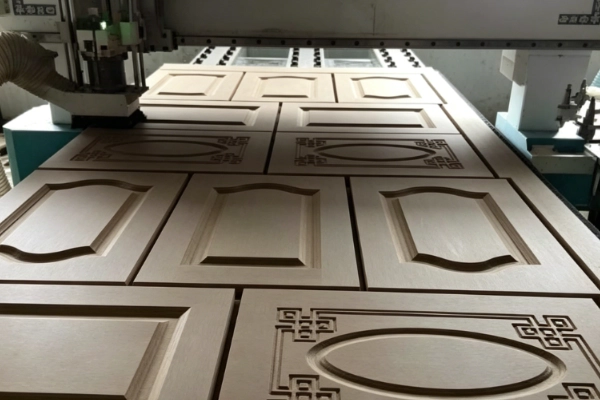
- CNC machining improves critical dimensions and surfaces
- Laser engraving adds traceability, assembly marks, or surface detail
This kind of combined workflow is especially useful in pattern making, mold development, composite tooling, and customized industrial model production.
CHENcan’s broader background across additive manufacturing, CNC machining, and laser-related processing is relevant here because buyers are often not comparing a single machine. They are comparing whether a supplier understands the full process route from blank creation to finished tooling.
What Should Buyers Check Before Ordering?
Machine choice is only one part of a successful purchase. Buyers should also review whether the supplier can support the process before and after delivery.
Before requesting a quote, prepare the following:
- CAD file or drawing
- Material target
- Part size
- Surface finish expectation
- Tolerance requirement
- Monthly or project output volume
- Whether the part needs later machining, coating, or marking
For high-value projects, ask for trial processing if possible. That is often the fastest way to confirm whether the proposed process route is realistic.
Final Takeaway
3D printing and laser engraving do not solve the same manufacturing problem.
If the bottleneck is creating a large thermoplastic or composite pattern, mold body, or tooling structure, industrial 3D printing is usually the better starting point. If the bottleneck is surface marking, shallow detail, identification, or light secondary processing, laser engraving usually deserves priority.
For many buyers, the smartest decision is to stop asking which technology is “better” in general and start asking which process fits the current geometry, material, and production step.
That approach leads to better machine matching, lower waste, and fewer avoidable delays on the shop floor.
FAQ (häufig gestellte Fragen)
- Is 3D printing better than laser engraving for pattern making?
Yes, when the main task is building the body of a mold, pattern, jig, or fixture. 3D printing creates volume, while laser engraving mainly adds surface-level detail or marks.
- Can laser engraving replace industrial 3D printing?
No. Laser engraving is not designed to build large 3D forms. It is better for marking, coding, shallow texture, and light surface processing on finished or semi-finished parts.
What materials can CHENcan’s industrial 3D printer process?
Based on CHENcan’s current product information, its pellet-based industrial 3D printing line supports thermoplastic materials such as PP, PE, PS, nylon, PVC, ABS, PA, PPS, acrylic, and related plastic or composite materials.
Why do some factories combine 3D printing, CNC machining, and laser engraving?
Because each process solves a different step. 3D printing builds the near-shape form, CNC machining improves key surfaces, and laser engraving adds traceability or fine surface detail.
What should buyers prepare before asking for a machine recommendation?
Buyers should prepare drawings, CAD files, material requirements, part size, surface finish targets, tolerance needs, and expected output. This helps the supplier recommend a practical process route instead of only quoting a standard machine.