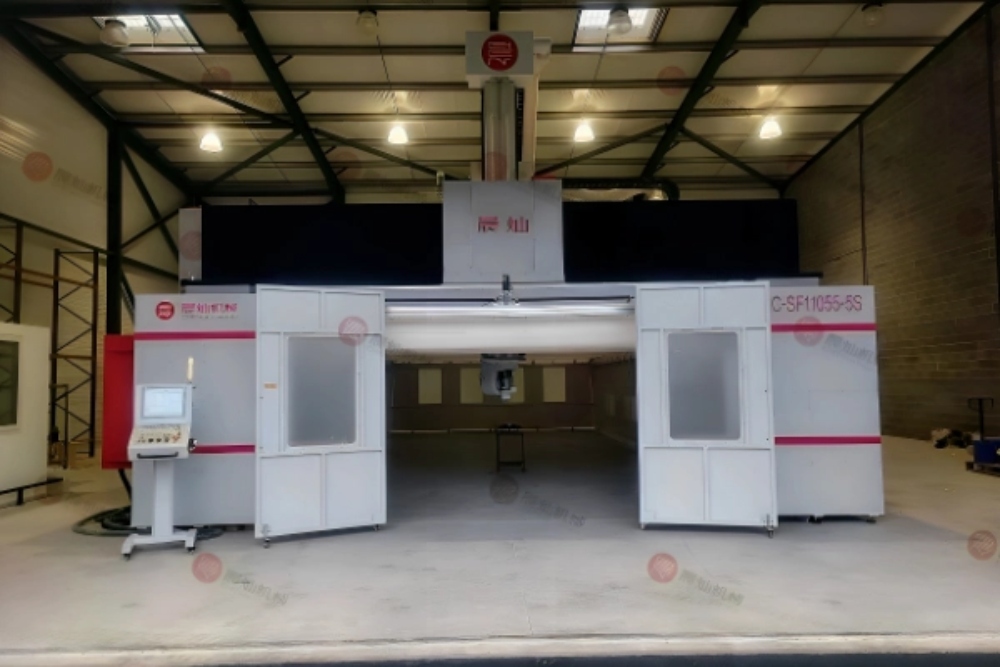
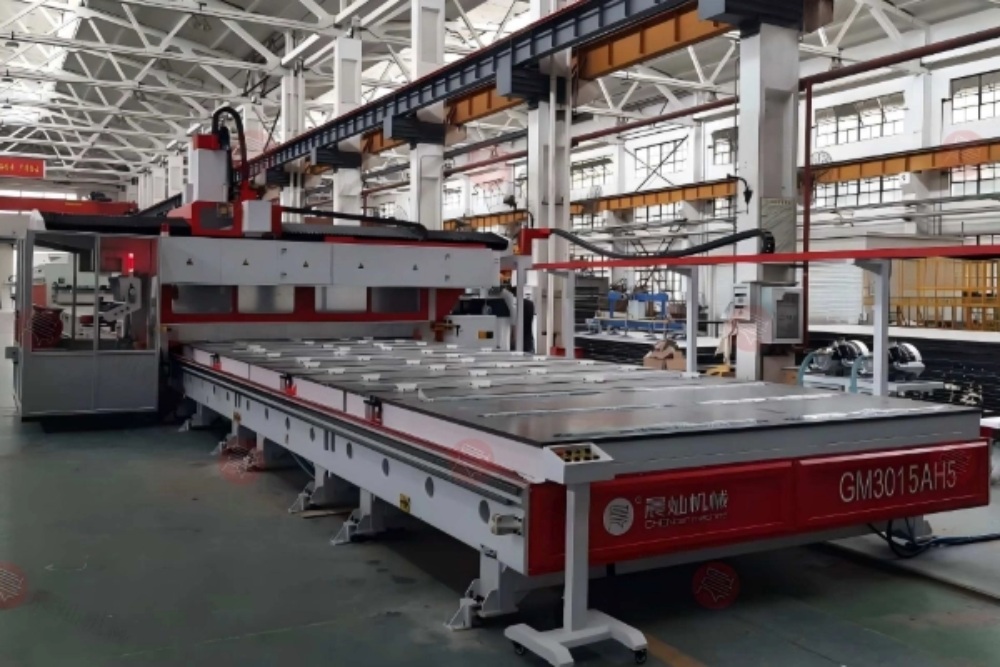
Foam mold production often looks simple from the outside, but daily factory work quickly proves otherwise. One week may require a vehicle model, the next week a casting pattern, and the week after that a large sculpture section. Manual carving is too slow for this kind of rhythm. A low-end router may cut fast at first but lose stability after months of dusty work. A larger premium machine may be powerful, yet its price, footprint, and maintenance cost can easily exceed what many workshops actually need.
That is why B2B buyers often ask a more practical question: can one foam mold CNC machine keep investment reasonable, output high, and stability reliable enough for long-term production?
For mold shops, pattern makers, sculpture studios, and casting suppliers, the answer depends on machine structure, working size, spindle configuration, drive system, service support, and how well the machine matches real orders. The BS3040 Styrofoam Form Carving Maschine für Schimmel Herstellung is designed around that balance. It is not positioned as the most expensive machine in the workshop. It is designed to deliver a practical cost-performance ratio for foam mold production.
Why Does Low Investment Still Require Real Machine Strength?
Low investment should never mean weak structure. In foam mold machining, many buyers start by comparing prices, but long-term value depends far more on the body frame, guide layout, and transmission stability.
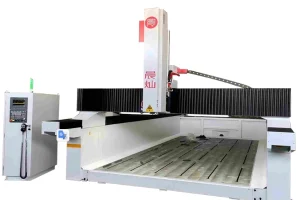
The BS3040 uses a thick-walled square tube welded body. According to the product information, welds pass strict inspection to reduce hidden risks such as false welding and welding leakage. This matters because even though foam is light, large foam molds still require long toolpaths, wide movement ranges, and stable positioning.
A weak frame usually does not fail immediately. Problems tend to appear gradually:
– Slight vibration during high-speed movement
– Uneven surface finish on large curved areas
– More sanding after machining
– Accuracy loss after repeated production
– Higher maintenance and repair cost later
For B2B workshops quoting foam mold projects, these problems directly affect delivery time, labor cost, and customer confidence. In many cases, lost production time costs more than the original machine discount.
How Does BS3040 Support High Output?
High output in foam mold machining depends on having enough travel range, stable feed performance, and a spindle system that can cut efficiently without damaging the surface quality. Foam does not require heavy metal-cutting force, but it does require smooth and repeatable motion across large 3D paths.
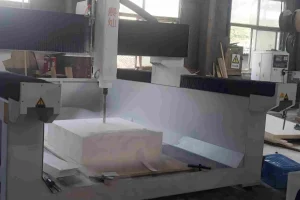
Die BS3040 Styrofoam Form Carving Maschine für Schimmel Herstellung offers a table size of 4000 × 3000 mm and a working area of X 4000 mm, Y 3000 mm, and Z 1000 mm. This is a practical range for many large foam and pattern jobs, including automotive models, casting patterns, sculpture sections, and marine mold parts.
The machine is equipped with a 7.5 kW ATC spindle running up to 20,000 rpm, with a BT40 cone, maximum tool diameter of 32 mm, and maximum tool weight of 5 kg. For daily foam mold production, automatic tool change is not a small convenience. It helps the machine move from roughing to semi-finishing to finishing with less manual interruption.
This improves real production efficiency by:
– Reducing stoppages during long jobs
– Supporting smoother multi-tool workflows
– Shortening changeover time between roughing and finishing
– Helping workshops handle larger or mixed orders more efficiently
Why Is Ball Screw Drive Important for Long-Term Accuracy?
Many buyers look at spindle power first, which is understandable. However, drive system quality is just as important, especially when the machine must repeat large 3D toolpaths day after day.
The BS3040 uses high precision ball screws on the XYZ axes. The product information lists positioning accuracy of X/Y/Z 0.08/0.06/0.05 mm per meter and repeatability of X/Y/Z 0.06/0.04/0.03 mm per meter.
For foam mold work, these figures matter because large curved surfaces need clean transitions and consistent geometry. If the drive system is unstable, the cutter can leave steps, marks, or subtle shape errors. That leads directly to more hand sanding and, in some cases, a lost workpiece.
A stable ball screw system helps support:
– Long 3D surface carving
– Repeated mold pattern production
– Cleaner curved edges
– Better toolpath tracking
– Lower rework pressure
This is one reason the BS3040 is better understood as a foam-focused mold CNC machine rather than a generic router.
Which Materials and Industries Fit This Machine Best?
The right CNC machine should always be selected by real application range, not brochure language alone. Foam mold work appears in many industries, but buyers differ in surface requirements, block sizes, order frequency, and delivery expectations.
The BS3040 is suitable for a broad range of soft-material mold and model applications, including:
– Automotive work using wood, MDF, PVC, foam, and plastic
– Aerospace work using composite materials
– Marine work using epoxy and putty
– Railway work using FRC and GRC
– Casting patterns and molds using fiberglass and sand-related processes
– Sanitary ware and sculpture engineering
This broad application range is useful for buyers handling mixed project types. It allows one machine to support multiple soft-material workflows without immediately forcing the factory toward a higher-cost machine class.
A practical note from workshop reality is that foam dust spreads everywhere. It affects machine cleanliness, operator workload, and long-term component life. That is why optional dust suction, protection covers, doors, roofs, cameras, vacuum tables, and tool library configurations are not just extra add-ons. They can directly improve working efficiency and maintenance control.
How Can One Machine Keep Daily Maintenance Simple?
Long-term stability is not only about the machine leaving the factory in good condition. It also depends on whether daily maintenance remains practical for real operators.
The BS3040 maintenance guidance focuses on essential shop-floor habits:
– Clean the worktable after daily production
– Check guide rails, transmission parts, spindle, and collet
– Monitor the automatic lubrication system and oil level
– Watch machine temperature during operation
– Use the water chiller correctly for spindle cooling
– Calibrate the machine regularly
– Keep protection devices in working condition
– Handle collisions or abnormal issues quickly
These are simple habits, but they are often what separates a stable machine from a problematic one after long use. For workshops that need consistent foam mold output, easy maintenance is part of productivity.
What Supplier Strength Should B2B Buyers Check?
A CNC purchase includes much more than the machine body. It also includes technical communication, drawing review, sample proofing, production control, shipment planning, installation, training, and after-sales support. This is especially important for overseas buyers.
According to CHENcan kann company information, the company has worked in CNC machining solutions since 1998 and serves customers across multiple countries and industrial sectors. Its knowledge base also states that it has two production and research bases, more than 60,000 square meters of floor area, over 270 professionals, and in-house processing capability for mechanical structural parts.
This background matters during supplier evaluation. Buyers should verify whether the supplier can:
– Review drawings before order confirmation
– Recommend a suitable machine configuration
– Arrange factory inspection or sample proofing
– Explain shipment and installation procedures clearly
– Support operator training after delivery
– Provide long-term technical assistance
The company’s service information includes installation, maintenance training, operation training, CNC programming support, repair, and refurbish service. That lowers risk for factories that need the machine to become productive soon after arrival.
When Is BS3040 a Better Choice Than a Higher-Cost Machine?
A larger or more complex CNC system may still be necessary for huge molds, harder materials, or full 5 axis contour applications. But many foam mold factories do not need that level for most daily orders.
The BS3040 becomes a practical choice when these conditions match the buyer’s needs:
– Main materials are foam, wood, MDF, PVC, plastic, putty, or similar soft materials
– Workpieces fit within 4000 × 3000 × 1000 mm
– The factory wants much higher efficiency than manual carving
– Surface finish needs to reduce hand repair time
– Investment budget is limited but machine stability still matters
– ATC spindle performance is important for workflow efficiency
– Dust collection, protection, vacuum table, or camera options may be useful
– After-sales support and training are important after purchase
It is less suitable for factories mainly processing hard metals or requiring heavy-duty metal milling. A serious supplier should say this clearly instead of overselling one machine for every task.
How Should Buyers Move from Inquiry to Production?
A safer buying process starts with real drawings, workpiece dimensions, materials, surface requirements, and output expectations. Buyers should ask for a machine layout suggestion and clarify which options are necessary and which are optional. If possible, sample proofing before final confirmation is highly valuable.
The typical purchase route includes deposit confirmation, production start, machine inspection before shipment, balance payment, delivery, and then engineer installation and training. This process helps reduce misunderstanding and improve readiness before the machine reaches the workshop.
Conclusion
Die BS3040 Styrofoam Form Carving Maschine für Schimmel Herstellung is attractive because it keeps the buying logic practical. It combines a large working area, ATC spindle, high precision ball screw drive, a strong welded frame, and flexible option selection without forcing every customer into a top-cost system.
For many foam mold, pattern, and sculpture factories, the real goal is not to buy the biggest machine. It is to buy a machine that can keep producing stable parts after the showroom excitement fades. In that context, the BS3040 offers a strong balance of low investment, high output potential, and long-term operational stability.
FAQ (häufig gestellte Fragen)
Q1: Is BS3040 suitable for large foam mold production?
A: Yes. With a 4000 × 3000 mm table and X 4000 mm, Y 3000 mm, Z 1000 mm working area, it is suitable for large foam molds, casting patterns, automotive models, sculpture parts, and similar soft-material work.
Q2: Why does a foam mold CNC machine need a strong welded body?
A: A strong welded body helps reduce vibration and accuracy loss during long cutting jobs. Even though foam is light, large molds still require stable motion across wide areas. Better structure usually means cleaner surfaces and less rework.
Q3: What is the main benefit of the 7.5 kW ATC spindle?
A: The 7.5 kW ATC spindle supports faster tool changes and smoother workflow. It helps the machine move from roughing to finishing with less manual stopping, which is especially useful for batch orders and large 3D toolpaths.
Q4: Can BS3040 process materials other than styrofoam?
A: Yes. It can process foam, wood, MDF, PVC, plastic, putty-related work, epoxy-related work, fiberglass-related casting patterns, and similar mold materials. Final suitability should still be checked against the actual workpiece and cutting target.
Q5: What support is available after purchase?
A: Support can include installation, operation training, maintenance training, CNC programming help, repair, refurbish service, and lifetime technical support. Buyers can also discuss factory inspection and workpiece trial processing before placing the order.