Many CNC suppliers use the phrase “industrial grade,” but in real manufacturing that phrase only means something if the machine can hold up under industrial conditions.
A machine does not become industrial grade because it has a large frame, a high spindle speed, or an impressive-looking control screen. It becomes industrial grade when it can hold accuracy over time, stay stable under load, maintain finish quality during long operating hours, recover from normal production variation, and keep doing those things without depending on ideal conditions.
That is why experienced buyers in mold making, composite processing, wind energy tooling, aerospace support parts, automotive patterns, and large-format machining usually do not judge a machine by one visible feature. They judge it by a group of technical signals that reveal how the machine will behave after installation, not just during presentation.
This article explains eight of the most important signals to verify when deciding whether a CNC machine is truly industrial grade.
1. Industrial Grade Begins with System Behavior, Not a Single Component
The first misconception to clear up is that industrial grade is not one isolated specification.
A machine can have a good spindle but a weak structure. It can have a strong frame but poor calibration discipline. It can have a premium controller but still perform inconsistently if the motion system is not well matched. In other words, industrial grade is a systems result.
A serious machine must make all of these layers work together:
- structure
- motion transmission
- controller and servo response
- spindle and tooling stability
- calibration and compensation
- application-specific configuration
- maintenance and serviceability
When buyers fail to evaluate the machine as a system, they often overvalue the most visible feature and undervalue the hidden factors that control long-term performance.
2. Structural Rigidity Must Be Paired with Thermal and Dynamic Stability
Most buyers understand that frame rigidity matters, but many evaluate it too simply.
Industrial-grade structure is not just about whether the machine looks heavy. It is about whether the machine can resist three kinds of performance loss:
- static deformation from its own geometry and workpiece load
- dynamic vibration during acceleration and cutting
- thermal drift over long operating periods
That matters because accuracy loss in industrial production often comes from accumulation, not from dramatic failure. A machine may still run, but if the structure moves slightly under load, reacts poorly to vibration, or changes behavior as temperature rises, the result will show up as inconsistent finish, poor fit-up, or dimensional variation across batches.
A deeper structural review should therefore include:
- welded frame design quality
- wall thickness and support layout
- gantry stiffness
- stress-relief or heat-treatment process after welding
- rail mounting support quality
- resistance to long-travel deflection
A buyer should not only ask, “Is the frame heavy?” but also, How was the structure processed so it stays stable after months of real use?
This is one of the first places where a lower-priced machine can hide future cost.
3. Motion Architecture Reveals Whether Precision Can Survive Production Speed
Many machines can move quickly. Fewer can move quickly while remaining predictable.
Industrial-grade motion quality depends on how the rails, racks, screws, reducers, servo drives, and controller interact under load. A machine that looks smooth in air-cut mode may still produce chatter, overshoot, or inconsistent contour quality when it is cutting real material at production speed.
That is why buyers should pay close attention to motion architecture, including:
- guide rail support method
- rack-and-pinion or ball-screw selection
- reducer matching
- backlash control approach
- acceleration behavior on long travel
- repeatability under real cutting load
This matters especially in mold making and large-format work, where surface continuity matters as much as location accuracy. Poor motion behavior may leave visible step marks, vibration lines, or contour inconsistency even when the machine technically reaches the programmed dimension.
A supplier that truly understands industrial performance should be able to explain not only what drive components are used, but why that drive structure is suitable for the application.
4. Servo and Controller Quality Decide Whether Complex Toolpaths Stay Accurate
Industrial machining is not only about getting from point A to point B. It is about how precisely the machine travels between those points when the path becomes complex.
This is where servo behavior and controller quality become critical. On large molds, curved composite parts, and five-axis or multi-surface machining, small interpolation errors can become visible in finish quality or dimensional deviation.
A strong industrial platform should give buyers confidence in:
- positioning accuracy
- repeatability
- contouring smoothness
- servo response consistency
- multi-axis synchronization
- controller ability to handle complex geometry without unstable motion
This is particularly important in applications where the finished surface matters directly, such as foam patterns, mold plugs, structural composite parts, or large 3D profiles.
A machine may claim industrial accuracy, but the real question is: Can it maintain that accuracy while executing complex motion continuously, not just at isolated points?
That question separates specification-sheet precision from manufacturing precision.
5. Spindle Capability Must Be Evaluated Under Load, Over Time, and in Context
Spindle marketing often focuses on power and maximum RPM because those numbers are easy to print. But industrial buyers need to go much deeper.
A spindle should be judged by whether it can maintain stable cutting behavior on the target material, at the intended duty cycle, with acceptable thermal behavior and acceptable tool life. That is a very different question from “How fast can it spin?”
For industrial users, spindle evaluation should include:
- whether the spindle is matched to roughing and finishing needs
- how power is delivered across the real working speed range
- bearing quality and thermal stability
- cooling method and long-shift reliability
- holder standard and tooling compatibility
- expected behavior on target materials such as foam, resin board, FRP, wood pattern stock, or light alloy
The reason this matters is simple. A spindle that performs well for a short sample cut can still become a problem in continuous use. If heat buildup, vibration, or torque weakness appears during production, the machine may still be running while quietly losing quality.
Industrial grade means the spindle supports output consistency, not only demonstration performance.
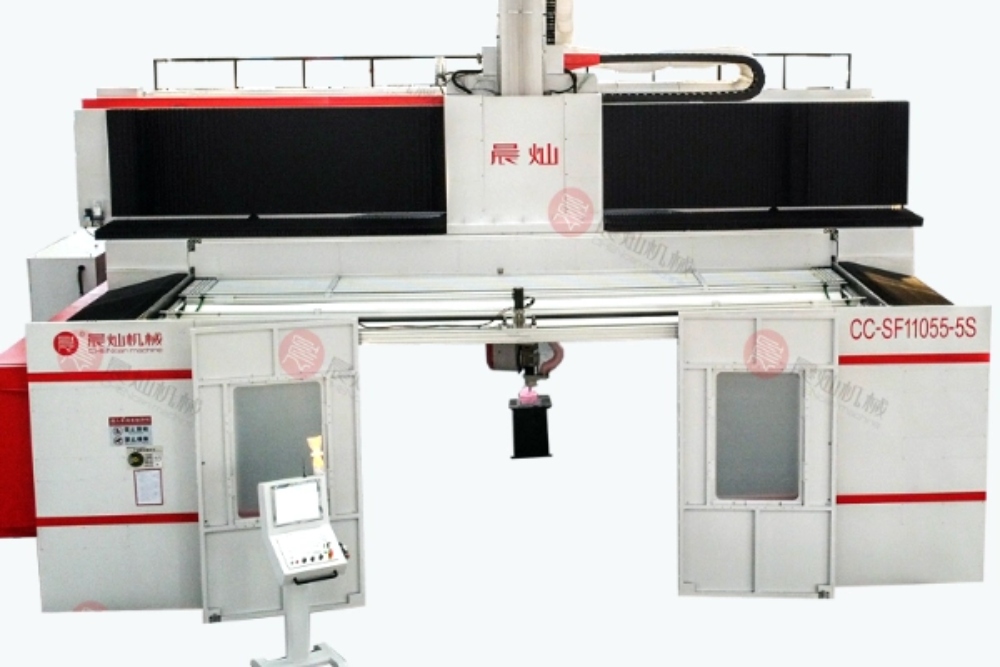
6. Calibration, Compensation, and Acceptance Discipline Are Major Industrial Signals
One of the clearest signs of a truly industrial supplier is how seriously it treats verification.
High accuracy should never be presented as a slogan alone. It should be supported by a calibration process, a compensation strategy, and a clear method for verifying machine performance over the relevant working range.
This is especially important in large-format CNC machines. Over a long axis, small geometric errors can accumulate into meaningful deviation if they are not measured and corrected properly.
Buyers should therefore ask about:
- laser calibration methods
- ballbar or other verification tools where relevant
- axis compensation logic
- tool length measurement or compensation
- repeatability checks after assembly
- acceptance criteria during commissioning
Automatic tool measurement is also part of the industrial conversation. It helps reduce setup error, supports multi-tool work, and makes the machine less dependent on perfect manual setup every time.
In short, industrial-grade accuracy is not only what the machine was designed to achieve. It is what the supplier can repeatedly prove and maintain.
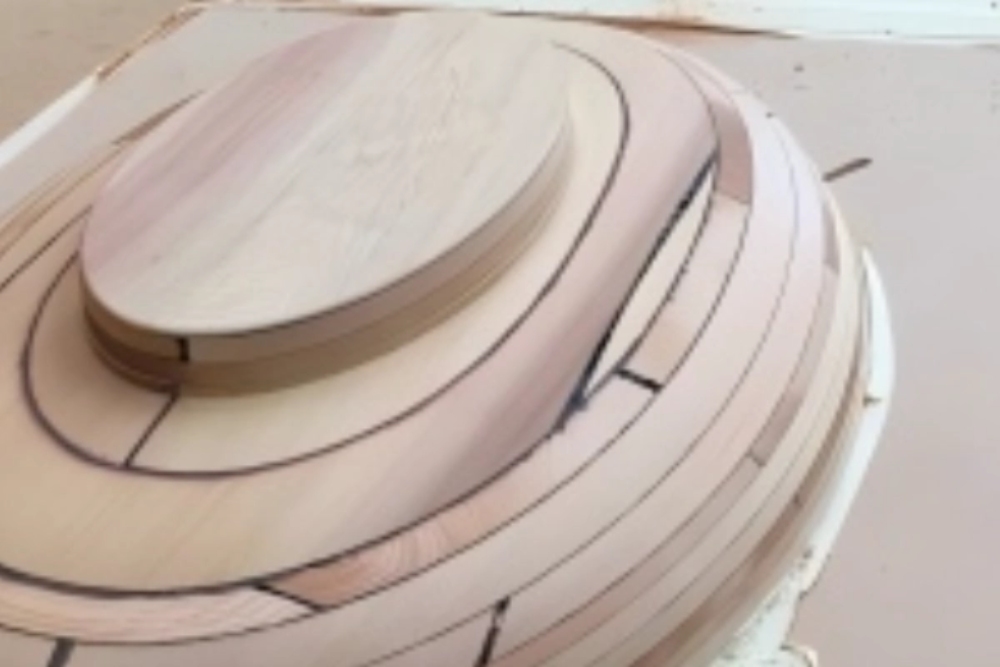
7. Application Fit and Customization Are Not Extras, They Are Part of Industrial Grade
A machine is not industrial grade simply because it is bigger or more expensive than a basic model. It must also be correctly matched to the work.
This is where customization becomes important. A large mold shop, a composite panel factory, and a foam pattern producer may all need CNC equipment, but they do not need the same table structure, spindle package, vacuum strategy, cutting head arrangement, or process integration.
Useful industrial customization may include:
- vacuum tables for thin or large composite sheets
- T-slot or cast-iron support for heavier workpieces
- different spindle packages for different material families
- automatic tool changer integration
- saw, drill, ultrasonic, or other hybrid process heads
- extended travel lengths for large molds or panels
- application-specific guarding, extraction, or handling layout
A standard machine can sometimes be enough. But when the production requirement is specific, refusing to adapt the machine often means transferring complexity back to the operator. That is rarely the best industrial solution.
True industrial grade should therefore include application intelligence, not just hardware size.
8. Maintainability and Support Depth Often Decide the Real Value of the Machine
A machine can be technically impressive and still become a poor industrial investment if it is difficult to maintain or poorly supported.
Industrial buyers are not purchasing a machine only for day-one installation. They are purchasing productive years. That makes service depth, spare-parts logic, electrical organization, commissioning quality, and troubleshooting responsiveness part of the industrial-grade standard.
Serious buyers should check:
- whether key machine parts are processed or controlled in-house
- how electrical and mechanical systems are documented
- how replacement parts are supported
- whether remote diagnostics are practical
- how on-site service is handled if needed
- what kind of application guidance is available after delivery
This matters because a machine that loses two days every time an issue appears is not behaving like industrial equipment, even if its brochure looks strong.
For many factories, dependable support is not an afterthought. It is part of production risk control.
A Practical Buyer Test: What Questions Can the Supplier Answer Clearly?
One useful way to judge industrial credibility is to look at the quality of the supplier’s answers.
If the supplier can clearly explain:
- why the frame stays stable
- how the motion system is matched
- how the spindle is selected for the process
- how accuracy is verified across the full range
- how the machine is adapted for the actual application
- how the machine will be supported after installation
then the conversation is moving in an industrial direction.
If the answers remain vague, stay heavily marketing-based, or avoid process details, the machine may still be useful, but the buyer should be careful about assuming industrial-grade performance.
A Short Industrial-Grade CNC Verification Checklist
Before making a decision, a serious buyer should be able to answer yes to most of these questions:
- Does the structure have credible rigidity and stress-control logic?
- Can the motion system stay stable at production speed under load?
- Is the controller and servo package suitable for the path complexity of the job?
- Is the spindle chosen for real material behavior and duty cycle, not just headline numbers?
- Is there a real calibration and compensation process behind the accuracy claim?
- Can the machine maintain quality across the full working range?
- Has the configuration been matched to the specific application?
- Is the service and maintenance support strong enough for industrial use?
If several of those answers are uncertain, the machine may be capable, but it should not automatically be treated as industrial grade.
How CHENcan Should Be Understood in This Context
For CHENcan kann, the industrial argument should not rest only on company history or on isolated component brands. It should rest on whether the complete machine solution matches demanding production logic.
That means showing buyers how the structure, motion platform, spindle selection, calibration approach, and customization capability work together for real applications such as mold making, composite processing, large-format cutting, or multi-axis machining. The stronger that explanation is, the stronger the industrial-grade case becomes.
Final Thoughts
A truly industrial-grade CNC machine is not defined by one premium part. It is defined by repeatable behavior under real production conditions.
That behavior comes from structural stability, motion quality, controller response, spindle reliability, calibration discipline, application fit, and support depth working together as one system. Buyers who understand those layers make better sourcing decisions because they evaluate the machine the way production will evaluate it: by what happens over time.
For that reason, the best industrial-grade buying question is not, “What is the strongest feature on this machine?” It is, “What evidence shows this machine can stay accurate, stable, and productive in my application after installation?”
That is the question that turns marketing language into a serious purchasing decision.
FAQ (häufig gestellte Fragen)
What is the clearest sign that a CNC machine is truly industrial grade?
The clearest sign is not one component but the machine’s ability to deliver stable, repeatable performance under real production conditions over time.
Why is frame rigidity alone not enough?
Because industrial performance also depends on vibration behavior, thermal stability, motion matching, calibration, and how well the machine is configured for the target process.
How should I evaluate spindle quality for industrial use?
Look beyond power and RPM. Check thermal behavior, duty-cycle reliability, tooling compatibility, material matching, and whether the spindle supports consistent cutting quality over long shifts.
Why is calibration so important for large-format CNC machines?
Because small geometric errors grow over long travel distances. Without serious calibration and compensation, large parts can lose accuracy even if the machine appears fine on smaller samples.
Does customization really matter when buying industrial CNC equipment?
Yes. Industrial jobs often require specific table, vacuum, spindle, travel, or process arrangements. A machine that matches the application more closely usually delivers better quality and lower operating friction.