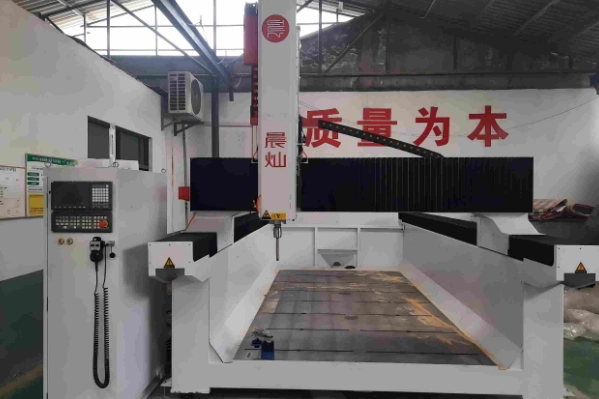
Sandwich panel cutting is not only about spindle speed or saw power. The workpiece must stay flat, stable, and clean during the entire cutting path. That is harder than it looks, especially when the panel is long, multi-layered, and processed through several operations in one flow.
A sandwich panel may combine metal or composite skins with a foam, wood, or lightweight core. Once that panel shifts, lifts, or sits on trapped chips, even a well-programmed cutting path can produce poor edges, unstable groove depth, or misaligned holes and slots.
That is why the work table matters so much. A hollow type vacuum table is not just a holding device. It directly affects panel support, chip removal, operator workload, and final cutting accuracy.
Why Does Workholding Matter So Much in Sandwich Panel Cutting?
Sandwich panels may look strong from the outside, but they can still bend, vibrate, or move during cutting, especially when the panel is long and the process includes trimming, slot milling, drilling, sawing, or sinking.
The cutting force does not only push downward. It can also pull, lift, and push sideways depending on the tool path and material structure. If the panel is not held evenly, the machine may follow the program correctly while the panel itself fails to stay in the correct position.
That is where full-surface vacuum support becomes important.
How Does a Hollow Type Vacuum Table Improve Panel Stability?
A clamp can hold the panel edge, but it does not always protect the middle area. On large panels, that becomes a real issue.
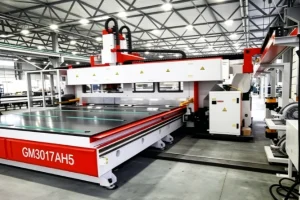
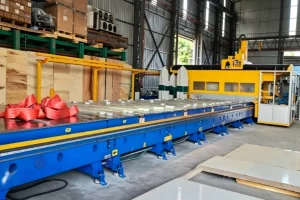
According to CHENcan’s current product information, the GM3015AH5 5 Axis CNC Panel Cutting Machine for Sandwich Panel uses a hollow type vacuum table on a 3000 × 15000 mm table platform. This design pulls the panel down more evenly across the table surface, helping the cutting path stay closer to the programmed position.
In practical production, that helps with:
- Cleaner edge trimming
- More stable groove depth
- Better hole and slot positioning
- Less manual correction after cutting
A small amount of lift in the middle of a long panel may not look serious before machining. But during cutting, that small change can affect depth, edge quality, and consistency from one feature to the next.
Why Is One Stable Reference Important in Multi-Step Processing?
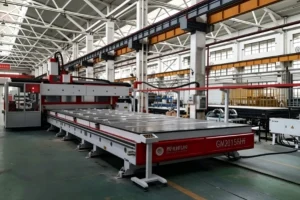
The GM3015AH5 is designed for drilling, tapping, cutting, sawing, sinking, and slot milling. When one panel goes through several of these steps, holding stability becomes even more important.
If the panel shifts during one step, the next step follows the wrong reference. That means one small movement can turn into several downstream errors.
A strong vacuum table helps keep the panel in one more stable reference position from start to finish. For B2B buyers, this matters because many sandwich panel jobs are no longer simple straight cuts. They often include door openings, edge features, mounting slots, or repeated structural details in one panel.
How Does the Hollow Structure Help With Dust and Waste?
Accuracy is not affected by movement alone. It is also affected by chips, dust, and trapped debris.
Sandwich panel processing can produce light dust, core fragments, skin chips, and small cutting waste. If that material stays on the table surface, the next panel may sit unevenly.
A hollow type vacuum table helps because its structure gives chips and debris a more direct path downward into the collection area rather than letting them stay on the working surface.
That creates two practical benefits:
- The support surface stays cleaner between panels
- Operators need to stop less often for manual surface cleaning
This may sound like a housekeeping detail, but it has a direct effect on precision. A small chip trapped under a large panel can create a slight height change, and on long cutting paths that small difference can show up as uneven depth or edge inconsistency.
Why Does This Matter More in Batch Production?
In vehicle body panel production, many parts repeat similar operations across a batch, such as:
- Door openings
- Window holes
- Edge trimming
- Mounting slots
- Internal cutouts
If the first few panels sit on a clean surface but later panels sit on accumulated waste, batch consistency becomes harder to maintain.
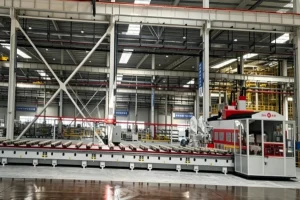
The hollow vacuum table helps reduce that variation by keeping the working surface cleaner throughout the production cycle. It is not a substitute for maintenance, but it lowers the cleaning burden and supports more stable output.
Why Is the GM3015AH5 Relevant for Real Sandwich Panel Production?
The table design matters, but the full machine structure still decides whether the process stays efficient and accurate over time.
According to CHENcan kann’s current machine information, the GM3015AH5 combines the hollow type vacuum table with a large working area, 5-axis cutting saw capability, automatic tool change, and high-speed axis movement.
1. Large Table Size Reduces Repositioning
The machine offers a 3000 × 15000 mm table size with a working area of X 3000 mm, Y 15000 mm, and Z 350 mm.
For many sandwich panel factories, this is important not just because the machine can handle large parts, but because it reduces the need to split long panels into multiple setups.
When a panel must be processed in two or three setups, every repositioning step creates another chance for alignment error. If the panel can be completed in one clamping, the cutting reference stays more consistent.
2. One Machine Can Cover Multiple Processes
The GM3015AH5 is positioned for drilling, tapping, cutting, sawing, sinking, and slot milling. That matters because transferring a panel between machines is not just a time issue. It also creates accuracy risk.
Each transfer means:
- Lifting the panel
- Moving it to another station
- Repositioning it
- Rechecking alignment
- Clamping it again
That adds labor and increases the chance of small reference errors. One-machine processing helps keep the workflow tighter and easier to control.
What Other Machine Details Support Cutting Accuracy?
The table is the main focus here, but long-term accuracy also depends on structure, transmission, guide systems, and pre-delivery testing.
1. Machine Structure Affects Long-Term Stability
Based on the current product details, the machine body uses thick-walled square-tube welding, and key components go through high-temperature tempering to reduce internal stress.
That matters because structural stress can affect long-term stability, especially on large machines processing long panels repeatedly.
2. Transmission and Rails Affect Motion Quality
The product information states that the XYZ axes use high-speed rack-and-pinion transmission, while the Z axis uses a high-precision ball screw. Square rails help support stable movement and vibration control.
For sandwich panel cutting, stable motion helps reduce burrs, rough edges, and local surface chatter during fast cutting cycles.
3. Factory Testing Helps Reduce Start-Up Risk
CHENcan’s current product information also notes a 24-hour continuous movement test before delivery. For buyers, that gives more practical confidence before installation and production planning.
Because this type of machine is large and production-critical, shipping, setup, training, and service readiness all matter before the machine enters the factory.
What Should Buyers Check Before Choosing This Type of Table?
A hollow type vacuum table is useful, but buyers still need to match it to their own panel size, skin material, core structure, cutting method, and dust-control needs.
Before technical confirmation, buyers should prepare:
- Maximum panel length and width
- Common thickness range
- Skin material and core material
- Required hole, groove, and edge shape
- Batch size and daily output
- Whether dust suction or vision options are needed
Die GM series is described as suitable for sandwich panels under 170 mm thickness, and the GM3015AH5 is positioned for panels from 70 mm to 170 mm in a single operation. Those limits should be checked against the buyer’s actual workpiece range.
Which Industries Benefit Most From This Design?
Based on CHENcan’s current positioning, the GM3015AH5 is used in:
- Cold chain vehicle body manufacturing
- RV body manufacturing
- Specialty vehicle body manufacturing
- Construction panel processing
- Aerospace-related sandwich panel work
These industries do not all buy machines for the same reason. Some prioritize batch speed. Others care more about mixed sizes, cleaner edges, or reduced transfer handling. But across all of them, stable workholding remains one of the biggest drivers of cutting consistency.

Final Takeaway
A hollow type vacuum table improves sandwich panel cutting accuracy in three practical ways:
- It holds the panel more evenly across the surface
- It helps reduce lifting, shifting, and vibration during cutting
- It gives dust and chips a path away from the support surface
When this table design is combined with a large working area, 5-axis cutting capability, multi-process integration, and stable machine structure, it becomes much more valuable for factories producing long sandwich panels at consistent quality.
For buyers who need cleaner edges, more stable slot depth, fewer setup changes, and less manual cleaning between panels, this type of table is not a minor feature. It is a real process advantage.
FAQ (häufig gestellte Fragen)
How does a hollow type vacuum table improve sandwich panel cutting accuracy?
It holds the panel down more evenly across the table surface, reducing movement, lifting, and vibration during cutting. Its hollow structure also helps dust and chips move away from the support surface, so the next panel sits more evenly.
What thickness of sandwich panel can the GM3015AH5 process?
Based on the current product information, the machine is positioned for sandwich panels from 70 mm to 170 mm in a single operation, and the GM series is described for panel thickness under 170 mm.
Why is one clamping important for large sandwich panels?
One clamping reduces repeated alignment work. When a panel is split into several setups, each setup can create small position errors. One stable clamping reference helps improve edge, slot, and hole accuracy.
What industries can use this type of sandwich panel cutting machine?
It is suitable for cold chain vehicle body manufacturing, RV body manufacturing, specialty vehicle body manufacturing, construction panel work, and aerospace-related sandwich panel processing.
What maintenance helps keep cutting accuracy stable?
Daily table cleaning, lubrication checks, vacuum-pump and dust-collector maintenance, spindle inspection, axis inspection, and regular accuracy verification all help keep long-term cutting quality stable.