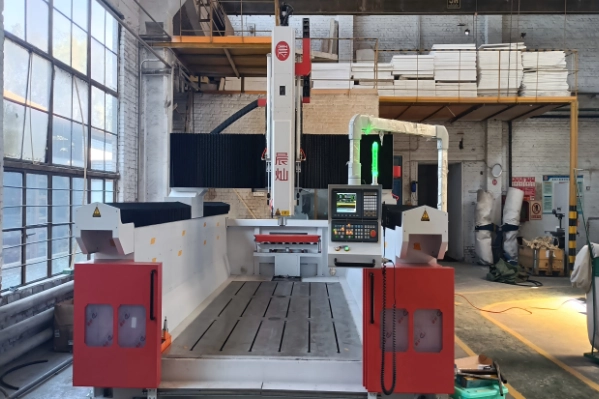
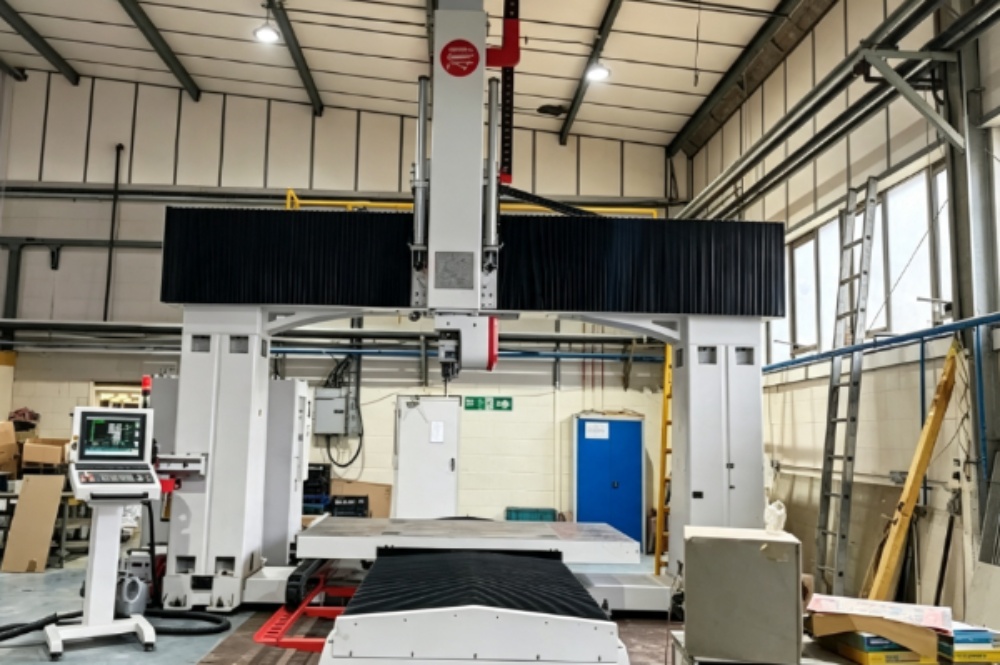
Foundries today face a massive bottleneck that threatens both their production timelines and workers’ health. For decades, fabricating large-scale casting patterns, especially those made from expanded polystyrene foam or wood, followed a predictable, painful cycle. A three-axis machine would rough out the basic shape, leaving massive steps, deep ridges, and tight cavities untouched. Then, an army of skilled workers spent days or weeks with handheld sanders, inhaling toxic dust trying to smooth out those complex contours. This process causes human error, delays, and skyrocketing labor expenses. When a pattern requires tight geometric tolerances, relying on a manual finishing step is a massive gamble. Moving to a simultaneous five-axis machining center changes the entire dynamic by allowing the cutting tool to constantly orient itself perpendicular to the workpiece surface. This capability delivers a pristine surface finish straight off the machine, eliminating manual post-processing completely.
The Real Cost of Traditional Sanding in Pattern Shops
Traditional pattern making creates hidden operational losses that foundries accept simply because they always have. When you look at the production log of a large wind turbine blade mold, an automotive unibody stamping pattern, or a massive marine plug mold, the machining hours tell only half the story. The real delay begins after the machine stops.
The Labor Trap: Skilled pattern makers spend more time holding sandpaper than doing high-value setups or programming.
Geometric Inaccuracy: Even the most experienced operator cannot maintain precise tolerances across a sixty-meter wind power blade mold using a handheld block. Manual pressure varies, taking away too much material in soft foam or leaving high spots in wood substitutes.
Health and Safety Liabilities: EPS foam and composite dust require heavy filtration systems. The fine particulate hangs in the shop air, creating health risks and increasing regulatory compliance issues.
Our industrial team has spent decades tracking these bottlenecks across multi-industry client factories. We found that shops using standard three-axis systems spend up to forty percent of their total pattern lead time on manual finishing. This is where modern high-speed gantry centers redefine the manufacturing flow.
How Five Axes of Motion Deliver Flawless Surface Finishes
A standard three-axis machine moves only in vertical and horizontal planes. When it encounters a steep curve or a deep draft angle, the side of the tool rubs against the material, or the tip leaves a staggered staircase effect. Simultaneous five-axis milling adds continuous rotation along two additional rotational coordinates, typically designated as the A-axis and C-axis.
By controlling the linear movements alongside these rotational coordinates, a high-precision CNC system calculates the precise orientation required to keep the cutting tool engaged at its optimal point. Instead of step-over lines that require heavy sanding, the tool sweeps across complex 3D shapes with a uniform chip load. The tool can reach deep into small cavities that used to be unreachable, executing high-precision machining at any angle.
Our team at CHENcan kann engineers these movements into massive structures built for heavy industrial environments. We design systems that integrate high-rigidity structural frames with advanced double-swing heads so that the transition between linear axes and rotational axes remains smooth, keeping vibrations out of your finished pattern.
The Impact on Different Pattern Materials
Foundries work with a broad spectrum of substrates depending on the casting volume and precision needs. Our gantry machining centers adjust perfectly across all of them.
Expanded polystyrene (EPS) foam is highly susceptible to tearing if the tool orientation is wrong. A five-axis sweep cleanly shears the foam cells instead of plucking them out. For wooden casting molds or high-density wood substitutes, the constant cutting velocity prevents friction burns and grain tear-out. When working with carbon fiber or glass fiber composite material molds, maintaining the perfect tool angle prevents delamination and leaves a paint-ready surface right from the first run.
Architectural Choices That Separate Precision Gantries From Standard Routers
You cannot achieve a zero-sanding finish on a machine built from thin metal tubes or light aluminum panels. The massive forces generated during high-speed, five-axis movements will twist the frame, leaving visible chatter marks on your casting pattern.
We construct our machine frames using large-size, thick-walled square steel tubes. These structural parts undergo strict stress-relief heat treatment and aging treatment in our large tempering furnaces. This step ensures that the machine structure will not deform over years of continuous operation, keeping your long-term precision stable.
To take rigidity further, we use a triangular stepped guide rail structure where three rails form a highly stable base. The back of the crossbeam features a counterweight balancing device to counter the forward tilting force of the vertical axis. Additionally, we use specialized positioning pressure blocks to secure the line rails close to the reference plane. This approach eliminates horizontal play and improves load rigidity across the entire machine tool.
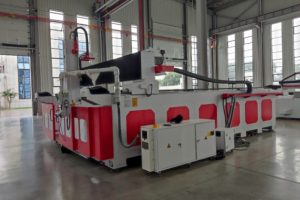
For pattern makers handling massive foam blocks and sand molds, we recommend our specialized SF4060 High Quality Mold CNC Milling Machine for Sand and EPS Foam Mould Making. It features a massive travel capacity and custom configurations specifically tailored to eliminate manual finishing on high-volume casting runs.
Dust Control and Operational Safety
Milling large-scale foam or composite molds creates a huge volume of flying waste. A clean workplace is vital for achieving fine finishes because trapped debris can score the pattern surface. Our high-speed gantry centers can be equipped with a completely sealed cabin design, featuring an automatically opening safety door and a retractable ceiling. This enclosed cabin stops dust and flying chips from escaping into the shop, keeping your working environment clean and protecting your operators.
Maximizing Factory Efficiency With Turnkey Engineering Solutions
Buying a high-end machine is only half the battle; the real value lies in integrating it into your daily casting operational workflow. Many foundries struggle during the transition from simple three-axis setups to five-axis programming, which is why we provide complete turnkey engineering services. We help our global B2B clients select optimal CAD/CAM software like UG, Mastercam, or Powermill, and we configure precise post-processors to match our machinery.
Our pre-sales process reflects this focus on actual factory floor performance. We do not offer generic off-the-shelf prototypes. Instead, we provide custom trial processing services. Your technical team sends over the specific pattern blueprints, and we run test cuts in our manufacturing facilities to verify both processing speeds and surface quality before any purchase agreement is signed. You can read more about our engineering setups on our factory overview page.
Once an order moves forward, our engineers travel directly to your facility to manage the complete on-site setup, calibration, and employee operational training. We back every installation with lifetime remote technical support, giving your production team direct access to troubleshooting experts whenever new pattern challenges crop up on the shop floor. More details on these post-sale programs are outlined on our dedicated service and support page.
FAQ (häufig gestellte Fragen)
Q1: Can a five-axis CNC milling machine completely replace manual sanding on both expanded polystyrene foam and hardwood patterns?
A: Yes. By constantly adjusting the tool orientation via simultaneous five-axis linkages, the system maintains the perfect cutting angle relative to the pattern contours. This eliminates the step-like ridges left by traditional three-axis routers, producing a smooth surface that goes straight to the foundry floor without manual sanding.
Q2: What exact testing tools do you use to ensure the five-axis accuracy remains stable under heavy workloads?
A: We inspect and calibrate our equipment using high-end precision instruments, including Renishaw laser interferometers, British Renishaw ballbars, Renishaw RCP calibrators, Swedish EasyLaser systems, and Rayton three-dimensional coordinate measuring machines. These tools allow us to compensate for error down to the micron level before shipment.
Q3: How do you handle shipping and container logistics for machines that weigh several tons?
A: We ship our large industrial machinery primarily via ocean freight using standard full containers, such as 40HQ units. For landlocked countries or specific continental regions, we can also coordinate rail transport or combined sea-rail logistics routes depending on your exact local infrastructure.
Q4: We work with very deep automotive and marine casting molds. What configurations prevent tool deflection in those cavities?
A: We use a gantry frame structure paired with all-cast iron vertical rams that feature internal structural reinforcement. This setup provides high structural rigidity, minimizing tool deflection even when working with long extensions in deep cavities.
Q5: What is your policy regarding product warranties and long-term machine tool maintenance?
A: We provide a comprehensive one-to-two-year warranty depending on the exact machine model, alongside lifetime remote technical guidance. We also operate two specialized machine tool maintenance subsidiaries staffed by nearly forty professional technicians to handle long-term retrofits, relocation, and precision restoration.