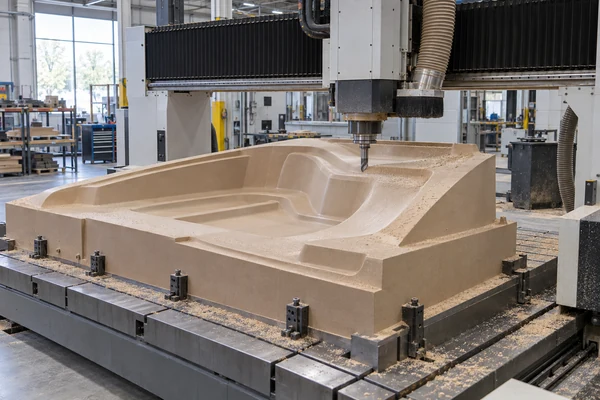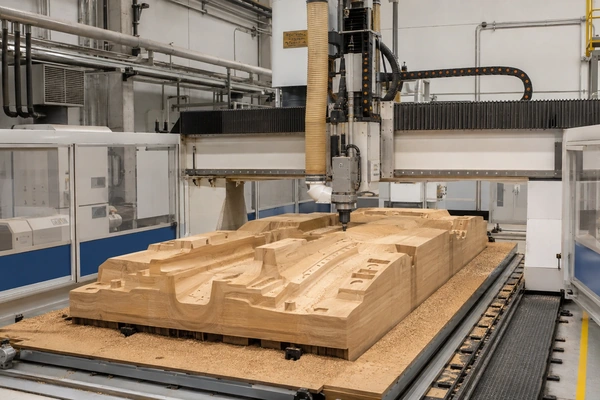
Most shops send their prototype work to an outside CNC service provider and never think about owning the machine. A few run cnc rapid prototyping on their own floor. From a distance the two setups look alike; up close the cost behavior is nothing alike, and the difference comes down to how often you iterate, how big the parts get, and how much your design data can afford to travel.
Worked with real numbers, the split point sits somewhere between 30 and 100 prototype jobs a year. Below the lower end, outsourcing takes it. Above the upper end, or the moment confidentiality, lead time, or an unusual material becomes a hard constraint, an in-house machine starts earning its floor space. What follows is a checklist you can run with your own numbers instead of ours.
The Two Cost Models Behind the Decision
Two costs get mixed together in most of these conversations, so pull them apart first.
- Cost per prototype. The figure on an outsourcing quote: machine hours, setup, finishing, delivery, margin. It is a variable cost, and it resets to zero with every new order.
- Cost of ownership. What an in-house machine makes you carry: purchase price, tooling, CAM licenses, floor space, power, dust handling, at least one trained operator, and a maintenance budget that never actually goes away. Fixed, and present every year whether or not there is work.
So the real question is not which option is cheaper this month. It is which line on the P&L your prototype volume belongs on. Five numbers settle it: jobs per year, part size and material, the precision and finish the part demands, the tooling a matching machine needs, and how sensitive the design data is.
The Outsourcing Route: What You Actually Buy and What You Give Up
Type any prototype keyword and the first results page is wall to wall CNC service providers, so the capacity question is rarely the problem. Standard-part unit prices are competitive, and for one-off or low-volume work this route keeps your fixed costs flat, which is exactly what small shops want.
The trade is control. Every iteration repeats the same loop: drawings go out, a quote comes back, the part is made, it ships, you inspect it. Each loop stretches the schedule a little and leaks a little of the design. Big or awkward parts add freight you actually pay. And stability quietly depends on whoever picked up the job; swap the supplier and the process can shift from batch to batch without anyone warning you.
The In-House Route: What the Machine Actually Costs
Budgeting a prototype machine means more lines than the machine itself. The price moves with travel envelope, spindle power and speed, control system, and automation. Then come tooling, CAM licenses, fixtures and workholding, floor space, power, dust extraction, climate control, and the people who will program, run, and keep it running. As a working figure, expect first-year operating cost in the 15 to 25 percent band of the purchase price; shift pattern and how much of the work is automated decide where inside that band you land.
When you do buy, the evaluation time is best spent on the signals that separate a serious tool from a box that merely cuts: spindle power, speed and taper; positioning and repeat positioning accuracy; control system and CAM compatibility; tool magazine capacity; enclosure and dust handling; the spare-parts channel; and who installs, commissions, and trains. We wrote up the first set of signals in What Makes a CNC Machine Truly Industrial-Grade and the geometry side of picking a model size in How to Select Industrial CNC Machine Models Based on Precision Requirements.
For shops prototyping in wood, foam, composite, or soft-metal molds, CHENcan builds the SF high-speed mold and pattern machining centers for those materials and the larger 5-axis gantry machining centers for parts that outgrow a table-sized envelope. Matching your part envelope to the right series is precisely what the quotation conversation is for.
A Simple Math Model for the Decision
Write both five-year figures down before the discussion gets emotional:
In-house 5-year cost = machine price + (tooling + software + fixtures) + 5 × (annual consumables + energy + maintenance + operator cost allocated to prototyping). Outsourcing 5-year cost = 5 × (annual prototype job count × average cost per job + freight + inspection overhead). The difference between the two is the number that should be running the meeting.
Three rules keep the math honest. Under 30 jobs a year and an average outsourced job below 300 USD, in-house almost never wins. In the 300 to 800 USD band with 100-plus jobs a year, run the full model, because the crossover usually lands in that band. And when confidentiality, lead time, or a special material is a hard constraint rather than a preference, weight it outside the arithmetic; costs like those never show up in a quote.
What In-House CNC Rapid Prototyping Can Do for a Mold Shop
Once the machine is on the floor, the change shows up in the iteration loop. A design change gets cut and checked the same day instead of next week. Trial counts drop, because errors surface on the first piece rather than after a batch. And the prototype stops being pure cost: the setup that cut the trial piece feeds straight into the production mold program.
Plastic and composite molds add a hybrid route. The industrial large-format 3D printer prints a near-net-shape blank in pellet material, the milling center trues it to tolerance, and the cost side of that print-and-mill loop is worked out in How a Pellet 3D Printer and CNC Milling Workflow Reduces Mold Trial Cost.
A Pre-Purchase Checklist for In-House Machines
- Spindle: power, speed range, and taper standard that fit your material.
- Travel and working envelope: covers your largest part with room left over for fixturing.
- Positioning and repeat positioning accuracy: and how the seller proves it, not just states it.
- Control system and CAM compatibility: can your existing files run without rework.
- Tool magazine capacity: checked against the tool list of a typical job.
- Enclosure, dust extraction, and safety devices that suit an open shop floor.
- Spare-parts channel and warranty terms; also whether the factory machines its own structural parts in-house, which is a fair proxy for long-term support quality.
CHENcan runs two R&D and production bases, both certified under ISO 9001 and CE, with every structural component machined in-house. The full company background and the certification list are on the company page.
Conclusion
cnc rapid prototyping works from an outsourced workbench or from your own floor; both are legitimate answers to a real question. What decides it is iteration volume, part envelope, material, and how far your design data can travel. Do the five-year math, check the machine against the signals above, and let the number, not the sales pitch, run the meeting. If you want to pressure-test the in-house option before committing, CHENcan takes customer drawings for a trial cut on its own machines, so the performance question gets answered with your part instead of a brochure. Send the drawings and request a trial cut.
Frequently Asked Questions
Q1: Is there a minimum batch once we run cnc rapid prototyping in-house?
No. The first prototype is a batch of one, and that is the flexibility an in-house machine gives back: no minimum order quantity, no negotiation, and a design change can be cut before your next coffee break.
Q2: When does in-house beat outsourcing in practice?
Most mold shops cross the line around 100 prototype jobs a year, or sooner once confidentiality or lead time turns into a hard constraint. Below that volume, the outsourced unit price is hard to beat with a five-year ownership model.
Q3: How do we verify first-piece accuracy before we sign?
Two steps: the factory acceptance record with laser measurement data, and a trial cut of your own drawing on the actual machine before delivery. A manufacturer that declines the second step is telling you something. CHENcan runs customer-drawing trial processing as a standard pre-order service.
Q4: Should we consider a used machine instead of buying new?
A used machine saves front-end money, but the hidden costs sit in the spare-parts channel and the precision recovery budget. If that route is what you want, weigh the warranty terms and whether the manufacturer still builds the structural parts it sells. Contact CHENcan to compare a like-for-like configuration before you decide.